Washington at Valley Forge by American 19th Century
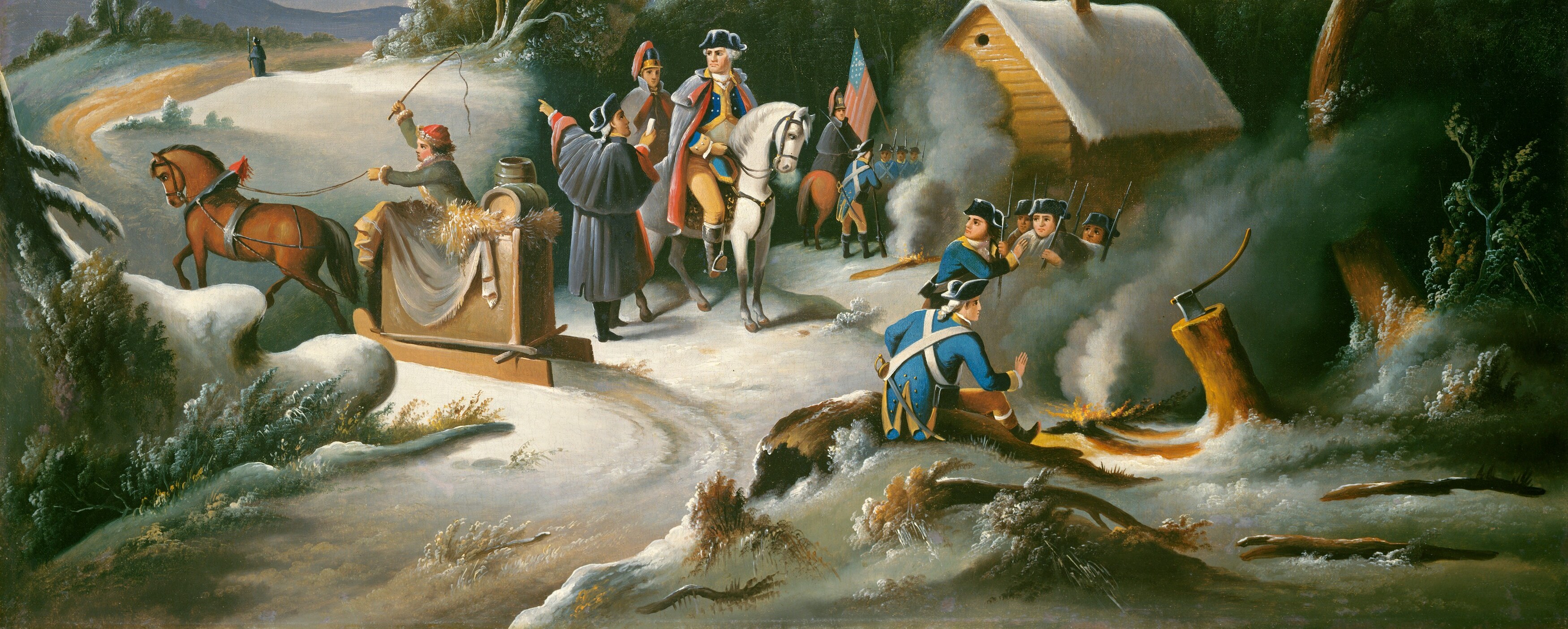
This powerful oil on canvas, "Washington at Valley Forge" by an American 19th Century artist, depicts General George Washington in a moment of quiet contemplation. Housed at the National Gallery of Art, it offers an intimate look at a pivotal historical figure.
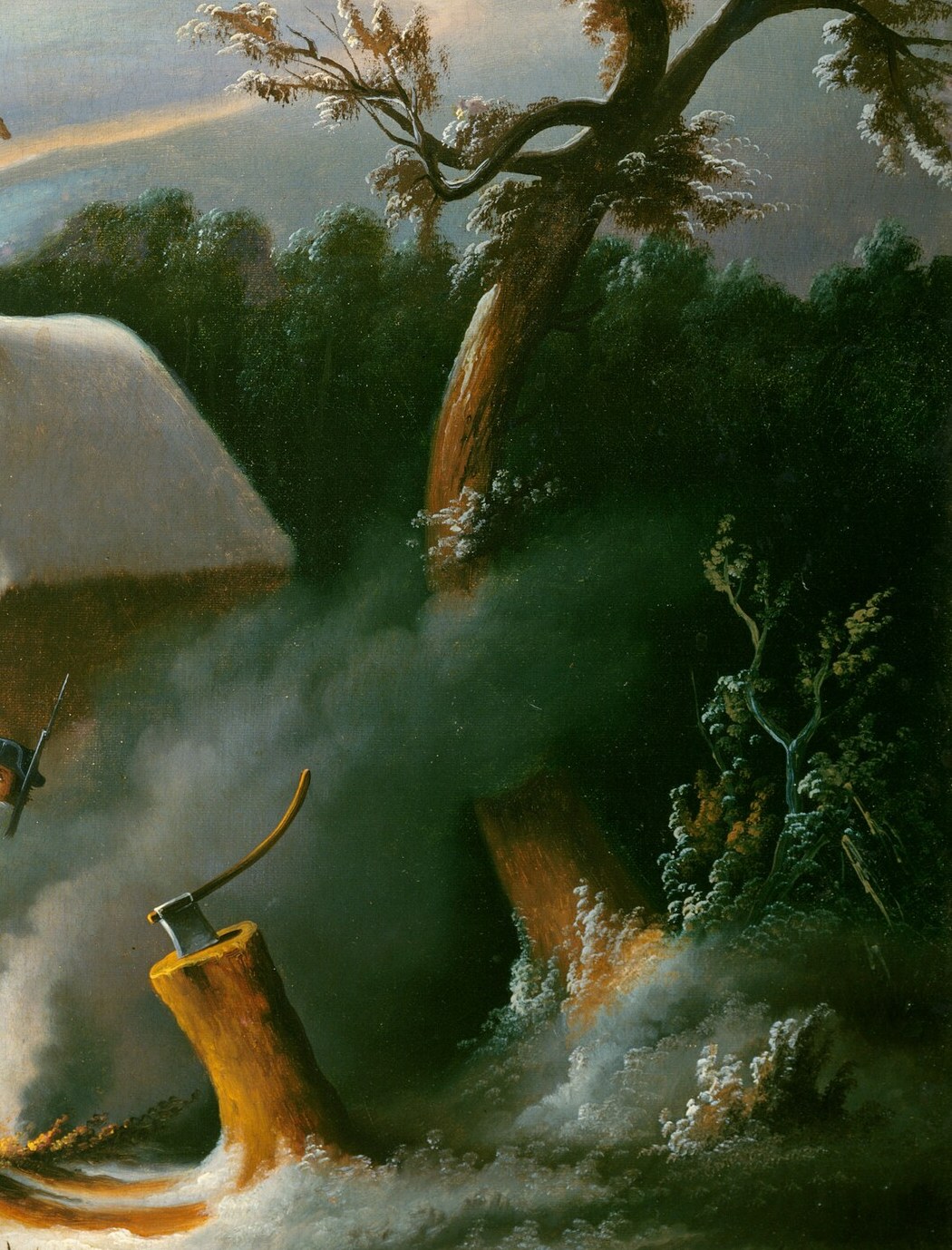
Notice Washington's pale, illuminated face, a compositional choice that emphasizes his inner resolve and perhaps divine inspiration. The artist uses subtle techniques, like incised lines in the snow, to convey the biting cold of the winter environment.
The painting diverges from typical heroic portrayals, focusing instead on Washington's vulnerability and reliance on faith during the severe winter encampment. The stark, bare tree and the distant settlement are symbolic elements that add depth to this scene of hardship and hope.
What do you think this painting tells us about leadership during times of crisis?
Details
Transcript
General Washington kneels in prayer at Valley Forge. His face, pale and illuminated, suggests inner resolve and divine favor. The bare tree, stark against the sky, symbolizes the harsh winter. Delicate lines in the snow capture the biting wind and extreme cold. Beyond the camp, distant houses hint at civilization and hope. This artwork presents a private moment of deep reflection.