Three Piankeshaw Indians by Catlin, George
George Catlin, an American lawyer and artist, dedicated his life to documenting Native American peoples during their cultural transition. This painting, "Three Piankeshaw Indians," from 1861, is an oil on card mounted on paperboard and is part of the collection at [Museum Name, if known, otherwise omit].
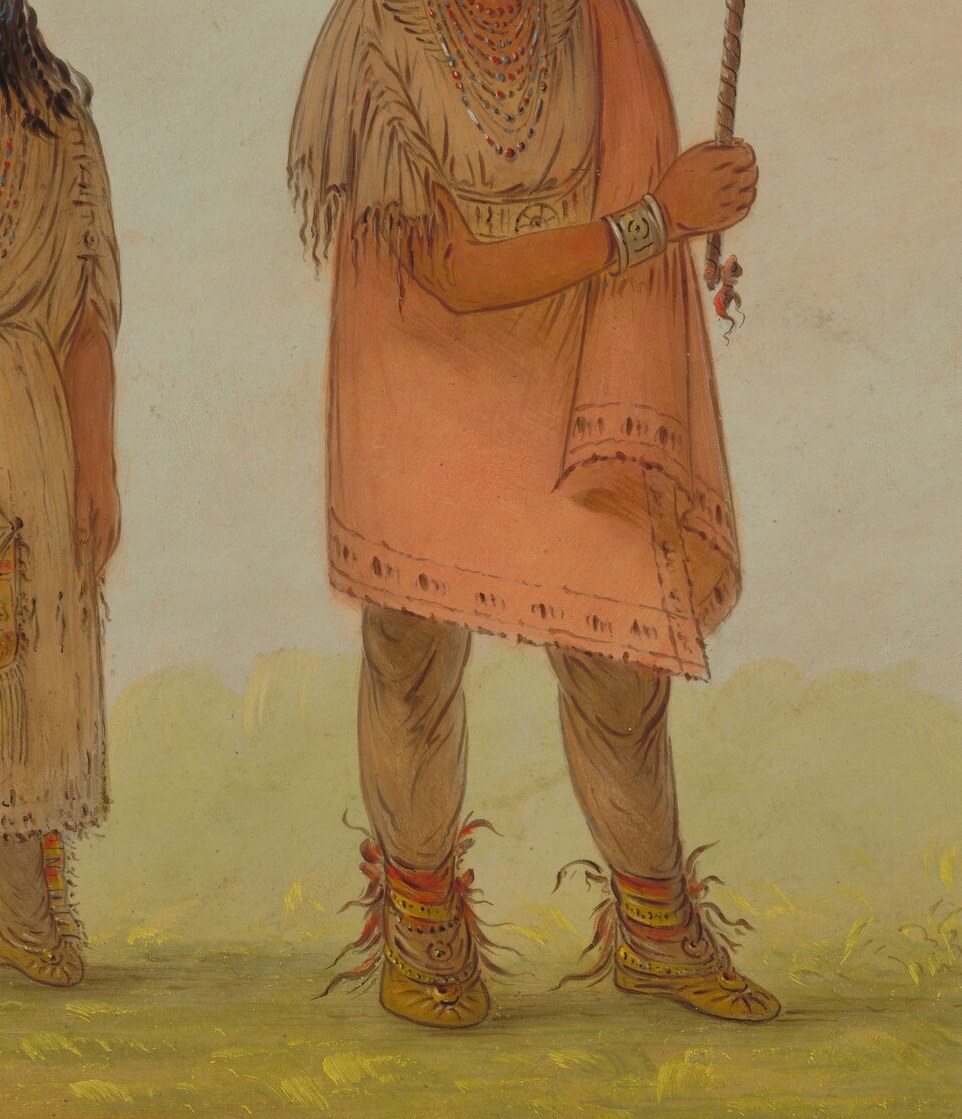
Catlin traveled the American West extensively in the 1830s, creating portraits that captured the daily lives and distinct identities of various tribes. Here, he meticulously depicts three members of the Piankeshaw tribe, highlighting their traditional clothing and accessories, such as the central figure's elaborate feathered headdress and fringed robe.
His straightforward, unembellished approach is characteristic of American folk art, focusing on the subjects against a muted background. Catlin's detailed visual records were frequently reproduced in early lithographic projects, including Cadwallader D. Colden’s memoir, making his work a significant contribution to both art and ethnography.
What details in their attire capture your attention most?
Details
Transcript
This painter, George Catlin, traveled the American West in the 1830s. He aimed to document the lives of Plains Indians. These are three members of the Piankeshaw tribe. The central figure wears a striking feathered headdress. This meticulous work is typical of American folk art. Catlin's works were often reproduced in early lithographic publications. His visual ethnography recorded a culture in transition.