Thérèse Louise de Sureda by Goya, Francisco
View the artwork: Thérèse Louise de Sureda →
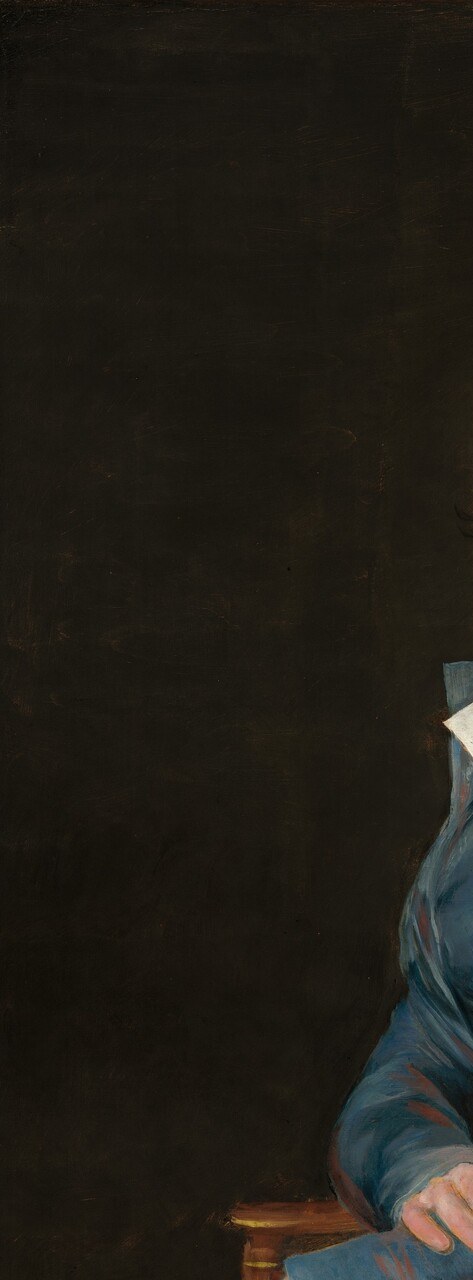
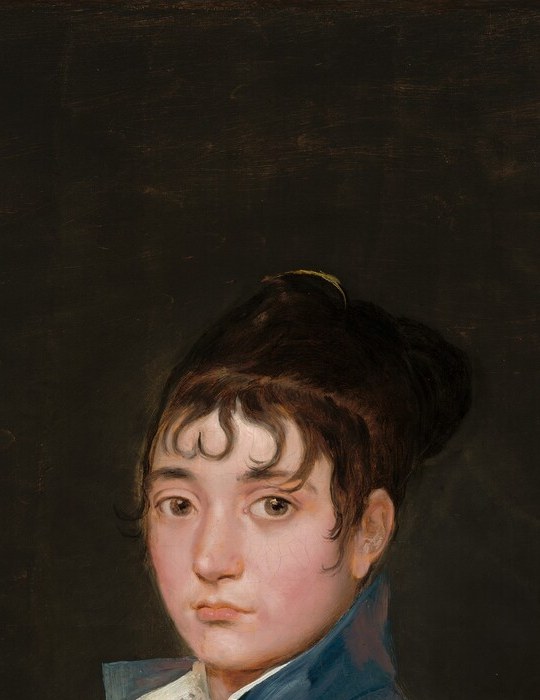
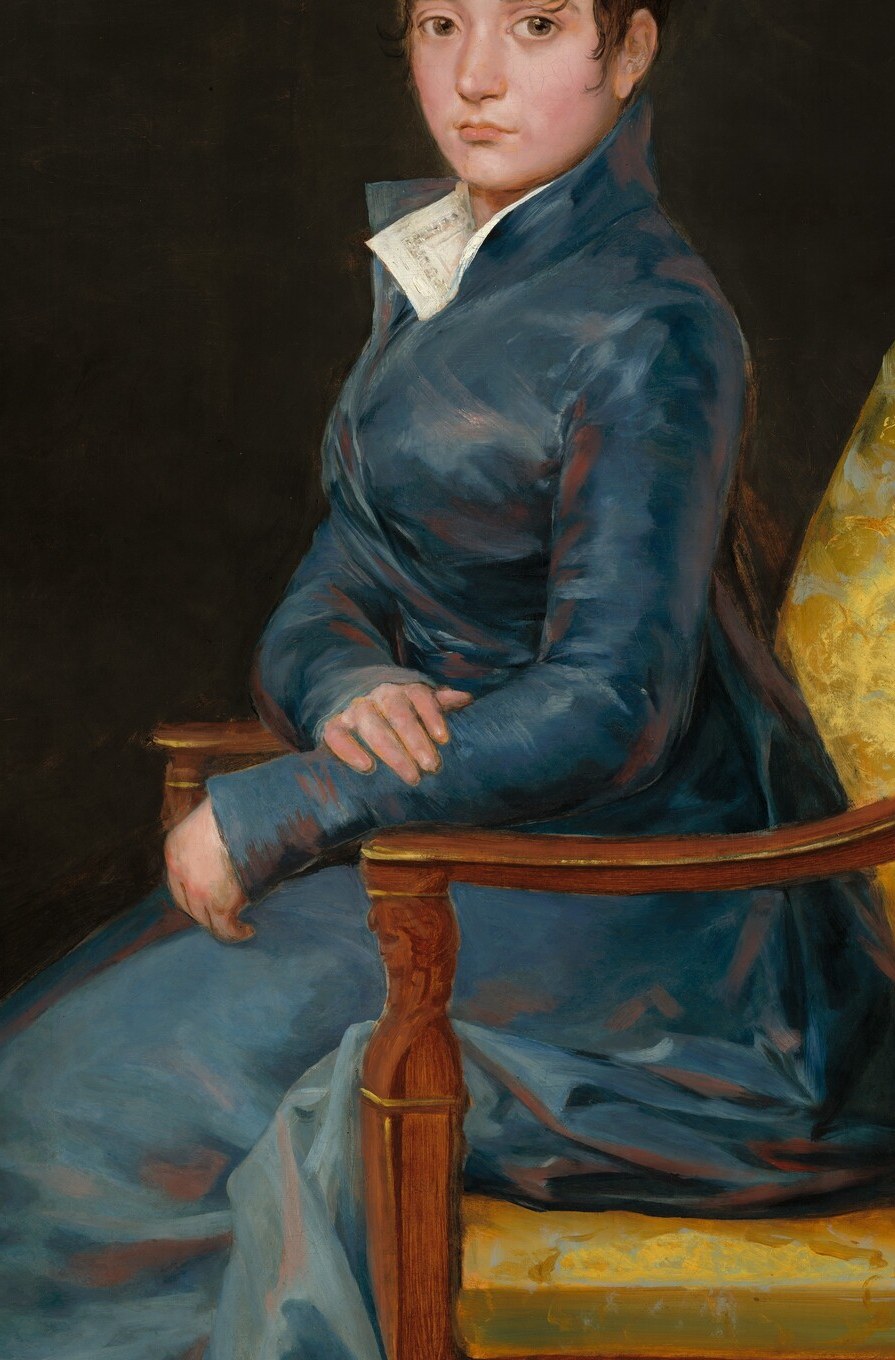
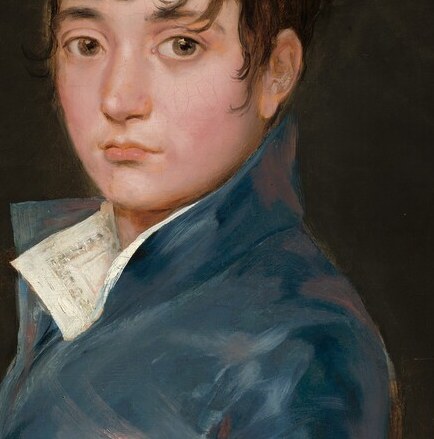
This is Thérèse Louise de Sureda, a young Frenchwoman who moved to Madrid in 1803, and she brought her identity with her. Painted by Francisco de Goya, her portrait is a catalogue of French neoclassical codes, from her Roman-revival hairstyle to the Napoleonic chair she sits in. She does not assimilate; she announces herself.
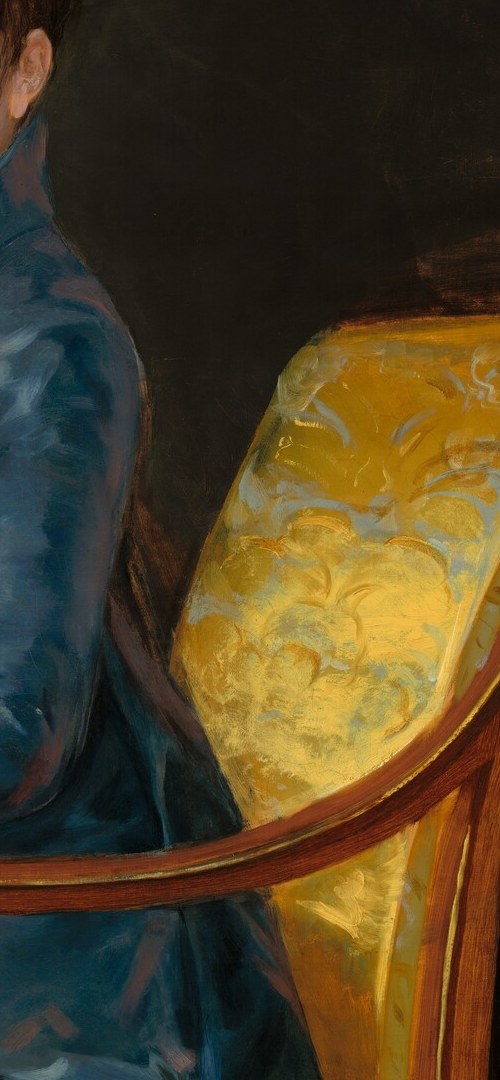
Look first at her hair, dressed 'à l'antique', and her stiff white collar. Both are pure French fashion of the revolutionary period, deliberately worn in the Spanish capital. Her chair is an Empire-style armchair with a tiny Egyptian head carved into the column, an emblem of the post-1798 Egypt craze that swept European decorative arts. Everything in the frame is a language, and she is fluent in it.
The portrait has a companion: Thérèse's husband, Bartolomé Sureda, who had taught Goya the aquatint technique essential to his printmaking. Goya paints Bartolomé lounging casually, while Thérèse sits rigid and unyielding. The contrast may reflect Goya's closer friendship with her husband, but it also reads as a deliberate performance of bourgeois propriety.
She was French. She wanted you to know it. What code would you wear if your portrait were painted today?
#arthistory #goya #neoclassical
Details
Transcript
A young woman sits rigidly in a gilded chair. Her hair is dressed 'à l'antique,' in the Roman style. It's a statement. French revolutionary neoclassicism, worn in Madrid. Her severe white collar is French dress code, not Spanish. She sits on a Napoleonic Empire chair. Carved into the arm: a tiny Egyptian head. An emblem of the Egypt craze that swept Europe after 1798. The message is total: she is entirely, unambiguously French.