Memorial painting by Sally Miller
View the artwork: Memorial painting →
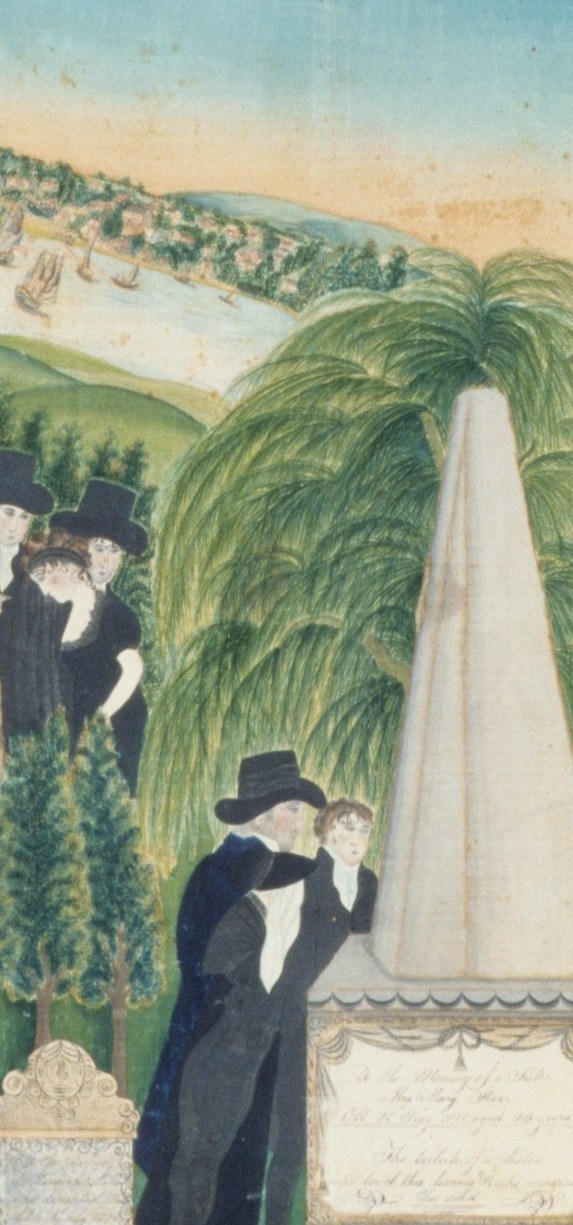
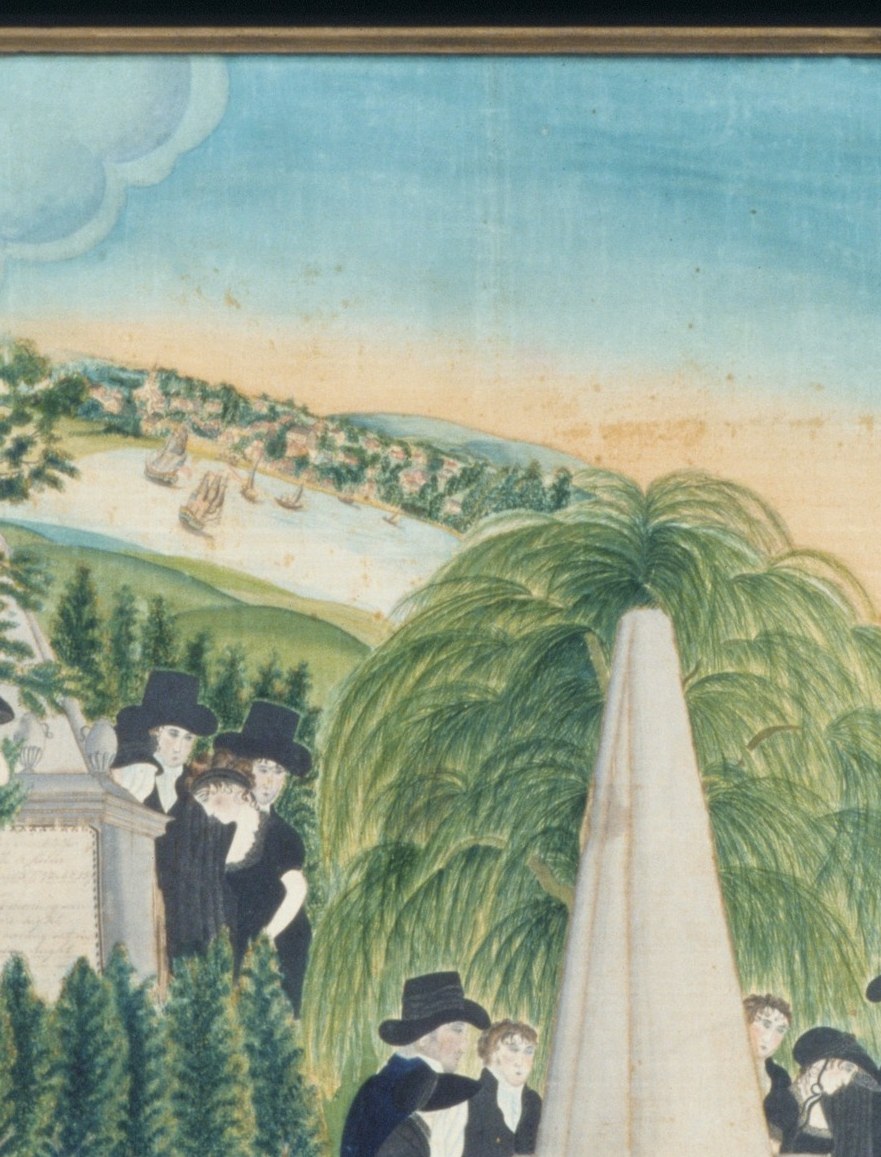
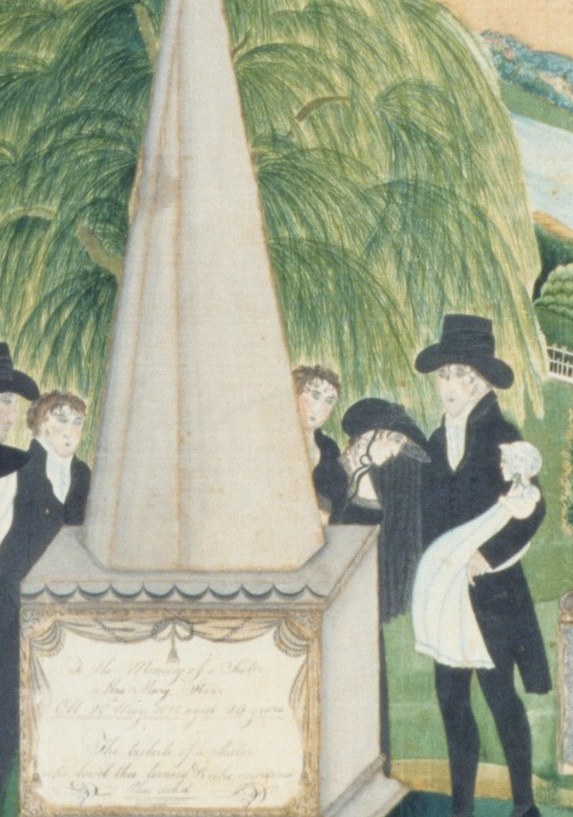
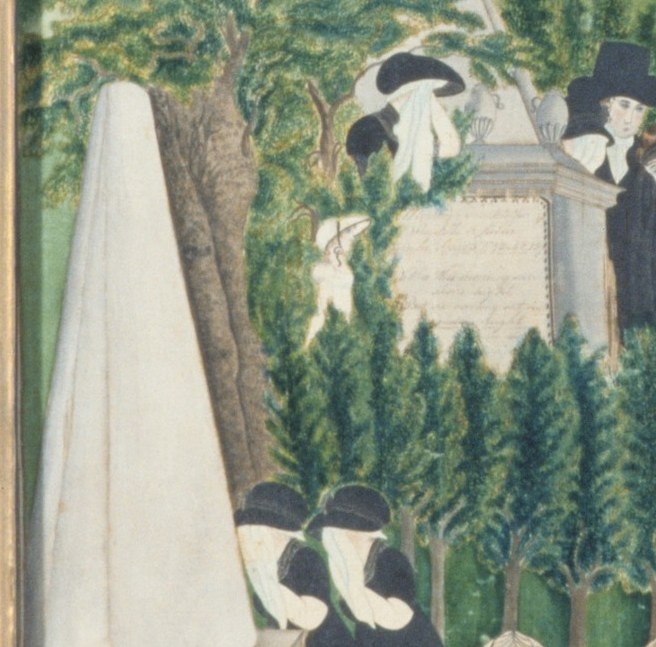
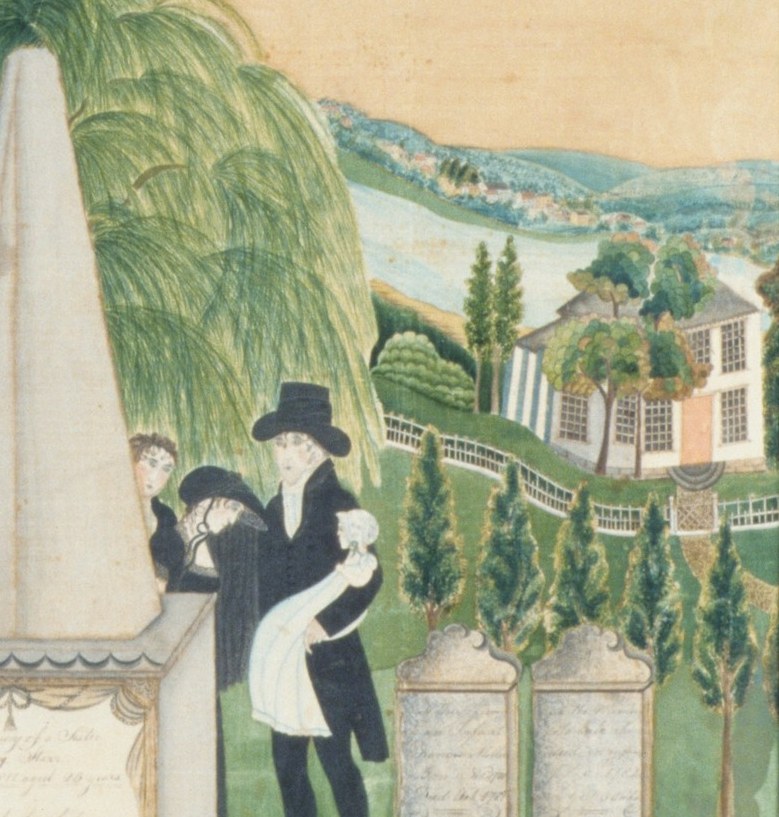
This is Memorial painting, a watercolor and ink on silk made by Sally Miller in 1811 while she was a student at the Litchfield Female Academy in Connecticut. It is one of eight nearly identical mourning pictures known to have come from that school, same size, same composition, same coloring.
The scene gathers every conventional symbol of early American mourning: black formal dress, a weeping willow, an open grave beneath a white obelisk, and a calm harbor opening onto the distance. The willow was understood immediately as grief made botanical; the harbor offered the quiet consolation of a passage toward light.
Litchfield Female Academy, founded by Sarah Pierce in 1792, taught young women academic subjects alongside ornamental skills, needlework, music, painting. These silk mourning pictures were exercises in feminine accomplishment, but they were also objects meant to be displayed and kept. The painted faces in all eight versions appear to have been done by a single hand, likely Flora Catlin, an art instructor at the school from 1815 to 1831.
The Met acquired Miller's version in 1948. The names on the tombs are indistinct, the picture mourns no one in particular, which is exactly the point. It teaches grief as a shared, practiced language. What do you make of eight young women producing the same elegy, face by borrowed face?
#arthistory #americanfolkart #mourningart
Details
Transcript
A young woman, 1811. She paints her school project on silk. Mourners in black gather around a fresh grave. The weeping willow was the era's symbol of grief. Now look at the tomb. The lettering is barely legible. Seven other girls at her academy made this same picture. Every face in every version was painted by one instructor.