Holy Family with St. Anne and the Infant St. John by Bronzino
Bronzino's Holy Family with St. Anne and the Infant St. John (1545) is a prime example of Mannerist style, which deliberately moved away from Renaissance ideals. Its departure from naturalism and emotional restraint sparked debate and criticism among viewers accustomed to more traditional religious art.
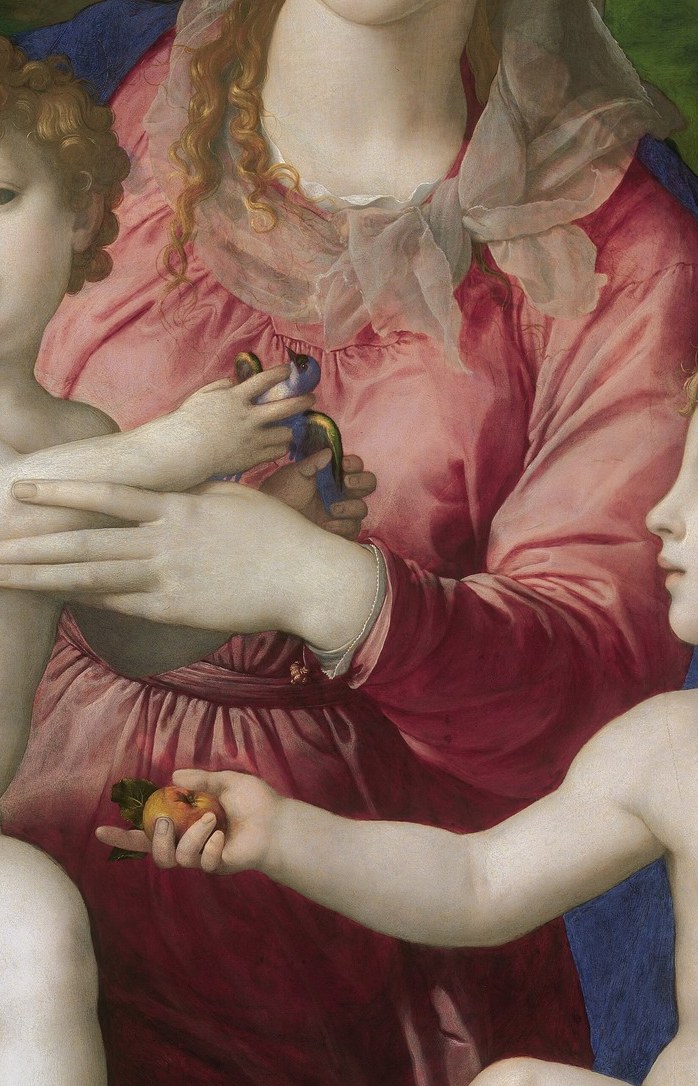
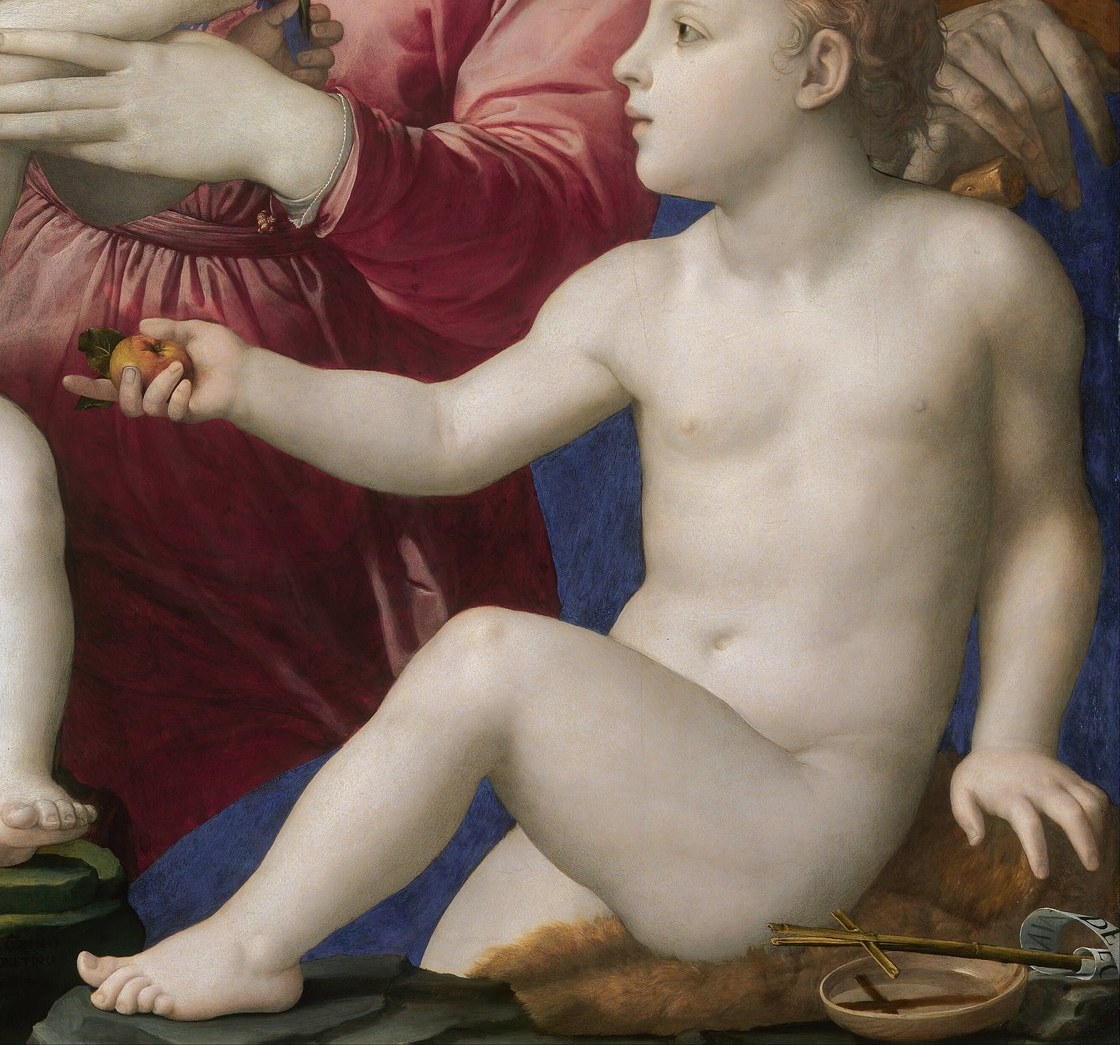
Look closely at the fabric of the Virgin Mary's robe. Notice how the folds are exaggerated and seem almost sculpted, demonstrating the Mannerist preference for artifice and elegance over strict realism. Observe Saint John's outstretched hand holding what appears to be a fruit, a detail that adds a symbolic layer to the scene.
Painted in 1545, this work reflects Bronzino's role as court painter to Cosimo I de' Medici, balancing his courtly portraiture with religious commissions. The Mannerist style, characterized by elongated figures, unusual color palettes, and complex compositions, was a departure from the harmony and balance of the High Renaissance and was often perceived as overly sophisticated or even decadent.
Bronzino's sophisticated style pushed the boundaries of religious art, challenging viewers' expectations and contributing to the era's evolving aesthetic sensibilities.
Details
Transcript
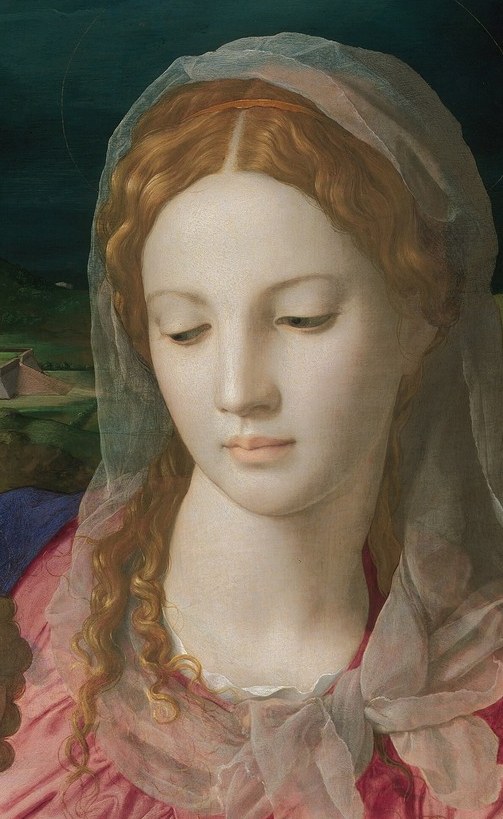
Look at the Madonna's pink robe. Its folds are impossibly complex and artificial. This is Mannerism: elegant, but unnatural. Bronzino painted this in 1545. His figures seemed strange to some viewers then. See how her gaze is distant and knowing? And the Infant John offers a strange fruit. Critics found it overly precious and daring.