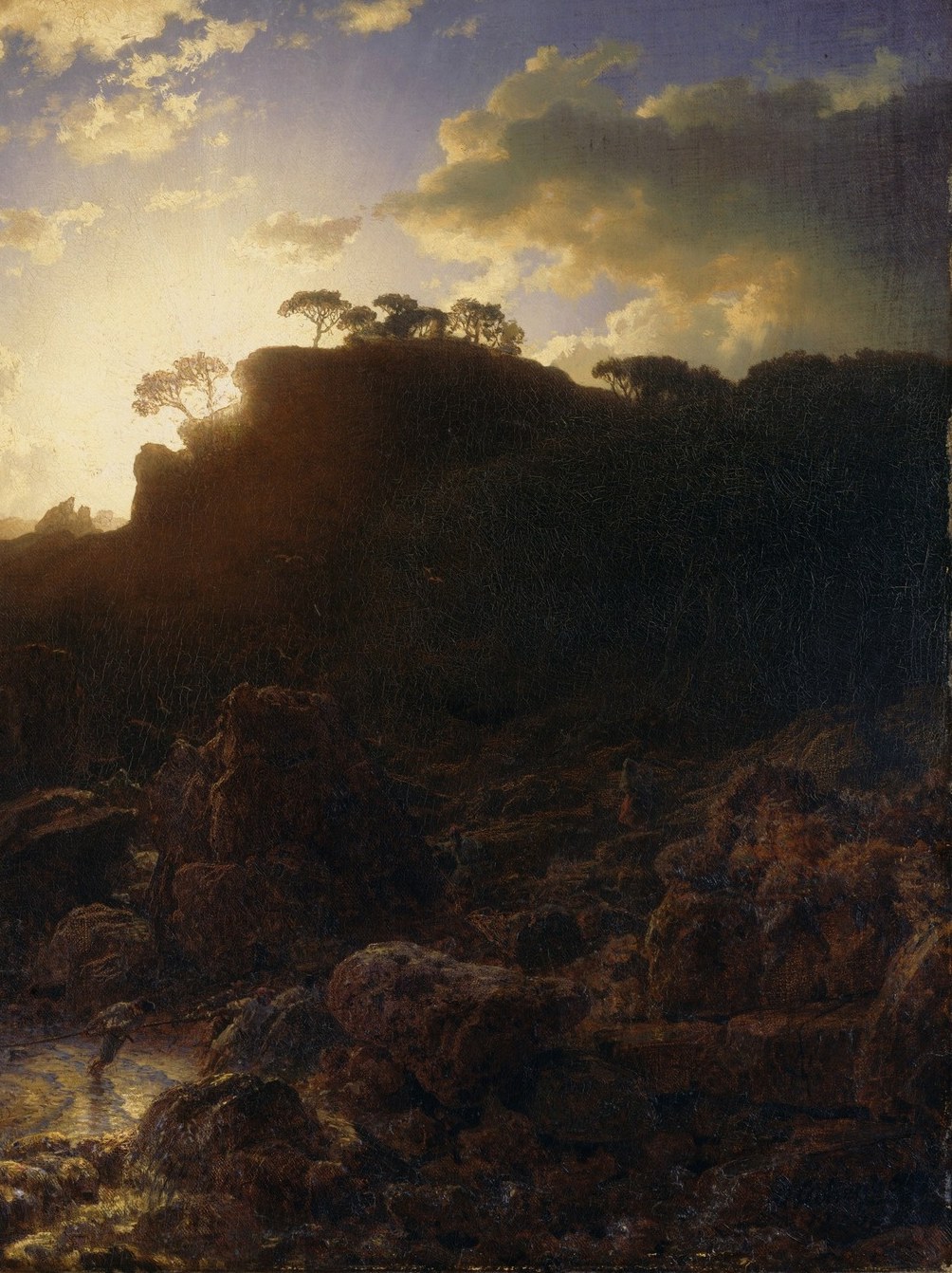
Sunset after a Storm on the Coast of Sicily by Andreas Achenbach
Andreas Achenbach completed Sunset after a Storm on the Coast of Sicily in 1853, and today it hangs in The Metropolitan Museum of Art. The painting almost works on you backward. First you feel the weather, the violet clouds breaking into amber, the churning sea, and only then do you notice how much human story is tucked inside.
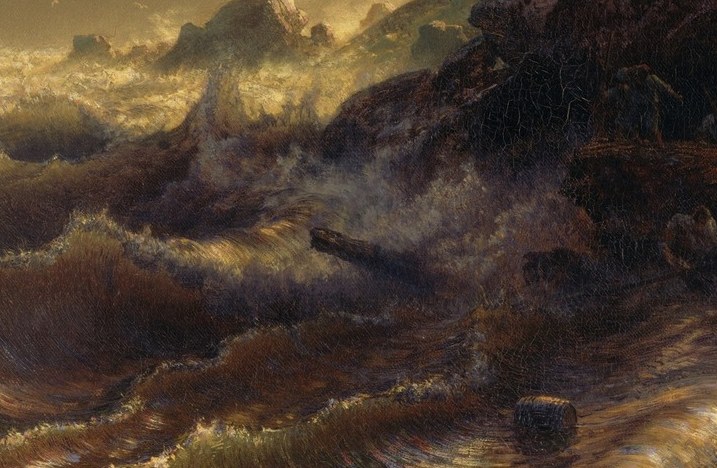
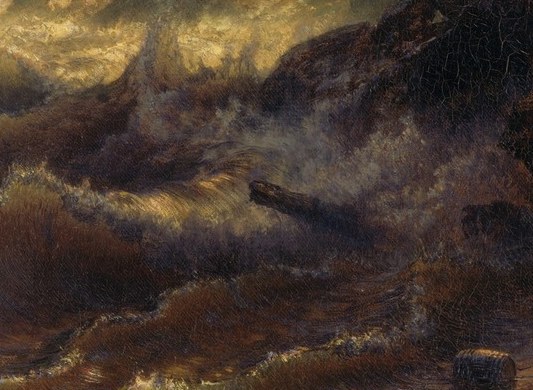
The lone boat in the foreground is barely a stroke of paint. Step closer and you can just make out a couple of tiny figures aboard, still navigating the afterwash. Scale is the whole point. Achenbach dwarfs them with the massive rocky headland and lets the golden sunburst steal your attention.
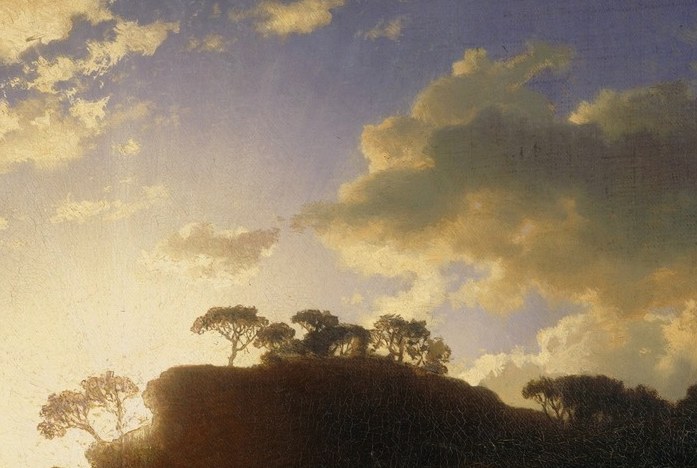
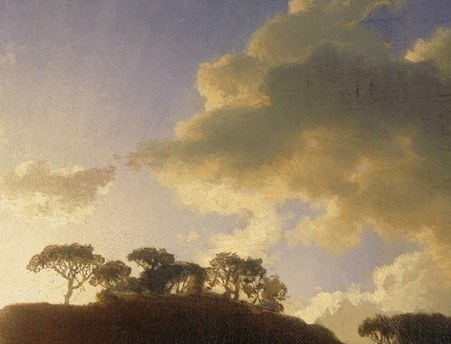
Then your eye reaches the cliff top. Among the wind-bent trees, a faint architectural shape resolves: a tower or chapel. It is easy to miss on a phone screen, but once you see it the emotion shifts. This is not pure wilderness. Someone built up there. The storm passed over human memory as well as human flesh.
Achenbach was a founder of the Düsseldorf School, a movement that treated landscape almost as a moral drama. He and his brother Oswald were so dominant the Germans called them the Alpha and Omega of landscape painting. This quiet hidden tower is a small signature of his method: nature is the big speech, but the small human mark is what makes it matter.
What detail did you spot first, the boat, or the building?
Details
Transcript
A storm has just torn across the Sicilian coast. Andreas Achenbach, one of the founders of the Düsseldorf School, painted this in 1853. Look for the boat. It is tiny and alone. If you look very closely, a couple of figures sit inside. They are so small the cliff would crush them. Now move up. Past the dark rock. Past the wind-bent trees. There, on the summit: a faint structure. A tower, or a chapel. The whole scene suddenly has human memory in it.