元 方從義 雲山圖 卷|Cloudy Mountains by Fang Congyi
Fang Congyi's handscroll "Cloudy Mountains" (ca. 1360-70), held at the Metropolitan Museum of Art, is not a portrait of a place. It is a memory of stone and weather, painted in ink and light color on paper by a man the Yuan dynasty had no use for.
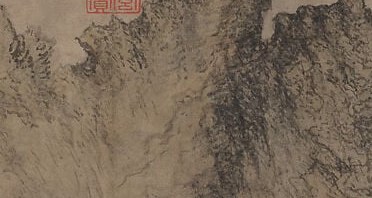
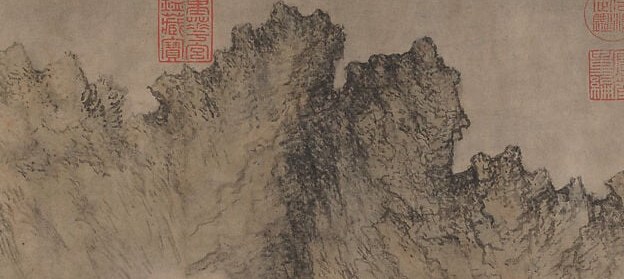
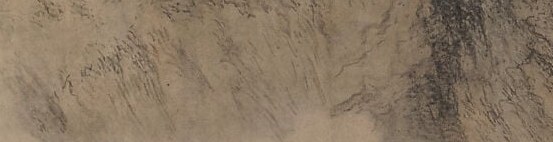
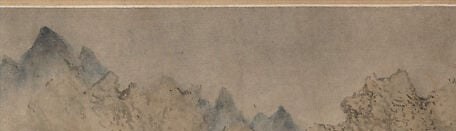
Fang was a Daoist priest who painted landscapes from his imagination, not from life. This scroll begins in absolute emptiness: bare paper serving as sky and mist. The mountains that emerge are jagged, almost gothic, built with rapid strokes of a nearly dry brush. The technique is called "flying white", you can see it most clearly on the central rock face, where the ink skips across the paper fibers, mimicking the grain of rain-slicked stone.
The scroll's real trick is the transition. Wet ink washes at the peaks' base bleed into nothing, so the mountain dissolves into cloud without a single outline. Where solid ends and air begins is left deliberately illegible, the philosophical center of the whole image.
Fang painted this in the last years of Mongol rule, at a moment when many Chinese artists retreated into private vision. His mountains don't argue with the world. They dissolve it.
Details

Transcript
It starts with nothing. Just untouched paper. Then, mist. Also paper. What reads as fog is simply the paper left bare. Look at the rock. The brush was nearly dry. The ink skips, catching the paper fibers like rain-slicked stone. This was painted from memory around 1365. No outline. The mountain fades straight into air.