Church Street El by Charles Sheeler
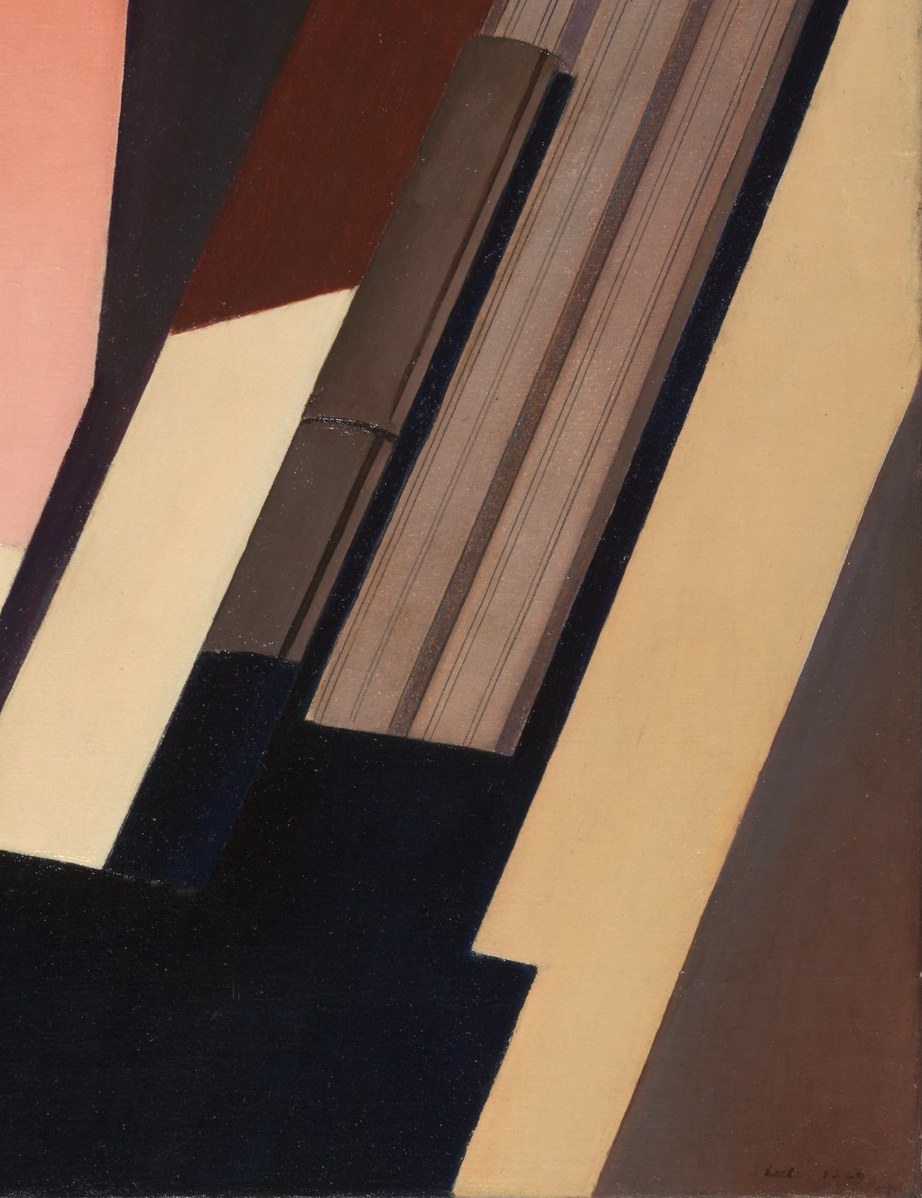
Charles Sheeler's *Church Street El* (1920) is a prime example of Precisionism, an early 20th-century American art movement that celebrated the clean lines and industrial forms of modern life. This oil painting, now at a notable institution, reduces an urban elevated train station to a series of geometric blocks.
Look closely at how Sheeler strips away detail, focusing instead on the functional beauty of the architecture. The flat planes of red, black, beige, and white interlock, creating a composition that feels both dynamic and highly organized. Elements like the elevated train tracks and building facades are rendered with precise, hard edges, emphasizing their structural essence.
Created during a period of rapid urbanization, *Church Street El* reflects Sheeler's fascination with translating industrial subjects into sharply defined compositions. He was a key figure in introducing modernist ideas to American art, finding artistic merit in the very structures that shaped the burgeoning urban environment.
Sheeler's work invites us to see the familiar city landscape with new eyes, appreciating the abstract beauty within its functional forms. What hidden geometry do you see in your own surroundings?
Details



Transcript
In 1920, this painter captured a new kind of beauty. He found it in the stark, clean lines of urban industry. Every element here is stripped down to its basic shape. This style, Precisionism, celebrated the machine age. It shows functional structures as art, like a diagram. Even a simple wall becomes a study in light and form.