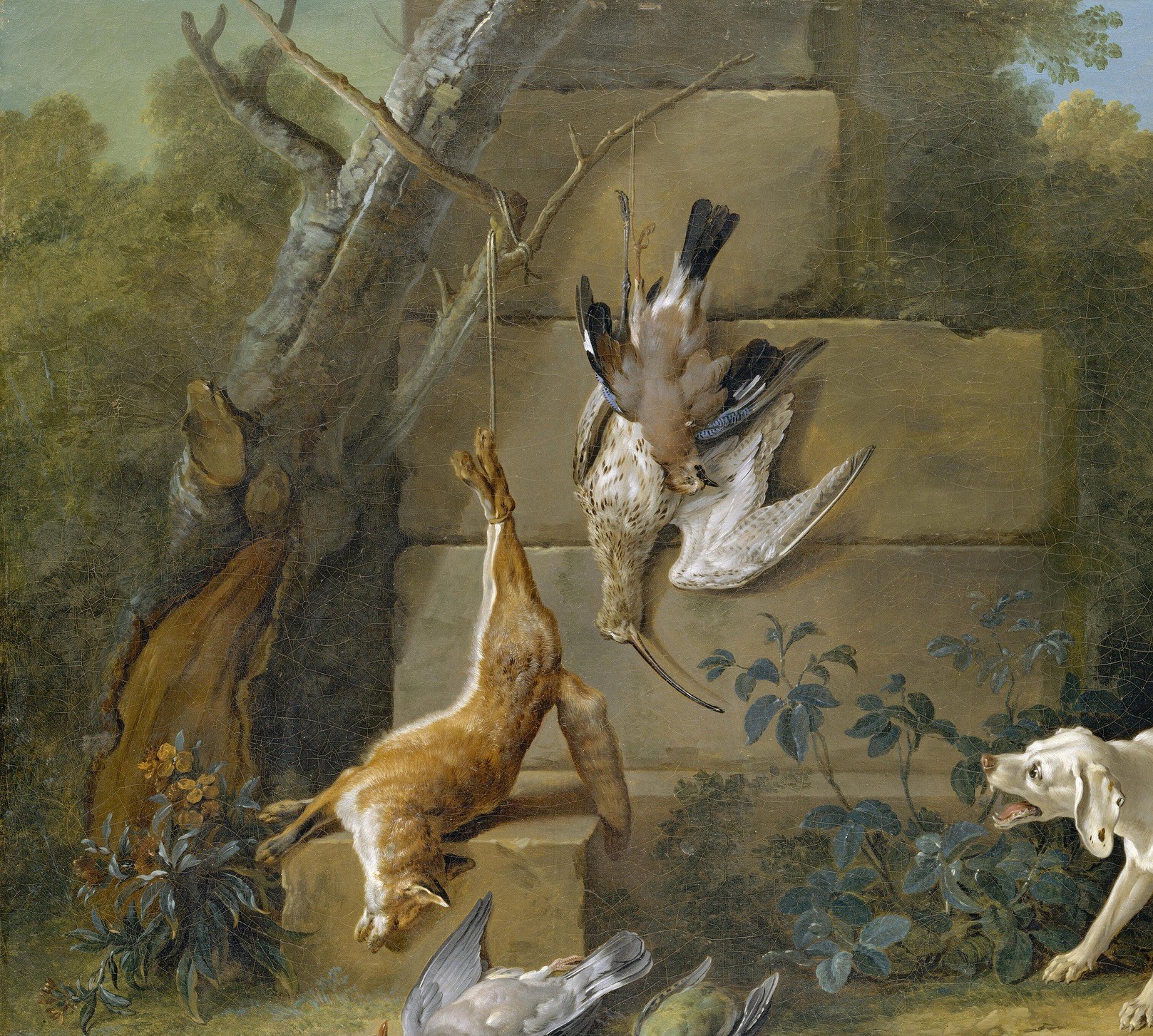
Dog Guarding Dead Game by Jean-Baptiste Oudry
Dog Guarding Dead Game, painted in 1753, is a late work by Jean-Baptiste Oudry, the official painter of Louis XV's royal hunts. It hangs in the Metropolitan Museum of Art.
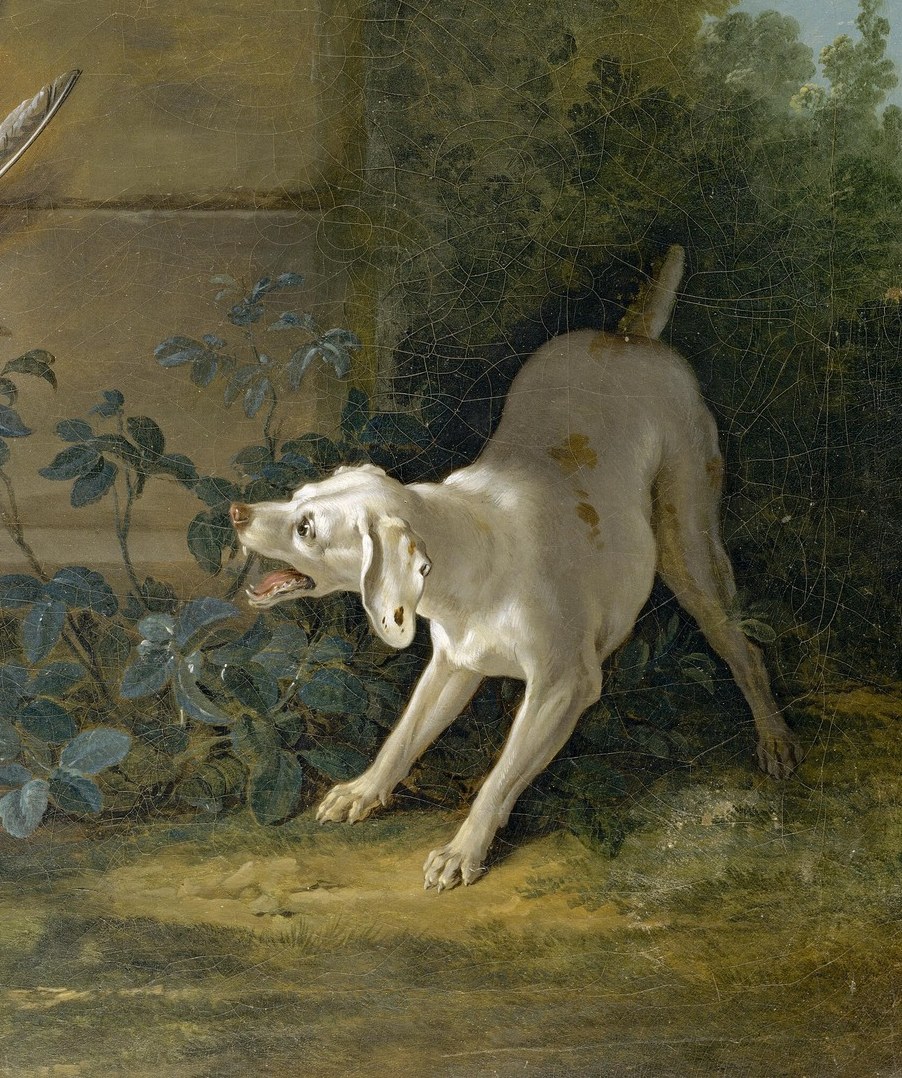
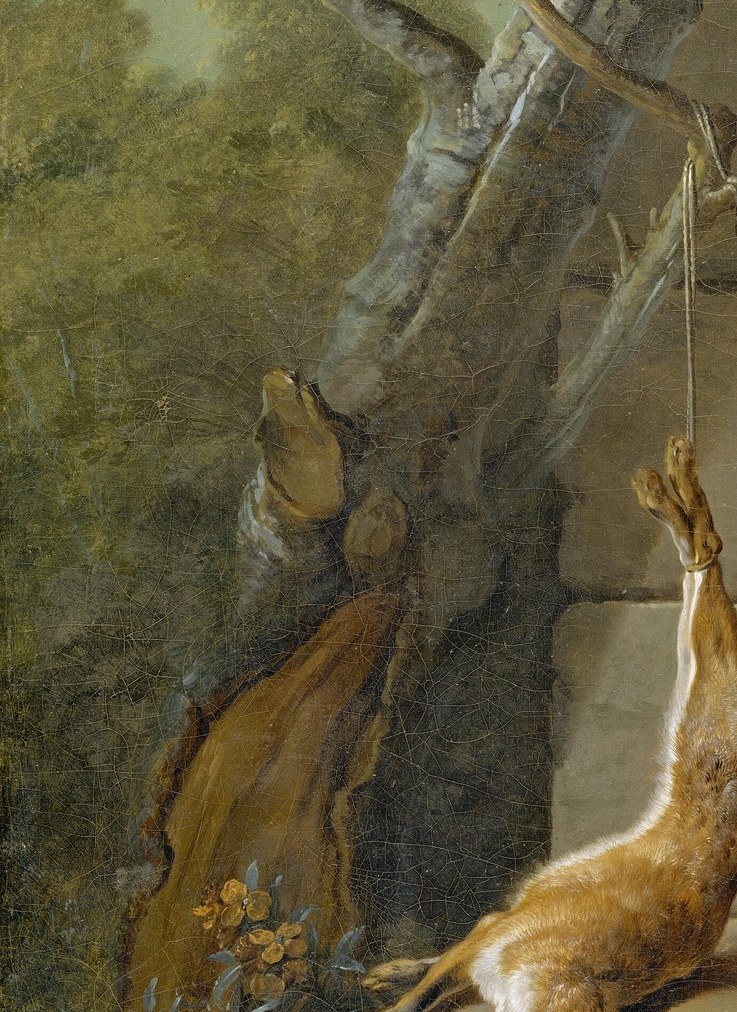
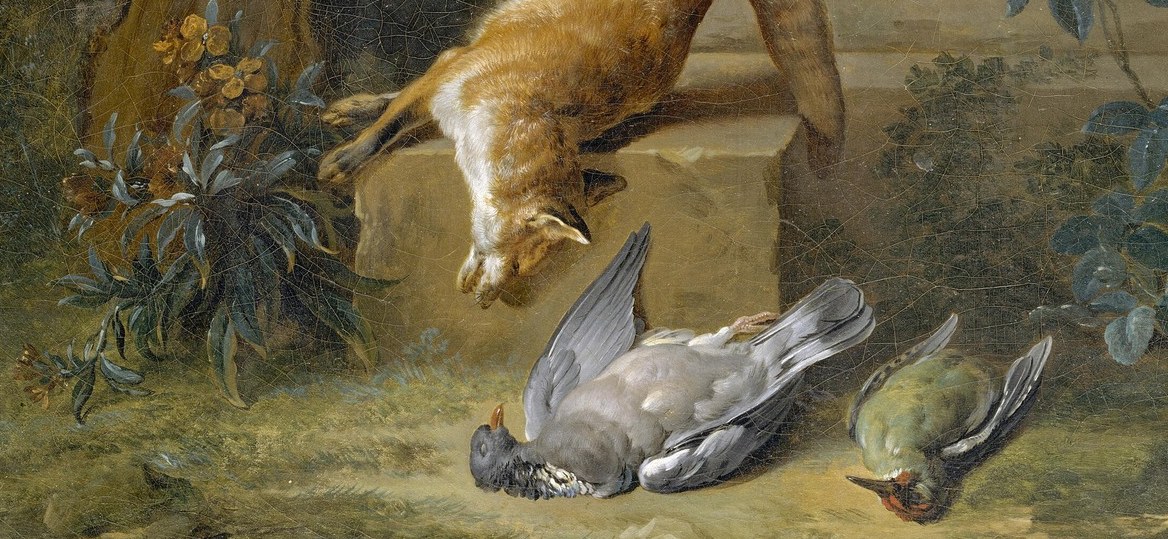
Look first at the white spaniel. Its face carries neither hunger nor ferocity. The eyes are liquid, the ears soft, the mouth just parted. Then look at what it guards: dead game birds on the forest floor, a fox suspended by its hind legs behind. The dog is the only living thing in the picture, and it is not celebrating.
Oudry was the great animal painter of the French Rococo, known for his near-scientific naturalism. He built this scene from the ground up: rough stone wall, gnarled tree bark, each feather body articulated down to the individual covert and primary. But the technical showcase is in service of something stranger. A hunting scene, and the hunter is absent. Only the dog remains, standing watch over the dead.
The painting is a vanitas without a skull. Loyalty outlasts the hunt, outlasts the hunter, and holds its post anyway.
Details
Transcript
A spaniel stands guard in the forest. Its face is alert, soft, and solemn. The hunt is over. The hunter is gone. All that remains is the dog, and what it protects. Oudry was the official painter of Louis XV's hunts. He painted this in 1753, two years before he died. It is not the hunter he chose to mark the scene. It is loyalty, still watching after the kill.