Hampton Court Green by Pissarro, Camille
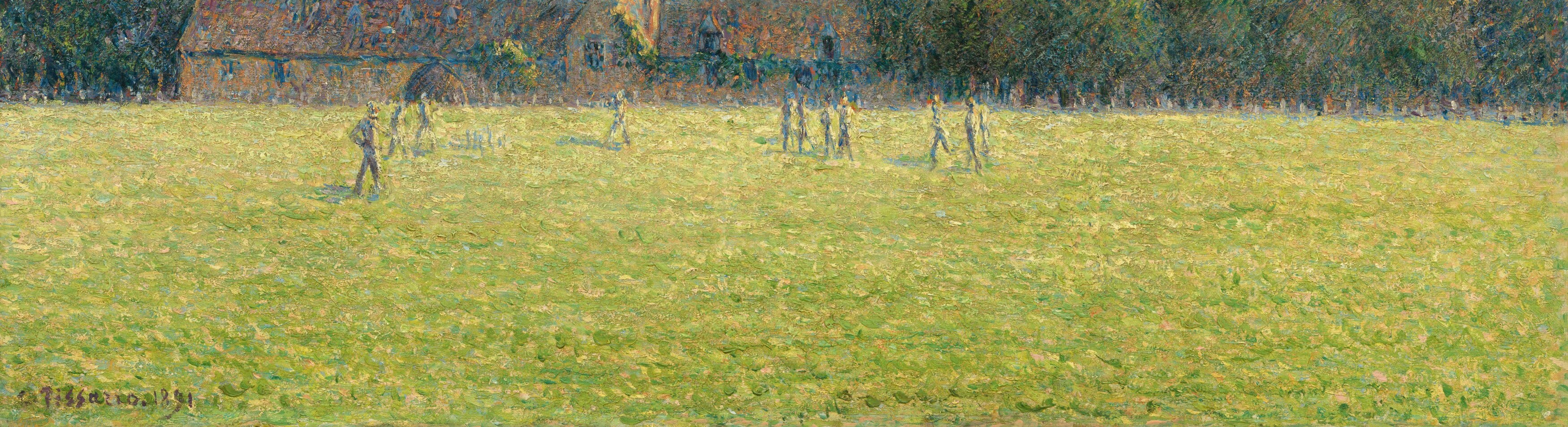
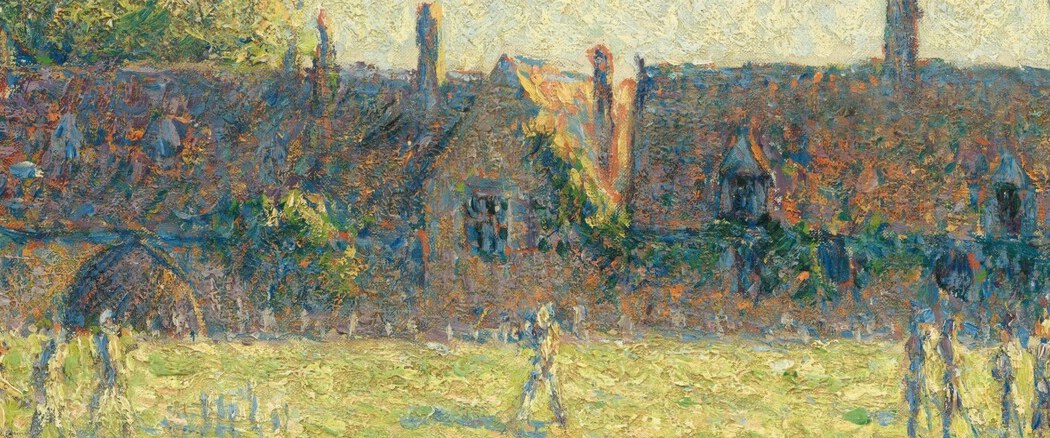
Camille Pissarro, a titan of Impressionism, experimented with the Neo-Impressionist technique of Pointillism in his 1891 painting, "Hampton Court Green." While the overall scene radiates the familiar tranquility of his landscapes, a closer look reveals his innovative brushwork.
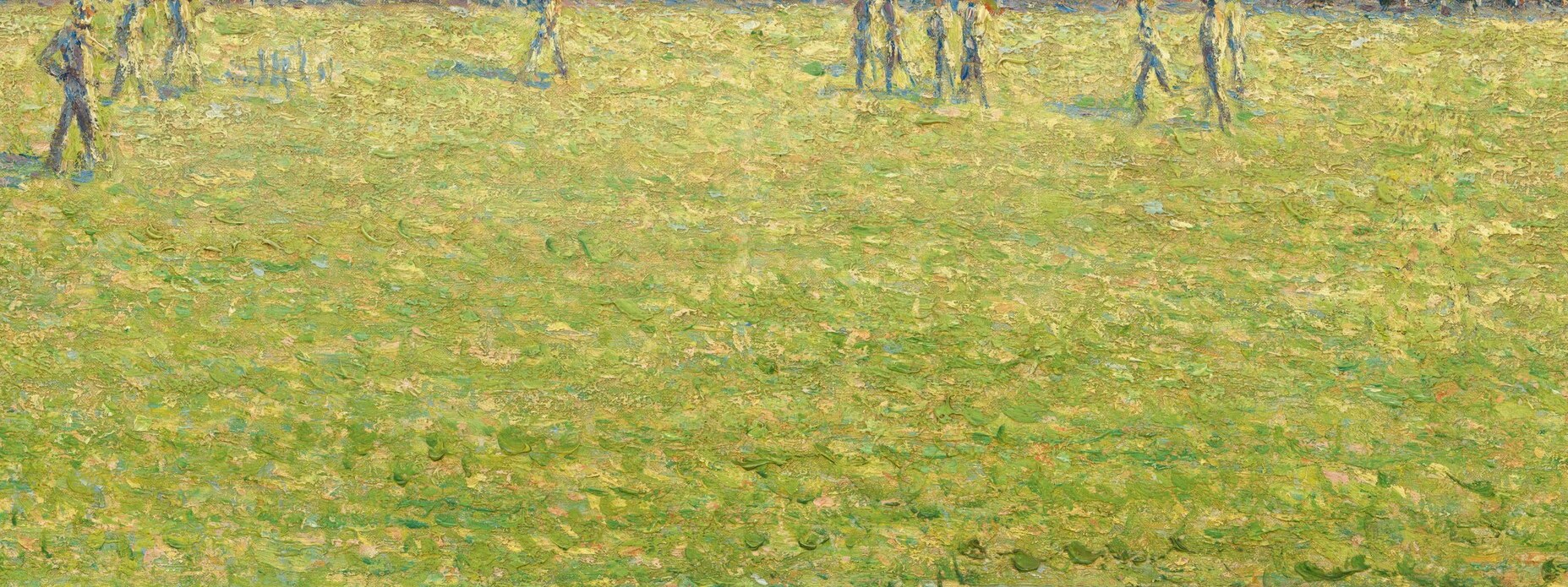
Observe the foreground lawn where the sun plays across the grass. Pissarro uses tiny, distinct strokes of pure color, greens, yellows, and even lavenders, that, when viewed from a distance, blend optically to create a vibrant, shimmering surface. This careful application of color, also known as Divisionism, aimed to capture the subtle nuances of light and atmosphere with greater scientific precision.
Pissarro painted this scene near his residence, drawing inspiration from the everyday beauty of Hampton Court. Although he later returned to a more Impressionistic style, "Hampton Court Green" stands as a fascinating document of his continuous exploration and adaptation of new artistic theories.
What details do you notice first in Pissarro's brushwork?
Details

Transcript
This painter was an Impressionist pioneer. But in 1891, he was trying something new. Look closely at the sunlit grass in front. He is painting with tiny dots and dashes of pure color. This Neo-Impressionist method makes light vibrate. He painted several scenes here, at Hampton Court. The technique was called 'Pointillism' or 'Divisionism'. His signature is hidden here, in the lower left.