Portrait of a Man with a Moor's Head on His Signet Ring by Conrad Faber von Kreuznach
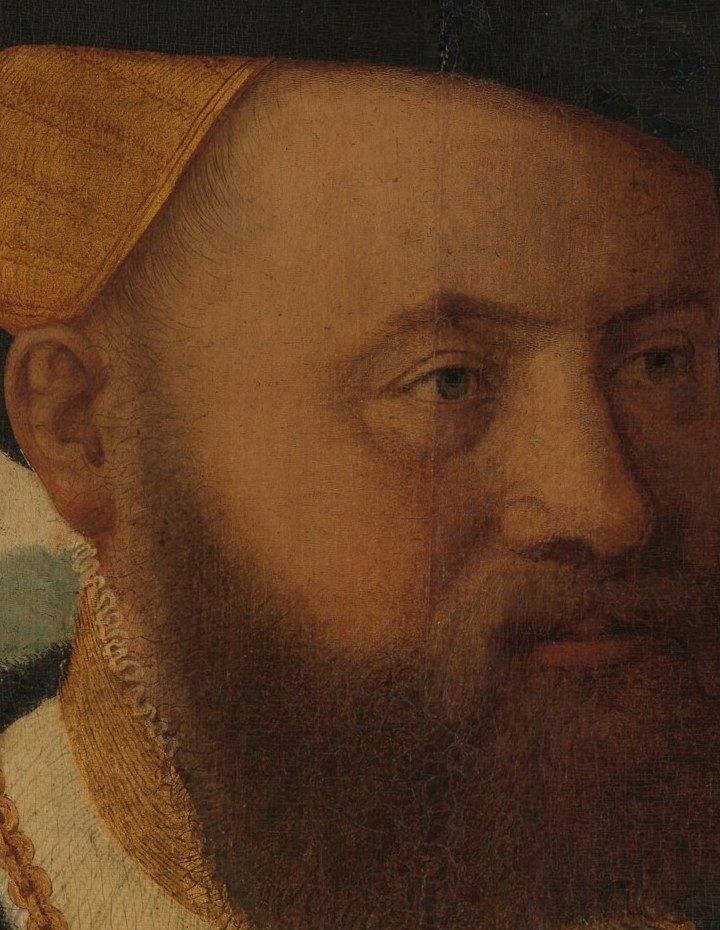
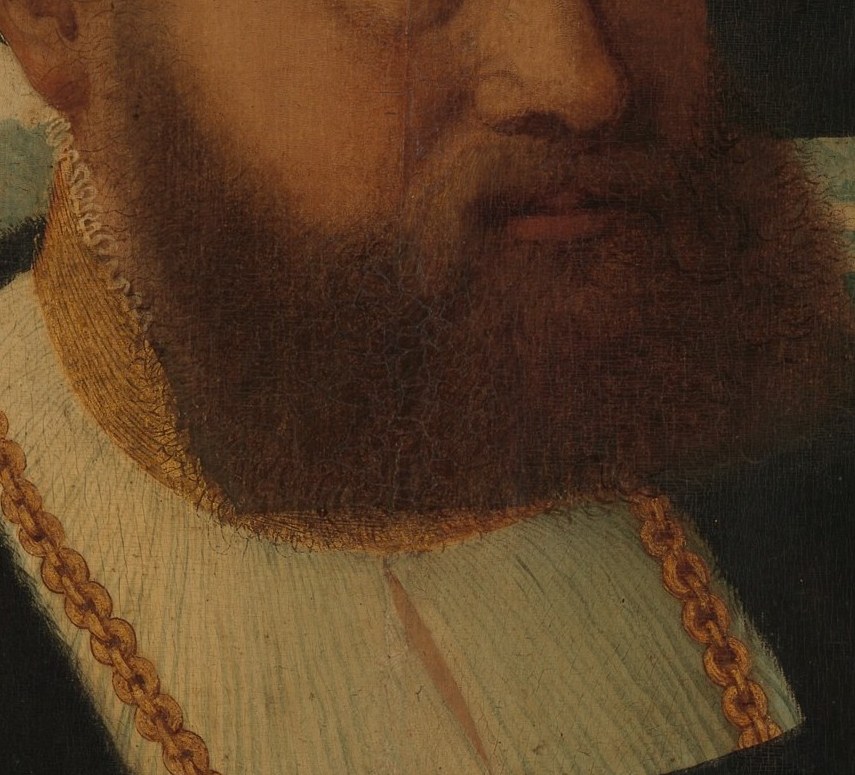
In Conrad Faber von Kreuznach's 1538 "Portrait of a Man with a Moor's Head on His Signet Ring," held at The Metropolitan Museum of Art, a seemingly small detail reveals much about the sitter's status and identity. The German artist's meticulous oil painting brings this unidentified man to life with striking realism.
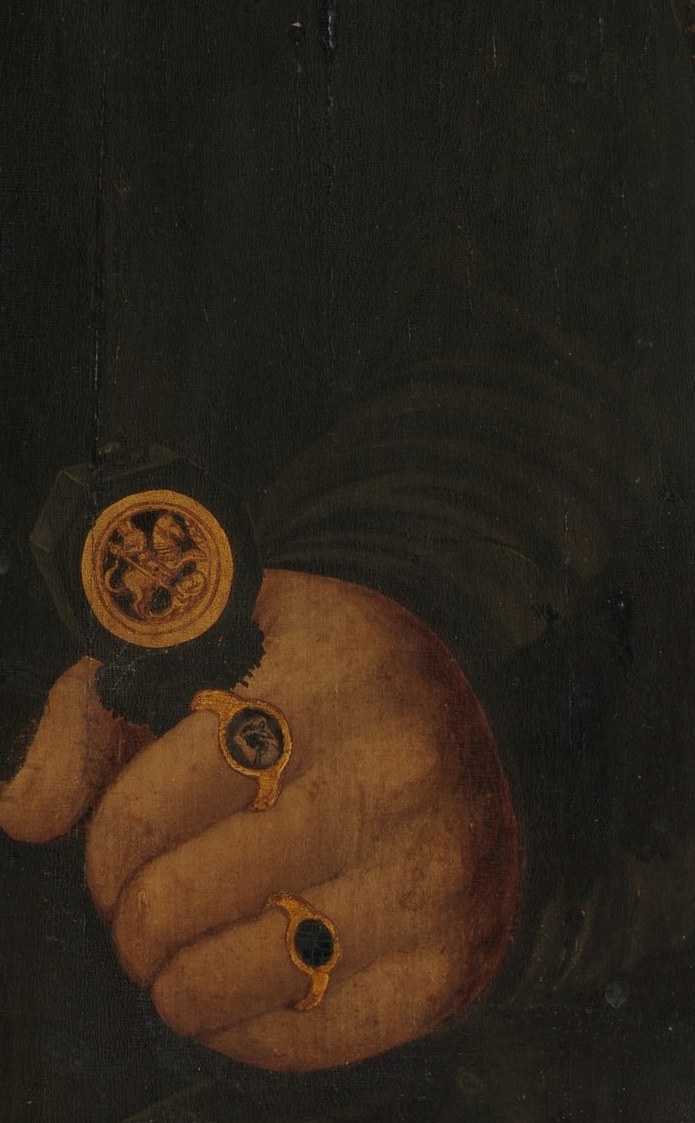
Look closely at the man's right hand. While his dark robe and prominent gold chain suggest wealth, it's the signet ring that truly stands out. It bears the carved image of a figure known as a 'Moor's head,' an emblem that served as a personal identifier or family symbol during the Northern Renaissance.
Faber von Kreuznach, active in the mid-16th century, was known for his detailed portraiture. Though the sitter's name is lost to time, his deliberate display of this ring ensures his distinct status is still conveyed almost 500 years later.
What other subtle symbols do you think held great meaning in historical portraits?
Details
Transcript
This man from 1538 hides his name, but not his status. Conrad Faber von Kreuznach painted this in Germany. His meticulous detail captures every hair in the beard. But the real story is on his right hand. He wears two rings, a sign of wealth. This signet ring shows a Moor's head, an important symbol. It was likely his personal identifier or family emblem. A small detail, telling a big story about his identity.