The Relief of Constance by Vincenzo Carducci
Vincenzo Carducci's "The Relief of Constance," painted in 1634, is a powerful early Baroque history painting housed at the Museo del Prado.
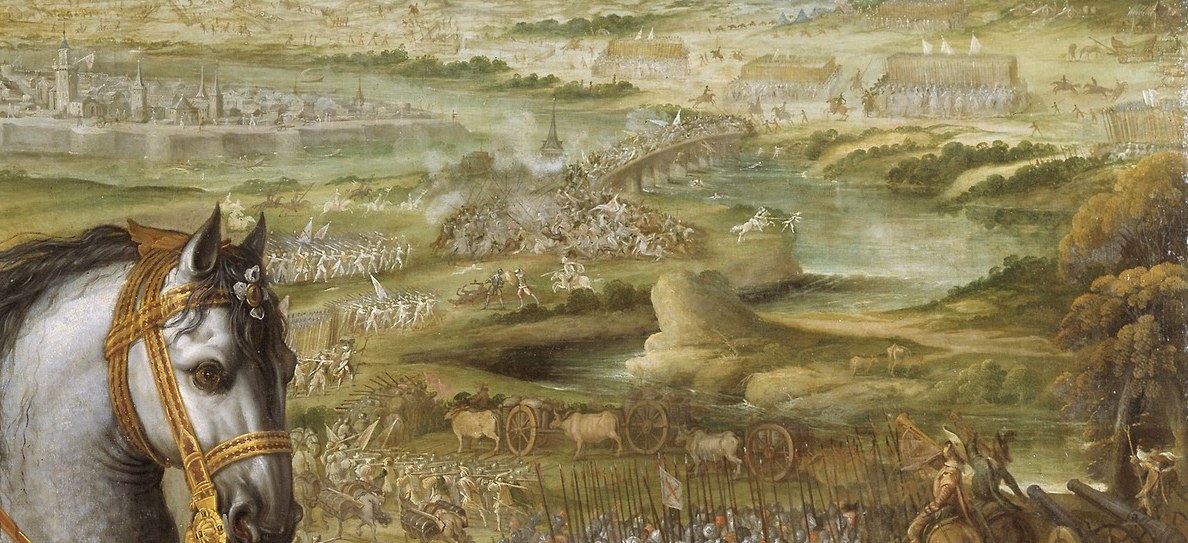
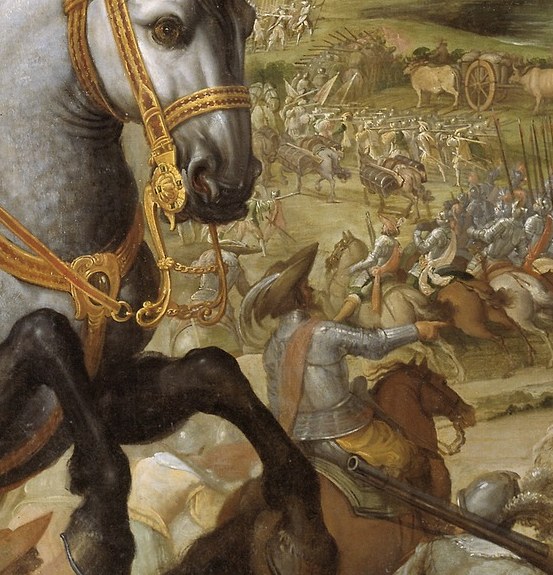
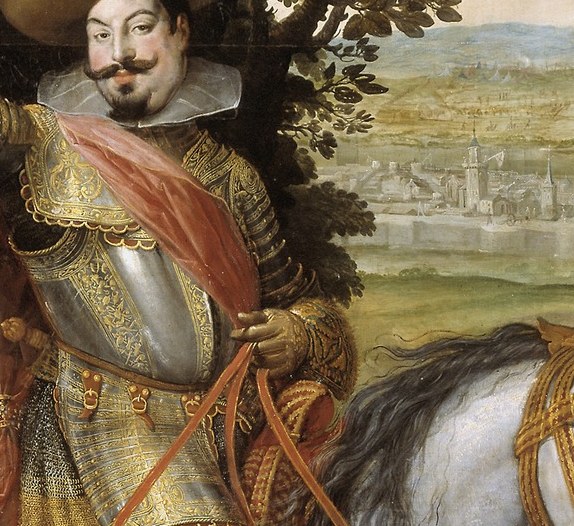
This artwork centers on the figure of the Duke of Feria, prominently positioned and clad in elaborate armor. The young boy in yellow gestures towards the distant, chaotic battlefield, effectively guiding the viewer's eye to the unfolding historical narrative.
Carducci, an Italian artist who established his career in Spain, masterfully uses chiaroscuro, a dramatic play of light and shadow, to emphasize the Duke's command and presence. This technique highlights the central figure against the darker, more subdued backdrop of war, reflecting the intense cultural exchange between Italy and Spain during the Baroque period.
The painting serves as a window into 17th-century military leadership and artistic expression. What details do you notice first?
Details
Transcript
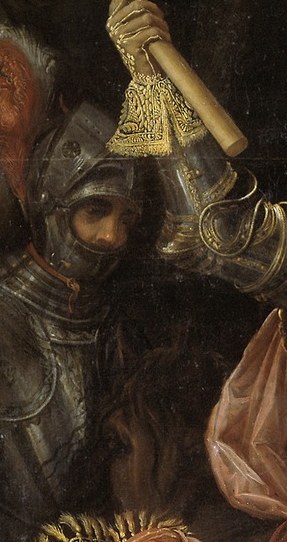
This painting tells a specific story from history. It shows a general, the Duke of Feria, leading his troops. His commander's baton signifies his authority and leadership. The battle rages in the background, a chaotic, distant conflict. The boy points to the action, drawing your eye to the story. Carducci used light to highlight the Duke amidst the darkness of war.