El pintor carlista y su familia by Valeriano Bécquer
Valeriano Bécquer's 1869 oil painting, *El pintor carlista y su familia* (The Carlist Painter and his Family), held at the Museo del Prado, subtly blends a family portrait with a political statement.
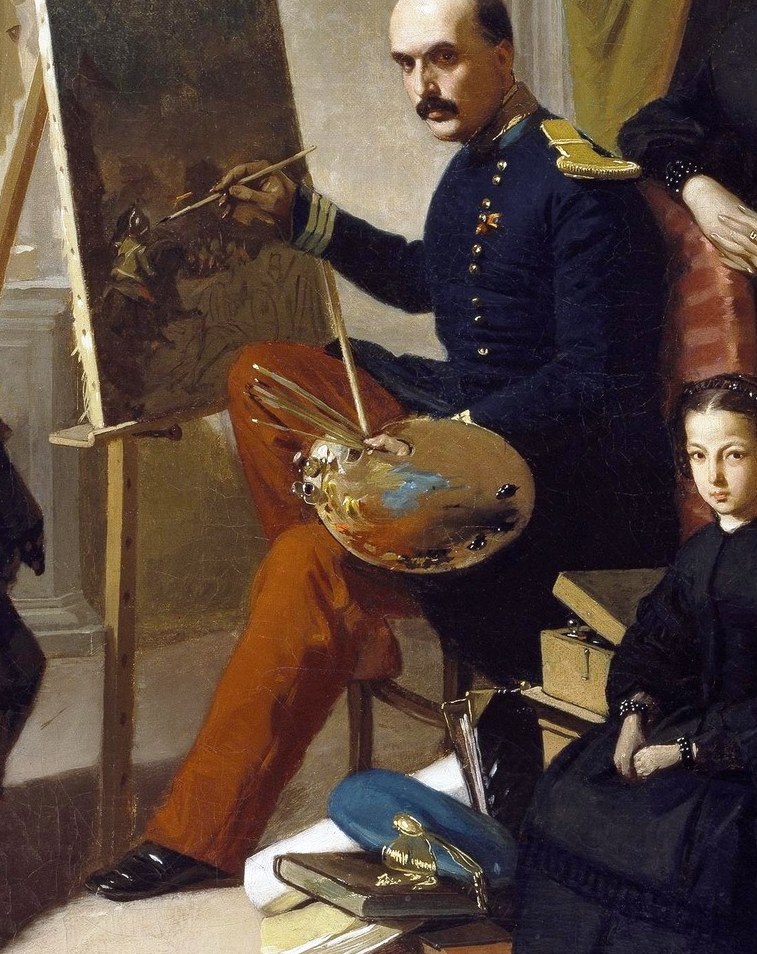
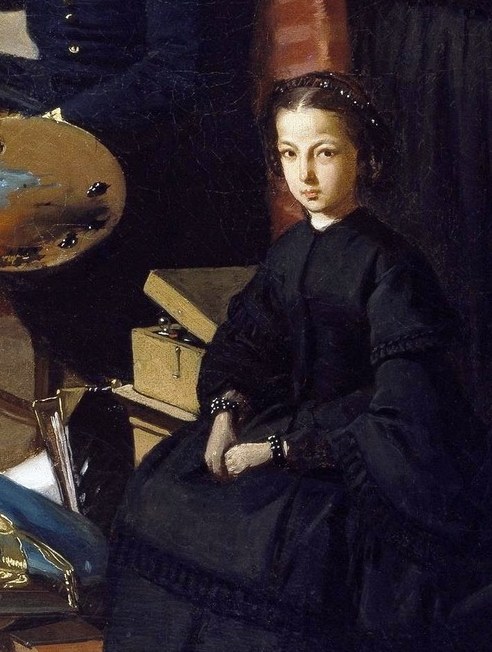
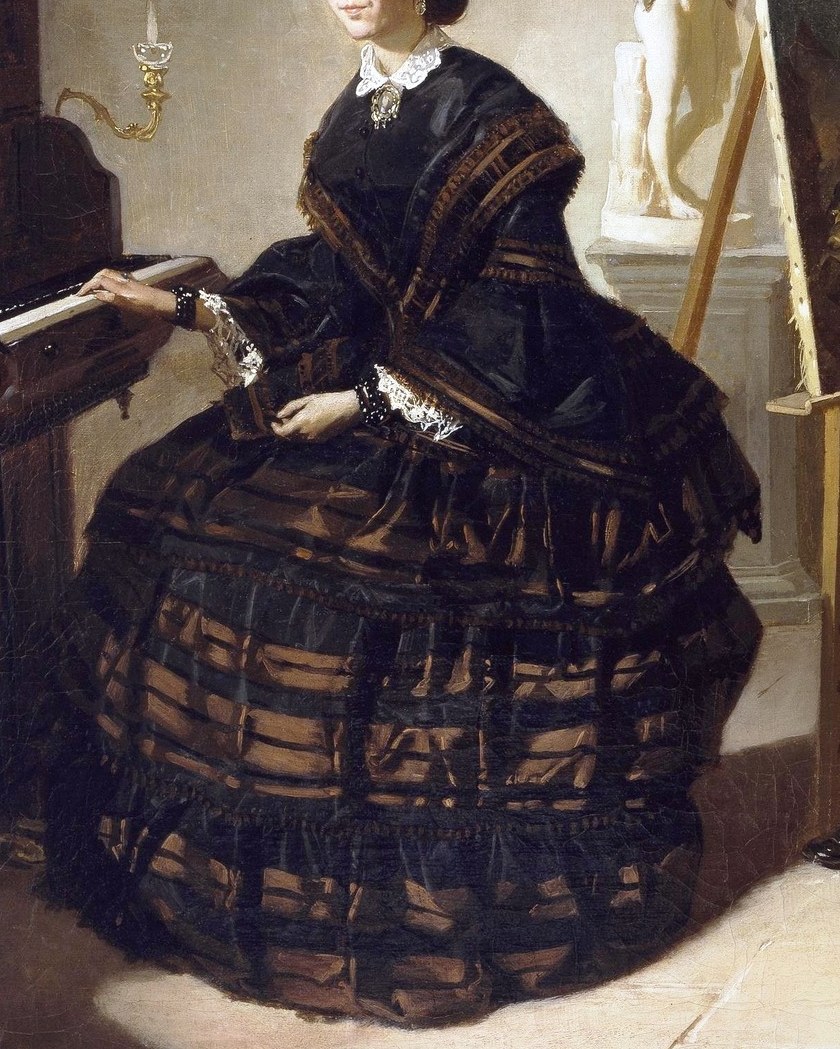
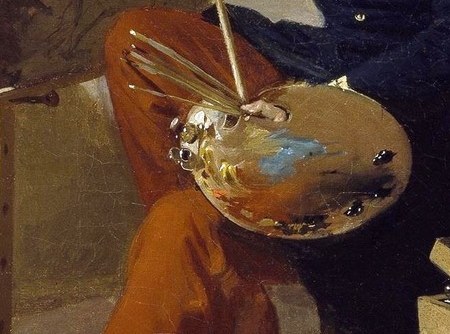
Look closely at the figures and the setting. The painting presents an intimate interior scene, capturing moments of artistic and domestic life, typical of the Costumbrismo style Bécquer often employed. A woman plays the piano, a girl holds a palette, and the painter himself works at an easel.
However, the title reveals a deeper context. The Carlist movement was a royalist political faction involved in several Spanish civil wars. The military uniform worn by the painter in the portrait directly links him, and by extension the family, to this significant political current of 19th-century Spain.
This work serves as a fascinating example of how personal narratives and broader historical events can intertwine within a single canvas. What details do you notice that speak to both aspects?
Details
Transcript
This family portrait from 1869 holds a secret. The artist, Valeriano Bécquer, was known for realism. The painting shows a domestic scene, full of artistic pursuits. But the title hints at something deeper: "The Carlist Painter." The Carlist movement was a royalist faction in Spanish civil wars. This military uniform links the figure to that political struggle. A family portrait, a political statement, hidden in plain sight.