The Worship of Venus by Titian
Titian's "The Worship of Venus," painted around 1518 and now housed in the Museo del Prado in Madrid, depicts an ancient Roman ritual. Every year on April 1st, women would make offerings to Venus, believing it would purify their bodies.
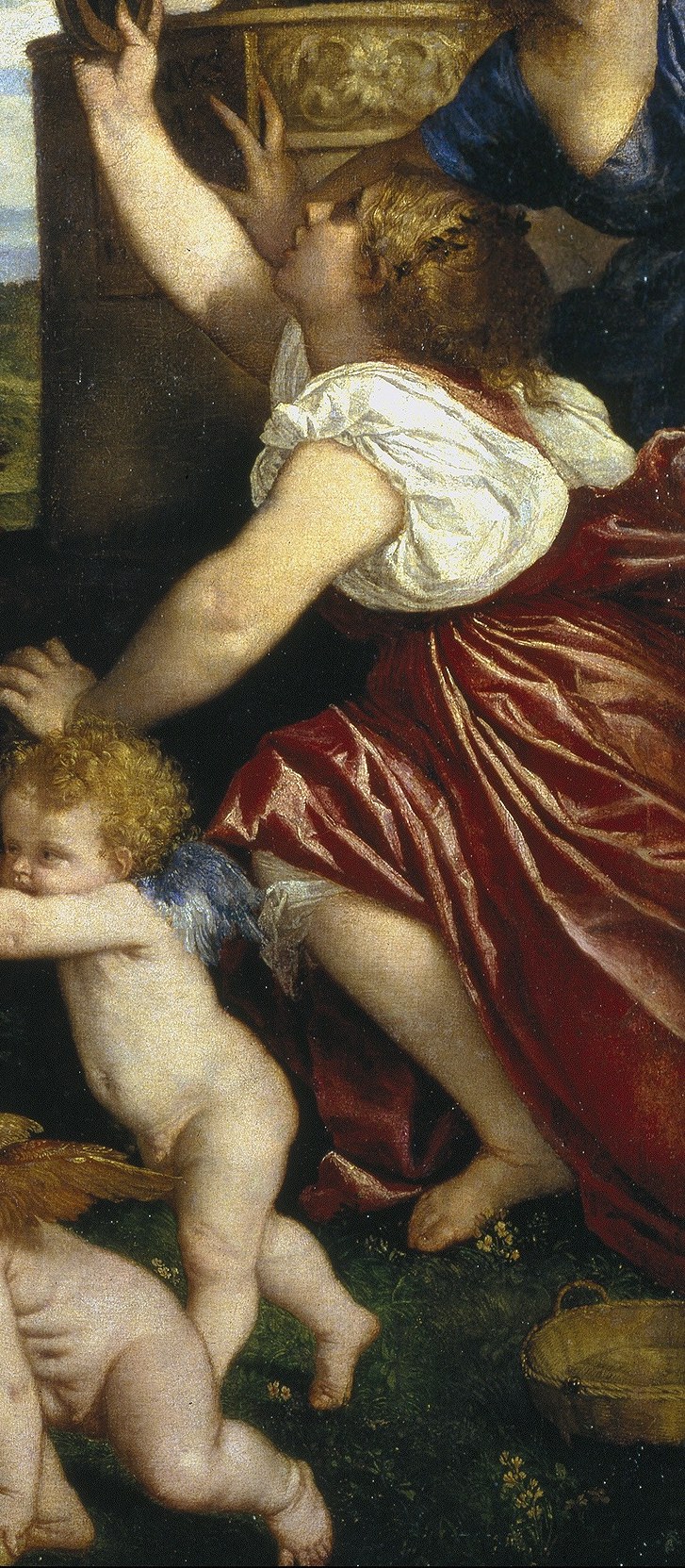
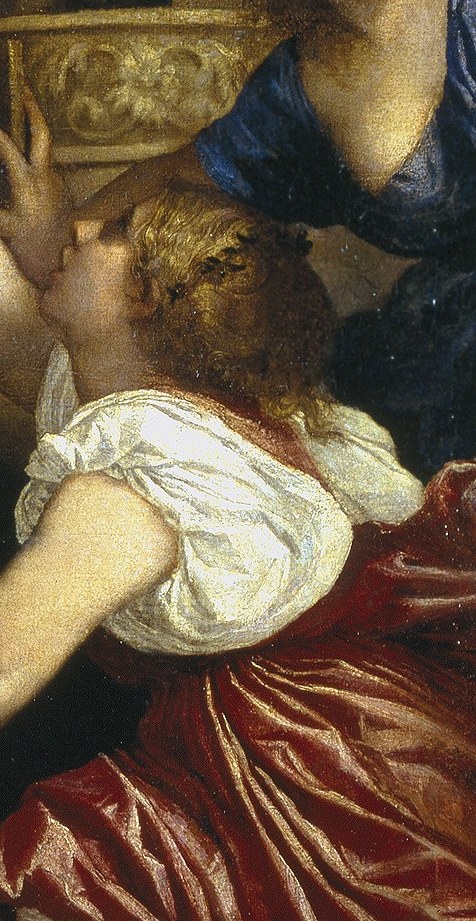
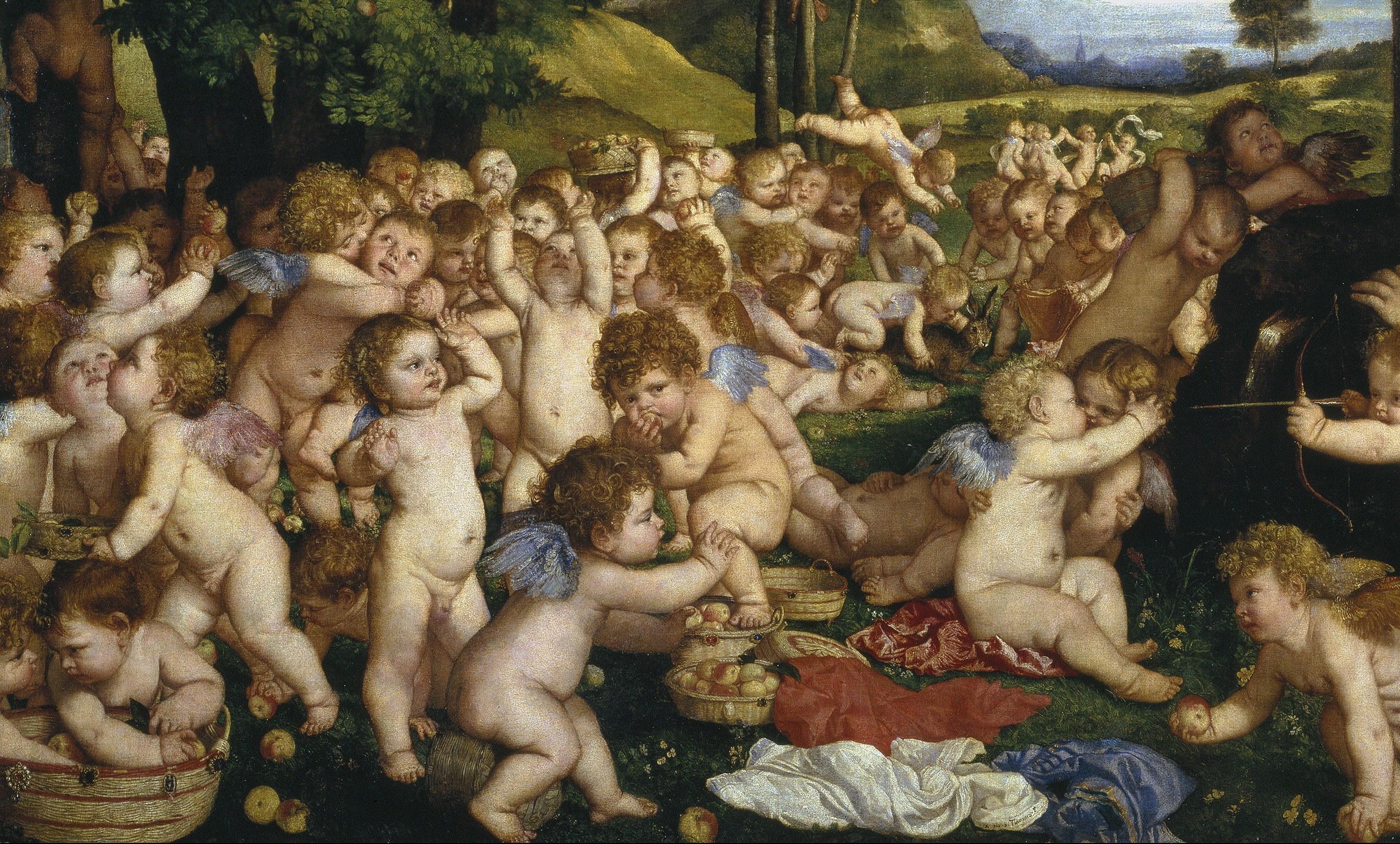
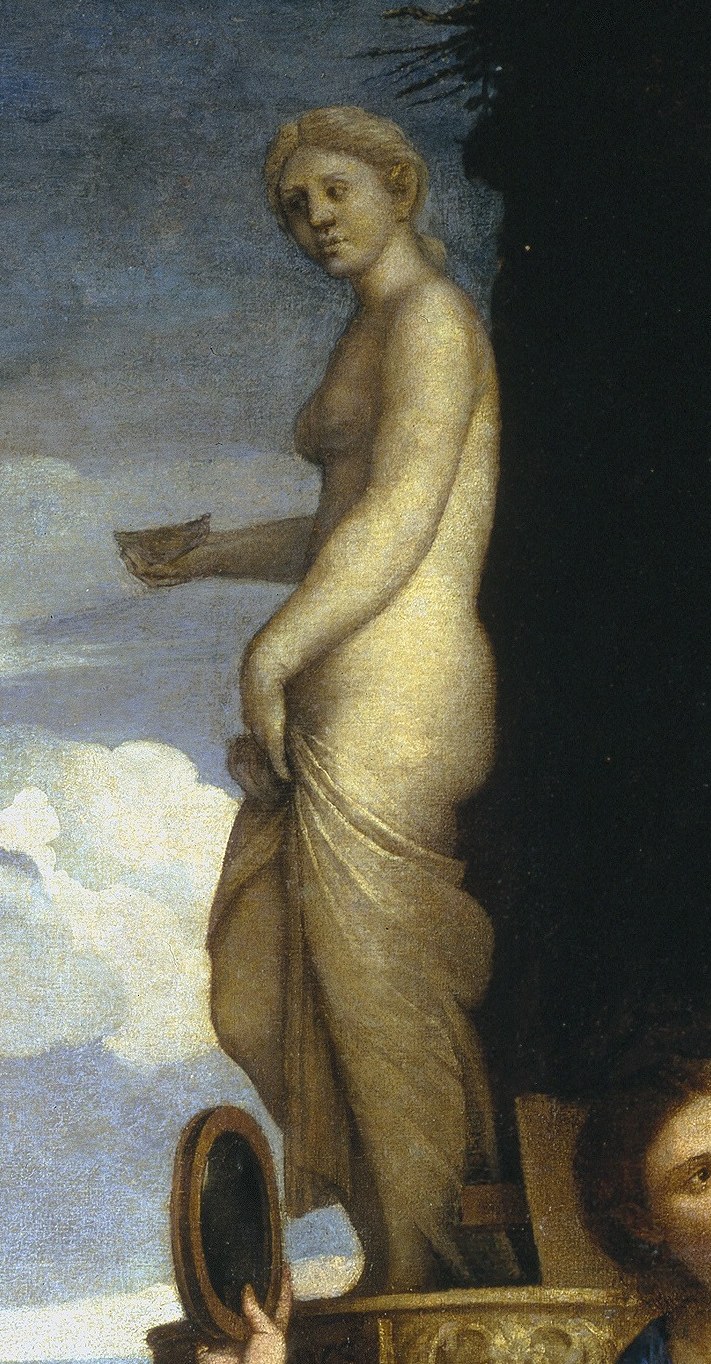
Observe the lively scene: cherubs play with abandon while figures engage in the festive ritual. A woman in a vivid red dress, possibly admiring her reflection, symbolizes beauty, while another in blue intensely observes the proceedings. Look closely at the tree on the right; a single red apple serves as a classical symbol of love and fertility.
This work reflects the Renaissance's fascination with classical mythology, blending it with contemporary interests in beauty and virtue. Titian, one of the most celebrated Venetian painters, used vibrant colors and fluid brushwork to bring this mythological scene to life, influencing generations of artists.
What other hidden symbols do you notice in this celebration of love and beauty?
Details
Transcript
This painting shows a Roman ritual for the goddess Venus. Every April 1st, women made offerings to cleanse themselves. A woman in blue watches intensely, deeply involved. Look closer, up in the tree on the right. A single red apple, a symbol of love and fertility. The painter was Titian, known for his masterful use of color.