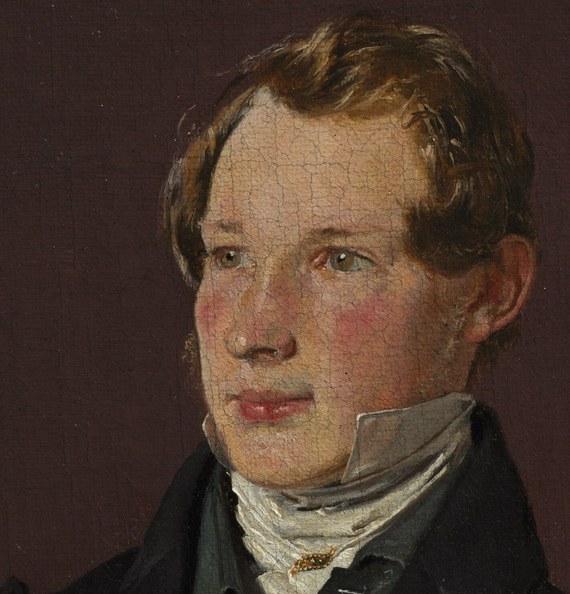
Dr. Johann Henning Kjetil Hjardemaal by Christen Købke
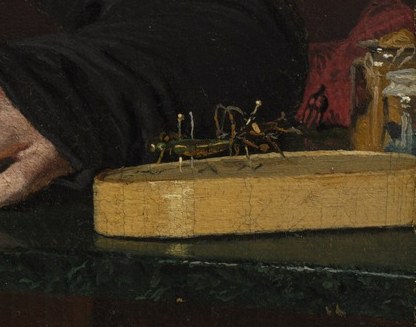
Christen Købke's 1833 portrait, "Dr. Johann Henning Kjetil Hjardemaal," at The Cleveland Museum of Art, captures a prominent Danish physician. Most people scroll past without noticing a crucial detail on his desk. This detail, a small electrical device, subtly reveals his profession and the scientific advancements of Denmark's Golden Age.
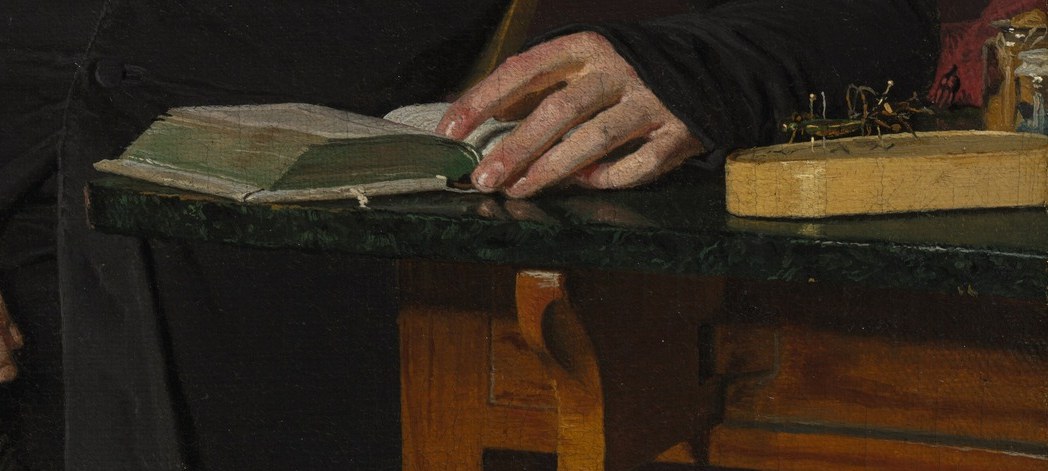
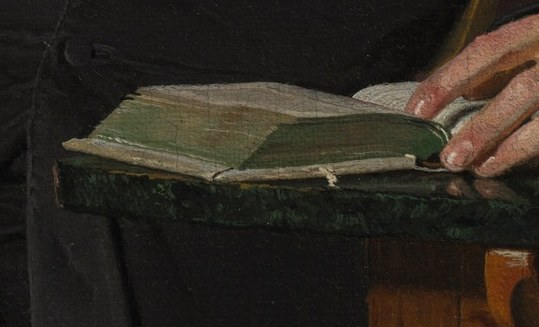
The painting shows Dr. Hjardemaal in quiet contemplation, his hand resting on an open book, suggesting deep study. The carefully rendered objects on his desk, particularly this intriguing device, ground him in the intellectual and medical context of his time.
Købke, one of the most celebrated artists of his era in Denmark, used refined brushwork and chiaroscuro to give the doctor a three-dimensional presence. The portrait offers a fascinating glimpse into 19th-century Danish society and the tools of a modern physician.
What other hidden details do you think might be significant?
Details
Transcript
This is Dr. Hjardemaal, painted in 1833 by Christen Købke. He was a Danish physician during the Golden Age of painting. His hands suggest quiet study and deep thought. Look closely at the objects on his desk. He keeps a small electrical device within reach. It hints at the cutting-edge medical tools of his era.