Madonna and Child with Two Angels by Vittore Crivelli
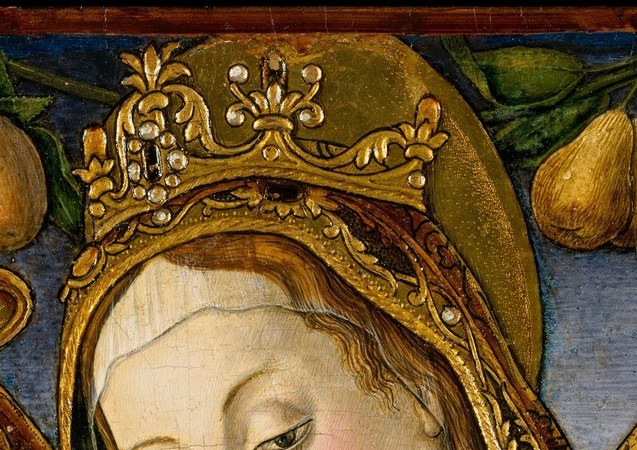
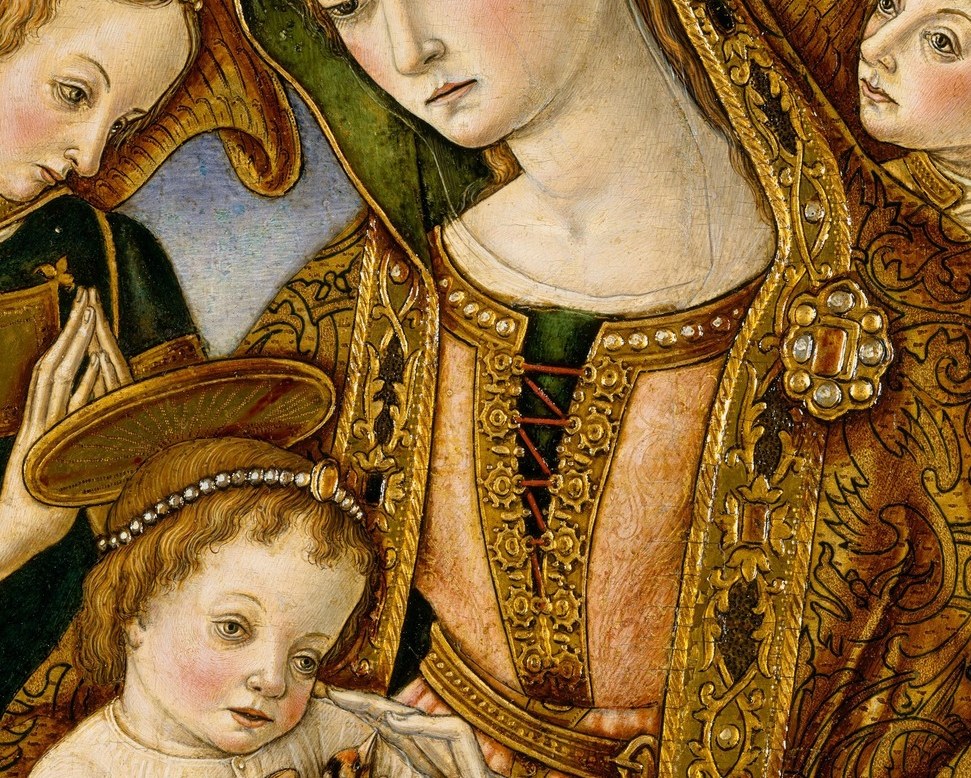
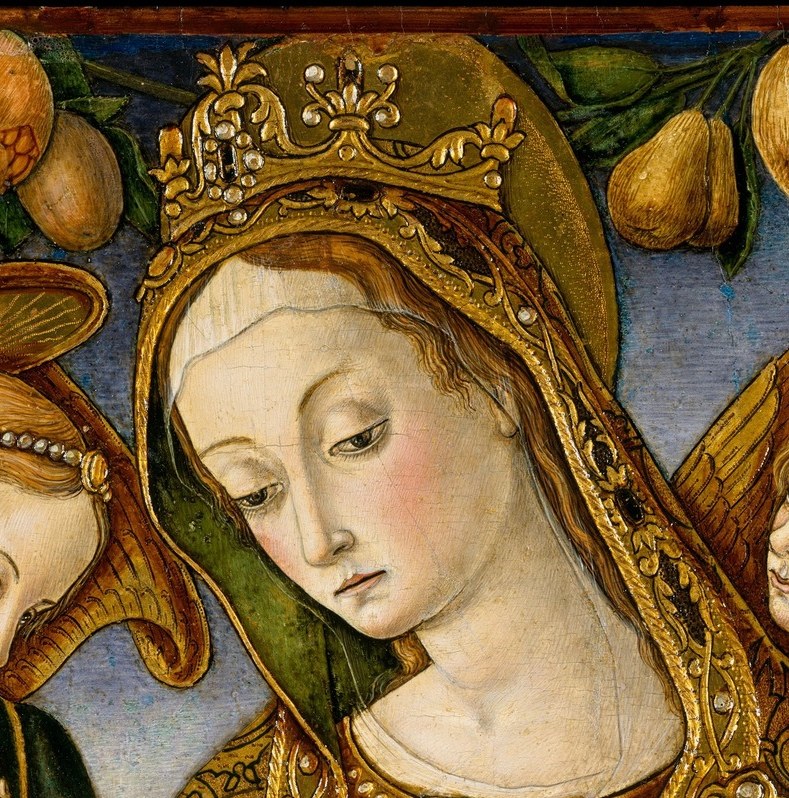
This is Vittore Crivelli's Madonna and Child with Two Angels, painted around 1481 and now in a private collection. The first thing you notice is the gold. The Virgin wears an embroidered robe studded with what looks like dozens of precious gems. The crown on her head is an architectural marvel of enamel and pearls. But none of it is real metalwork.
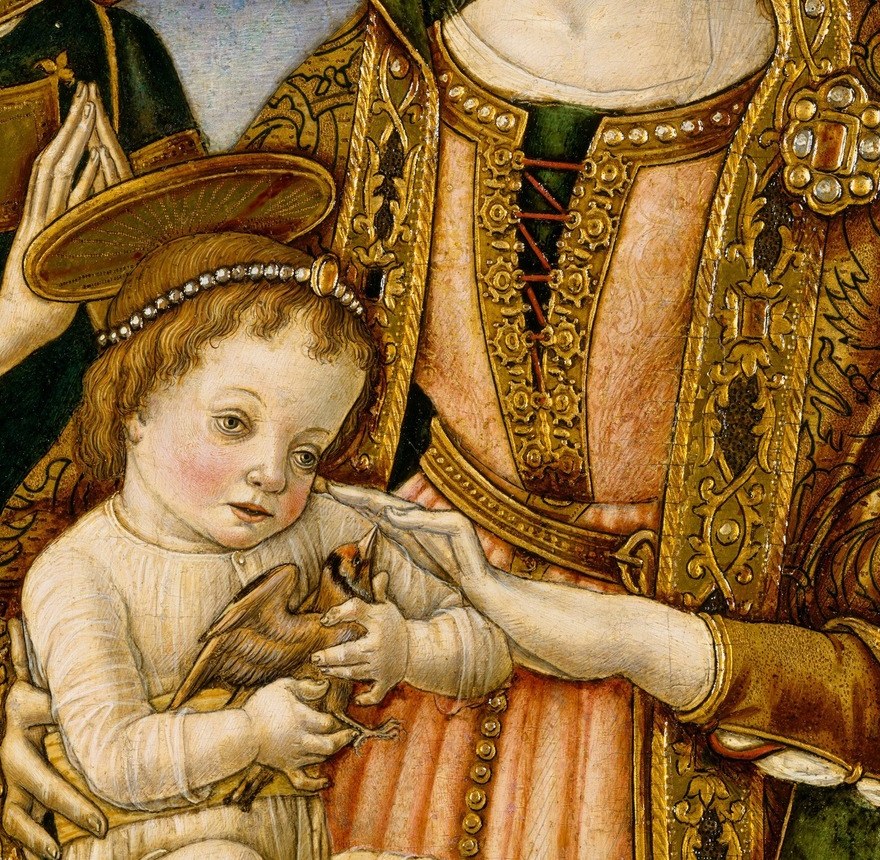
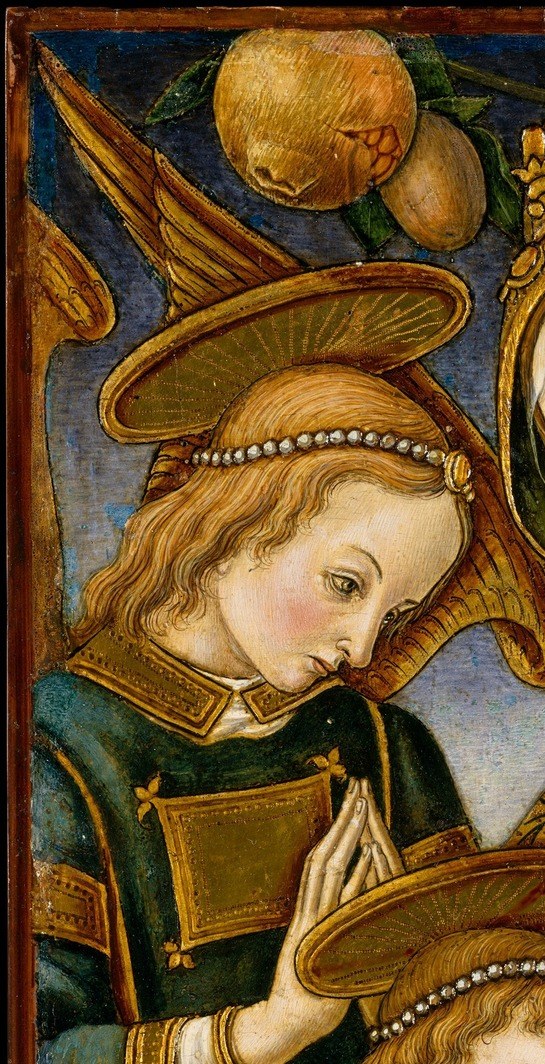
Look closely at any jewel on her robe. Each pearl is a tiny dot of white lead pigment, placed just so that it catches an imaginary light. The rubies are translucent red lake glaze laid over a gray modeled underlayer, the same optical trick that makes a car's paint look deep and wet. Crivelli was not decorating a panel; he was simulating three-dimensional luxury objects with nothing but a brush.
Vittore Crivelli worked in Venice and the Marche region, always in the shadow of his more famous brother Carlo. The two shared a workshop vocabulary of encrusted surfaces, dangling fruit, and solemn faces. Vittore's commissions came from provincial churches that wanted the splendor of a gold-ground altarpiece but at the scale of a private devotional panel. He delivered by making paint do the work that a goldsmith would otherwise charge for.
The painting's theological program runs on these material cues. The bird in the Christ child's hand foreshadows the Passion; the cherries on the stone ledge stand for paradise gained through sacrifice. But the first sermon here is visual: a queen so exalted she wears a fortune in gems, and an artist skilled enough to conjure that fortune from earth pigments and beaten gold.
Details
Transcript
She wears a heavy crown. Her robe glitters with dozens of jewels. Goldsmiths in the 1400s would charge a fortune for work like this. But this is not metalwork. It is paint and gold leaf. Each pearl is a dot of white pigment, timed to look like a convex reflection. The rubies are red lake over a modeled gray base. No stone, just optics. Crivelli earned his living making paint read as treasure.