Ball-Play Dance - Choctaw by Catlin, George
George Catlin, a lawyer turned painter, dedicated his career to documenting Native American life and culture. His “Ball-Play Dance - Choctaw,” painted between 1861 and 1869, captures a vibrant ceremonial sport now held in the National Gallery of Art, Washington, D.C.
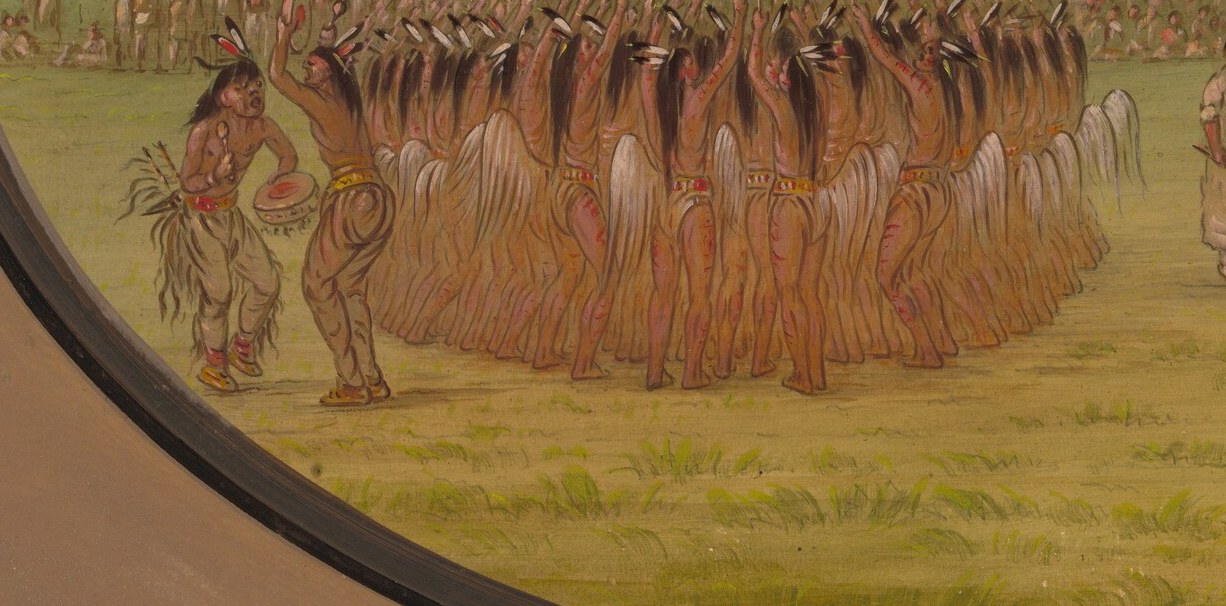
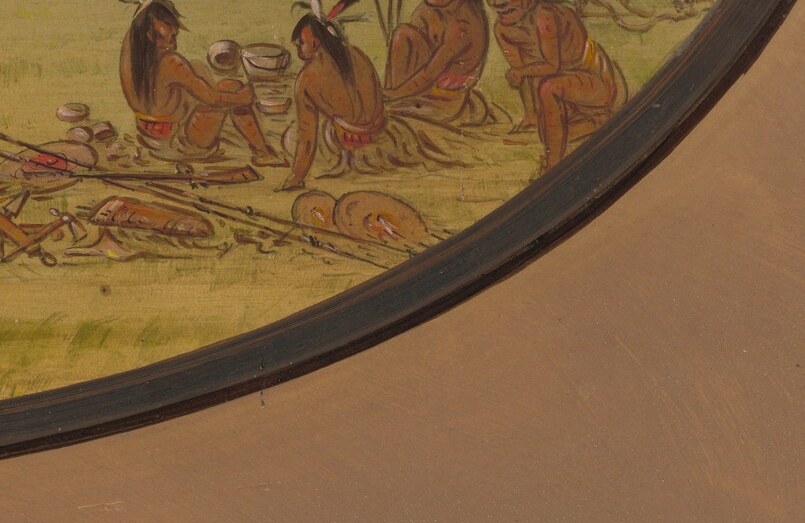
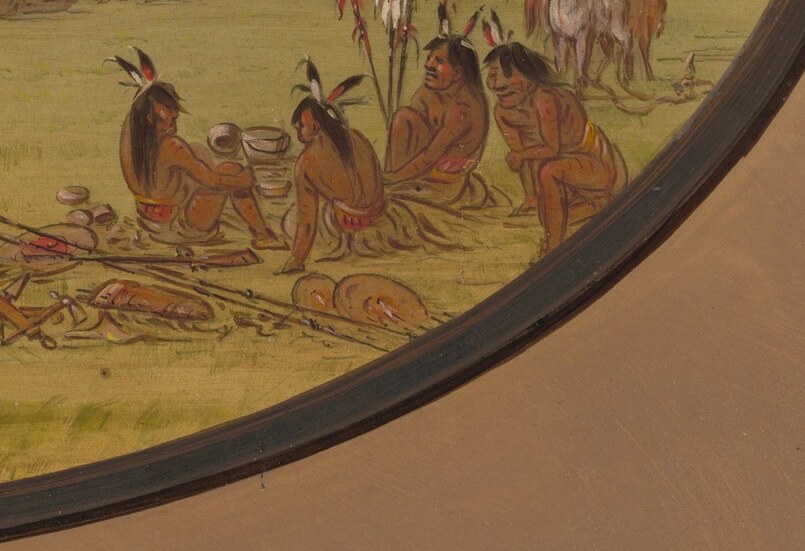
In this painting, we see the dynamic energy of the Choctaw ball-play, a game deeply intertwined with ritual and community. Notice the figures holding feathered objects, likely ceremonial items, and the discarded spears and shields, signaling a pause in the action or the rules of play. The painter's loose brushwork emphasizes the lively gesture of the event.
Catlin traveled extensively across the American West in the 1830s, creating ethnographic records as much as artistic works. He believed it crucial to preserve the customs of Indigenous peoples as their way of life faced rapid change and external pressures. This painting is part of his legacy to ensure these traditions were not forgotten.
What do you find most striking about this depiction of communal life?
Details
Transcript
This painter documented Native American life across the American West. Here he captures a Choctaw ball-play dance, a communal event. Participants hold feathered objects, suggesting a ceremonial item. The game was more than sport, it held ritual significance. Disarmed for play, spears and shields rest on the ground. He sought to preserve these customs before they were transformed.