Flowers and Fruit in a China Bowl by http://www.wikidata.org/.well-known/genid/53c9e08675276cfe0cbfc70e81dedb9f
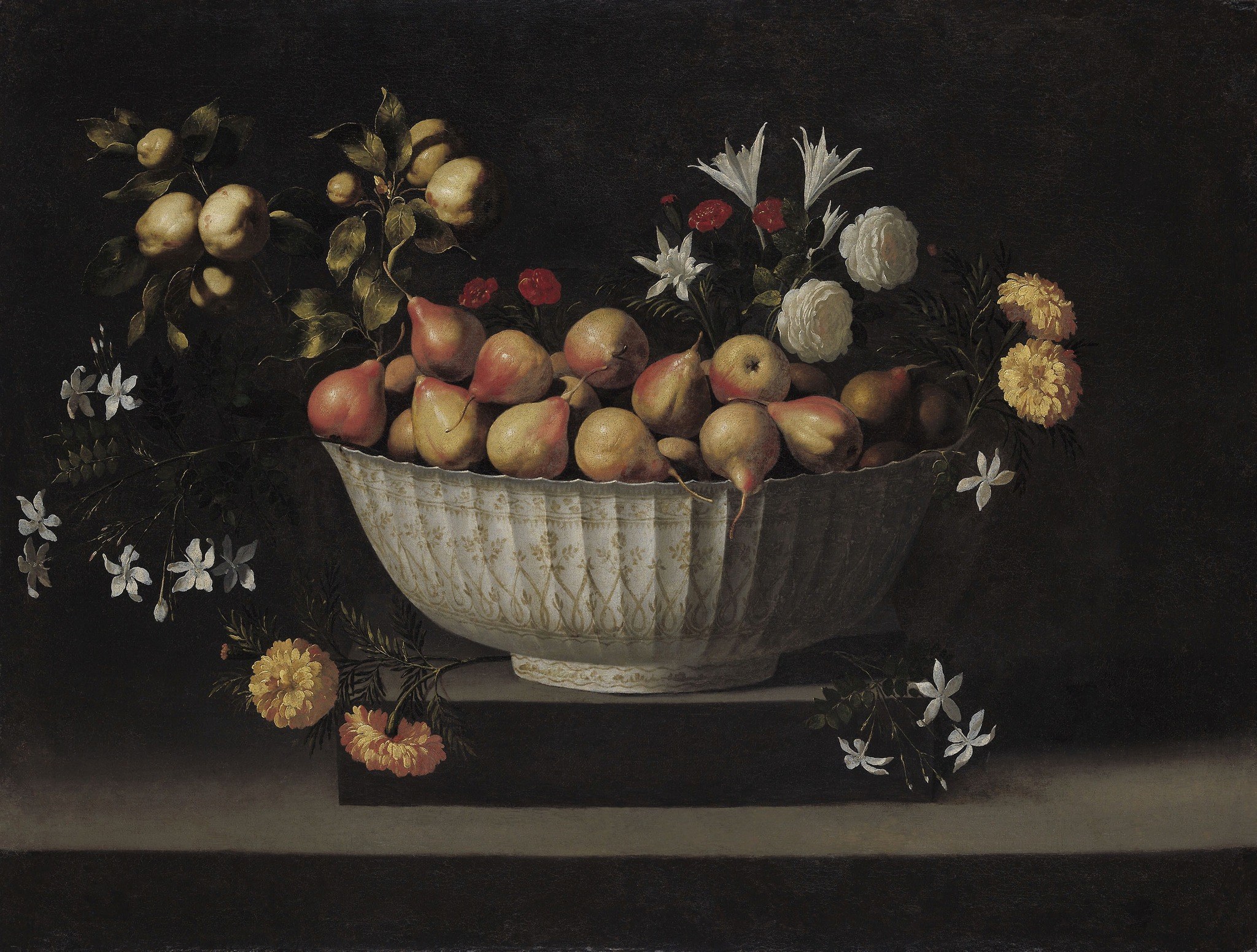
This exquisite oil painting, "Flowers and Fruit in a China Bowl" from around 1645, is part of the Art Institute of Chicago's collection. It offers a glimpse into 17th-century European fascination with both domestic arrangements and global trade.
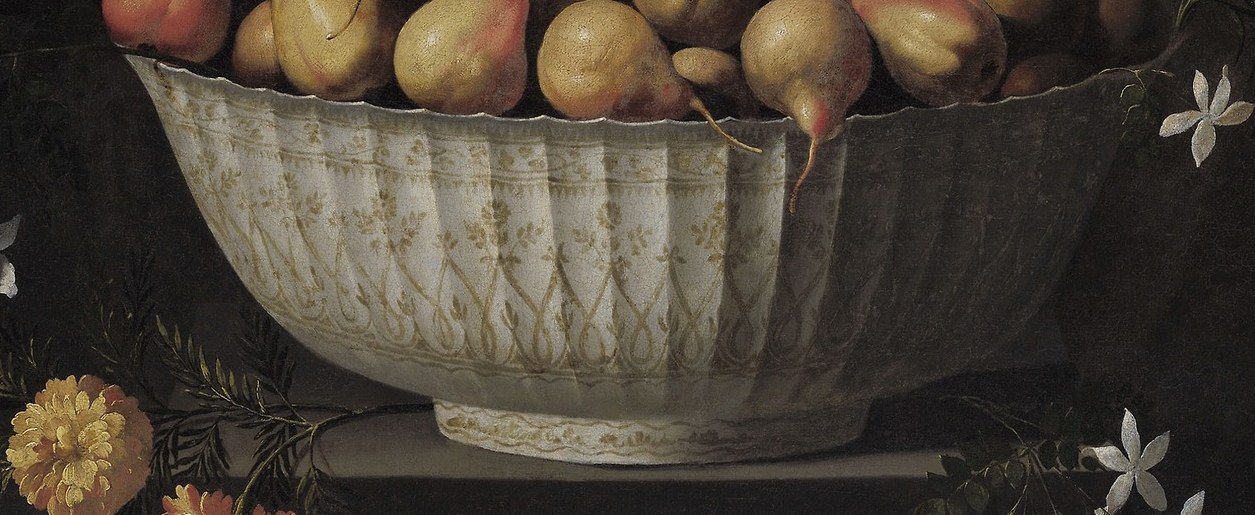
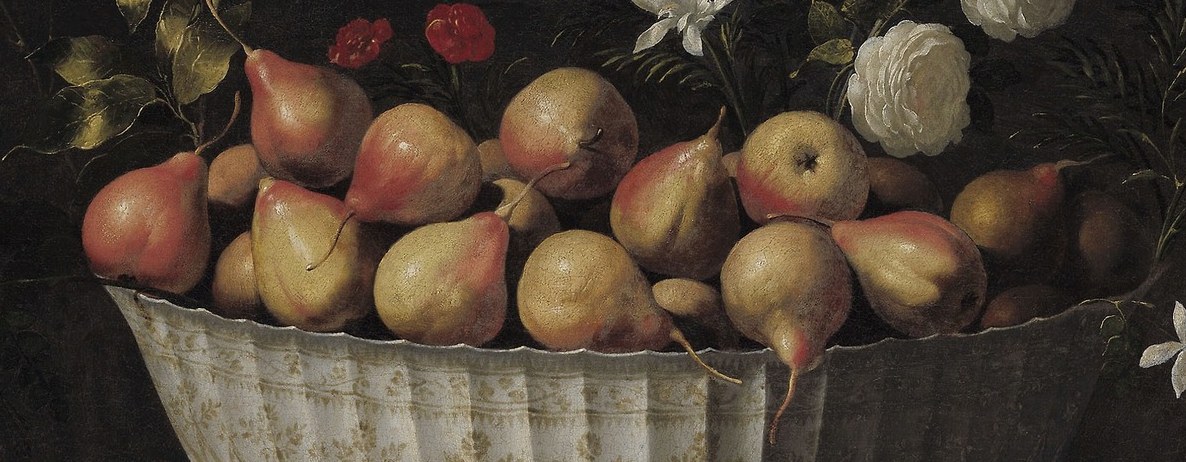
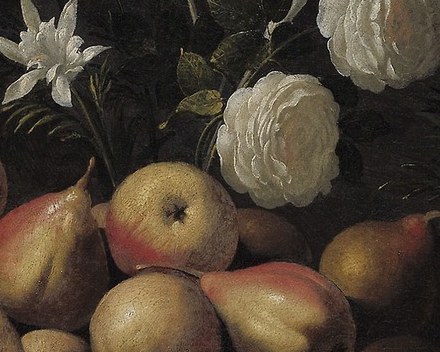
The painting's quiet realism highlights the delicate folds of petals on the white lilies and roses, the waxy sheen of ripe pears, and the intricate pattern of the prized Chinese porcelain bowl. The artist's subtle brushwork and the dark, undefined background draw attention to the textures and forms, transforming humble objects into a contemplative subject.
Still-life paintings were incredibly popular in Northern Europe during this era, often serving as symbols of wealth and a quiet reflection on nature's cycles. The presence of an imported porcelain bowl in the composition speaks to the extensive trade networks of the time, elevating the everyday to a subject worthy of sustained artistic attention.
This work invites us to pause and appreciate the beauty in the ordinary, a timeless message that still resonates today. What details capture your eye the most?
Details
Transcript
This painting, from the 1600s, captures a moment of quiet domestic beauty. Imported porcelain bowls like this one were prized possessions. The artist rendered the fruit with a waxy sheen and delicate folds on the petals. Notice the subtle shift of light across the ripe pears and white lilies. During this period, still life paintings flourished as symbols of wealth. The dark background enhances the luminosity of every object. This work celebrates the quiet beauty of everyday things.