Cow by Anton Mauve
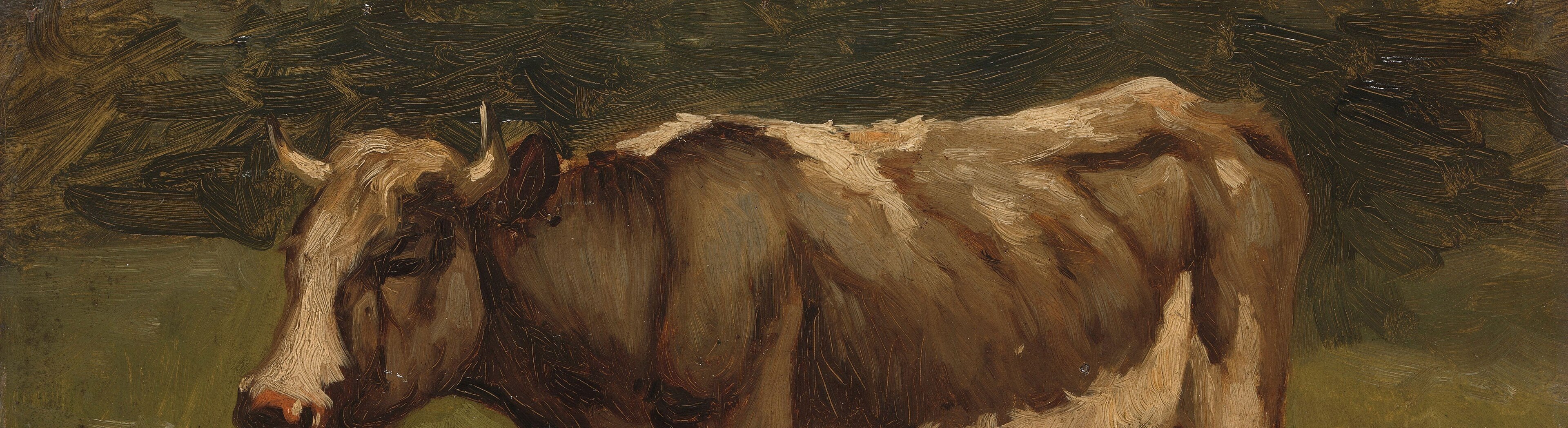
Anton Mauve's 'Cow,' painted in 1874, isn't just an animal portrait, but a window into Dutch agricultural life. This oil painting, held in a private collection, showcases Mauve's dedication to capturing the unadorned beauty of the natural world.
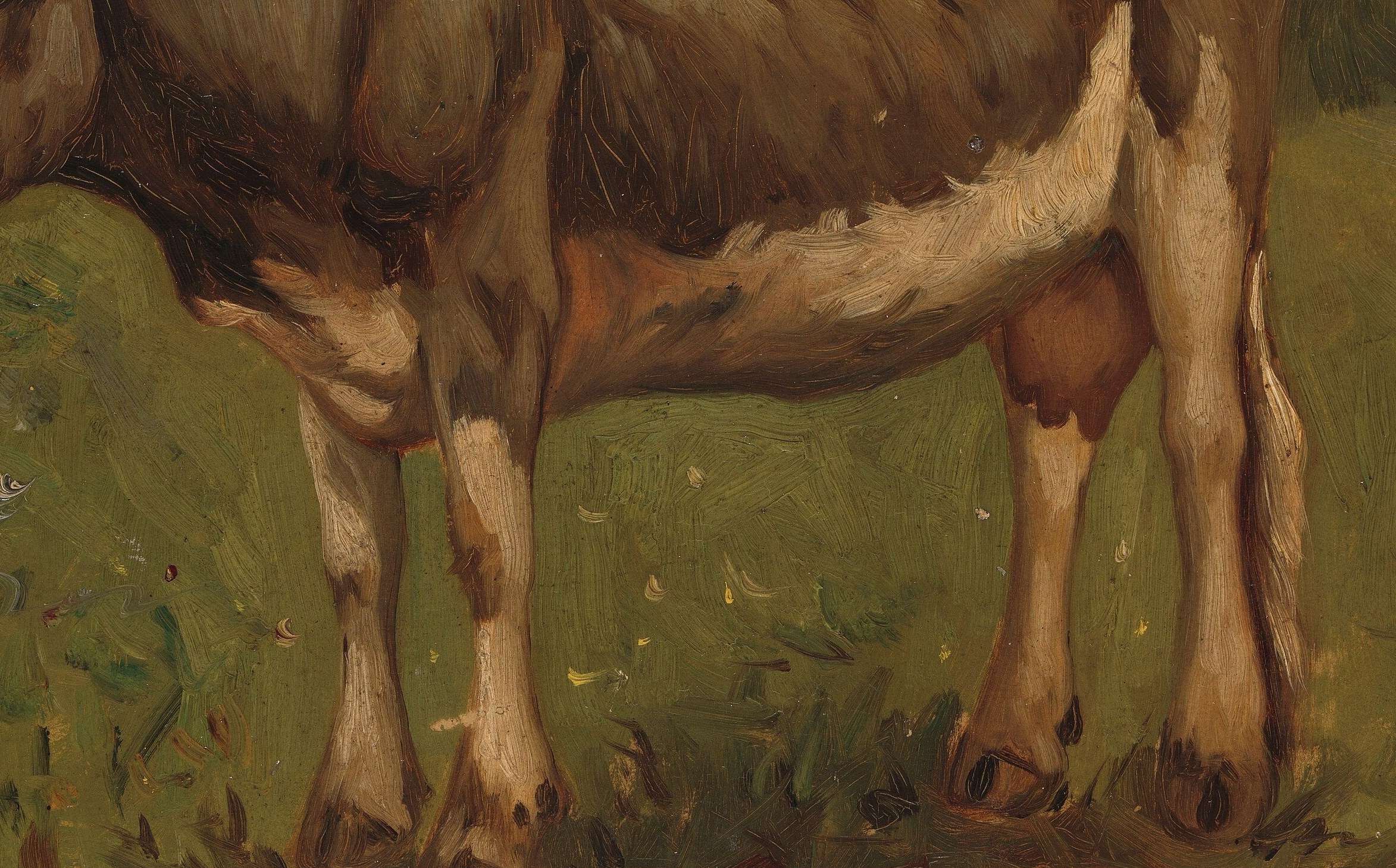
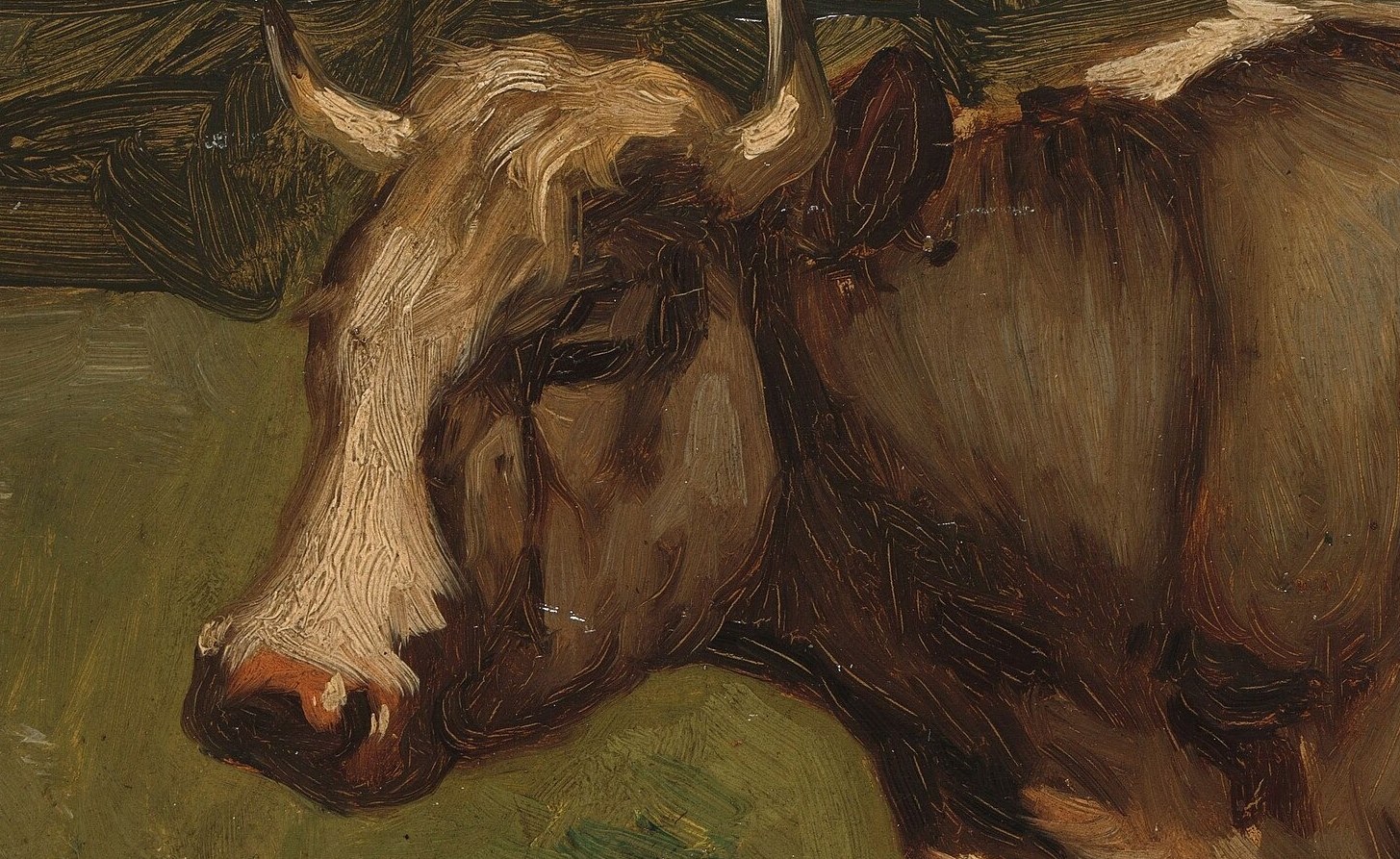
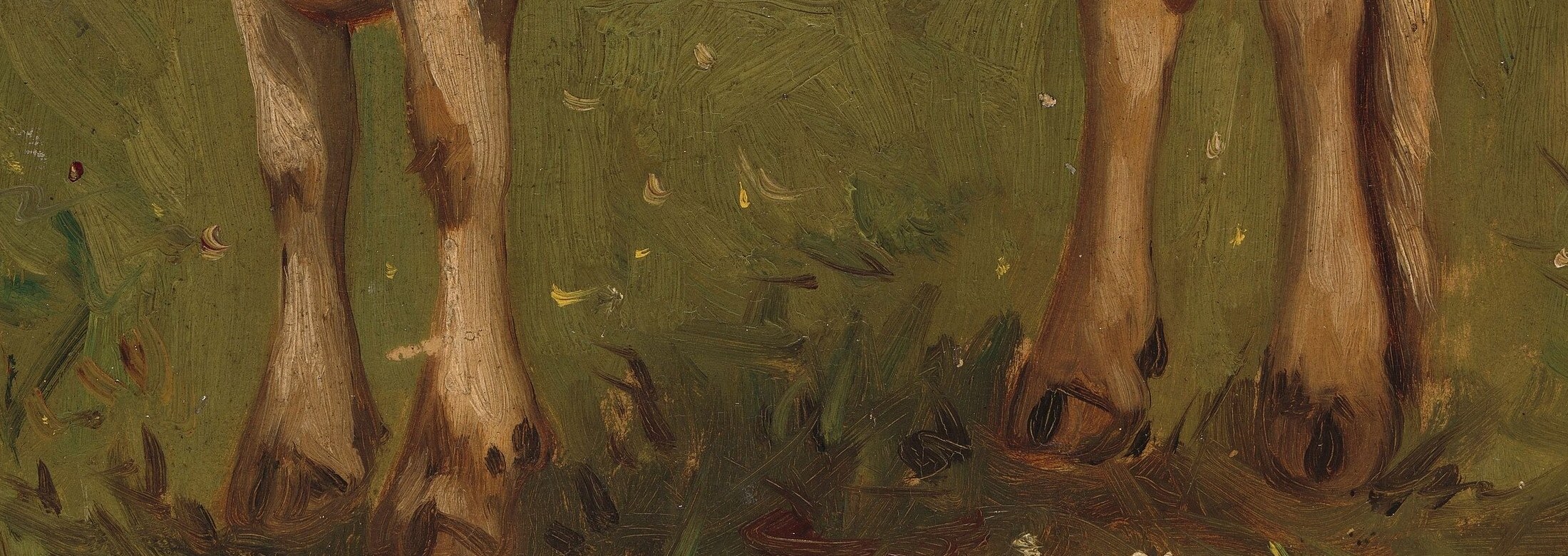
Notice the cow's alert face and the visible brushstrokes on its body. Mauve, a leading figure in the Hague School, used impasto to give the textures of fur and grass a tactile quality, making the scene feel immediate and real.
Mauve often depicted peasants and livestock in pastoral settings, celebrating the quiet dignity of rural existence. He was also an early influence on his cousin-in-law, Vincent van Gogh.
What details in this painting make the cow feel so present to you?
Details
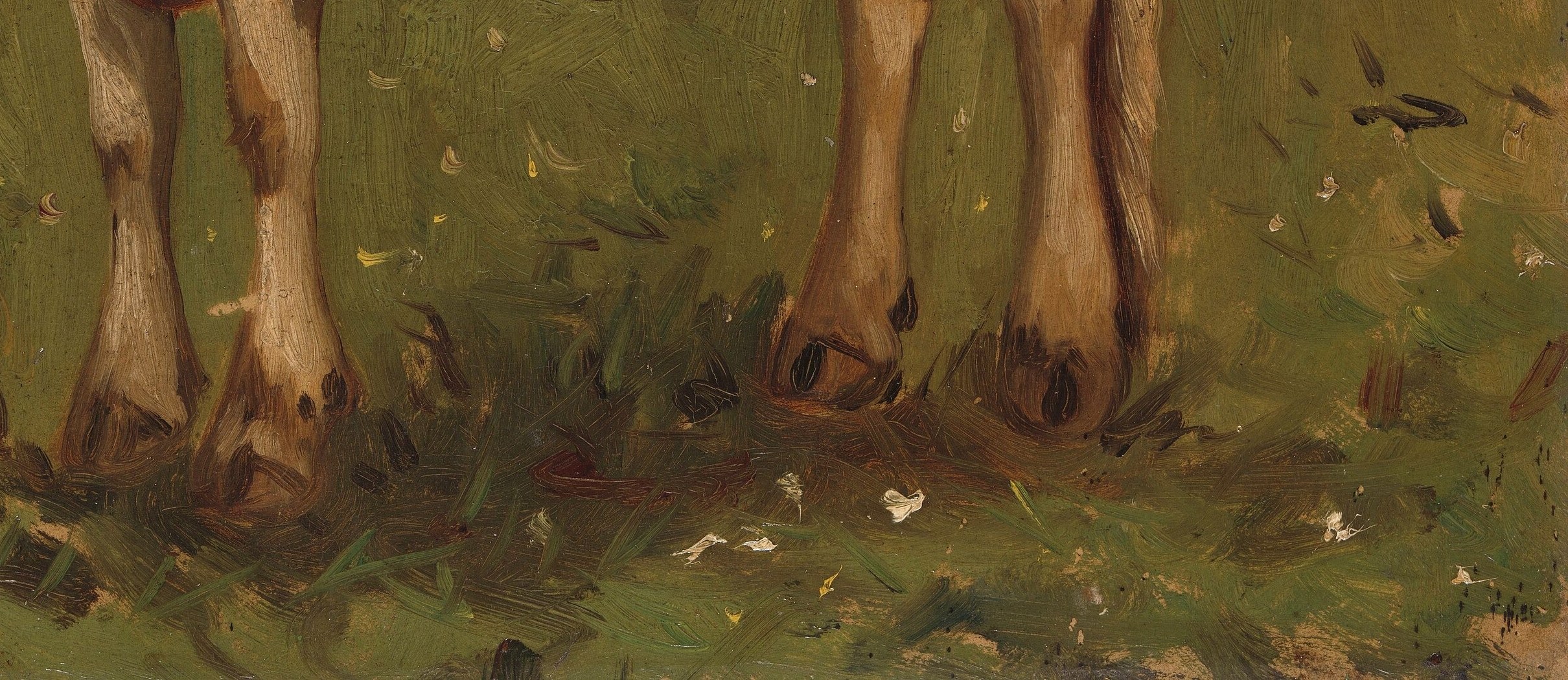
Transcript
This isn't a portrait of a person, but of a cow. Anton Mauve, the painter, was a Dutch realist. He was known for capturing rural life, like this animal. The thick brushstrokes give the cow a real, tangible presence. This specific breed, a Prim'Holstein, was common in 1874. Mauve brought dignity to everyday subjects like this.