Four Sepibo Indians by Catlin, George
George Catlin left a successful law career to dedicate his life to painting Native American cultures. *Four Sepibo Indians*, painted between 1854 and 1869, is an oil on card work at the Smithsonian American Art Museum that embodies his lifelong documentary purpose.
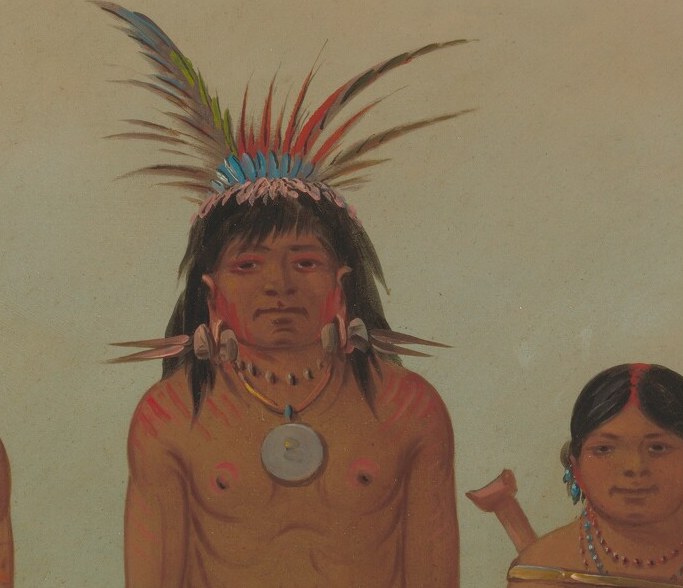
In this painting, Catlin meticulously portrays members of the Sepibo tribe. Look closely at the intricate details of their headdresses, beaded necklaces, and patterned loincloths, all rendered with a realistic approach that was characteristic of his work.
Catlin made five expeditions to the American West in the 1830s, creating a vast body of portraits. His visual records, including this piece, were intended to preserve the cultural details of Plains peoples during a period of rapid expansion and displacement he feared would lead to their disappearance. He truly sought to offer a dignified and individualized view of each sitter.
What details in their attire capture your eye the most?
Details
Transcript
This artist left his law career to paint Native Americans. He traveled the American West five times in the 1830s. He aimed to document cultures he feared would soon vanish. Here, he depicts members of the Sepibo tribe. He captured their distinct attire and personal adornments. This focus on realism was a hallmark of his portraits. He wanted to preserve every detail of their way of life.