Woman from Broek by http://www.wikidata.org/.well-known/genid/092e58f24ef5aa0a7175a1bb6dfb36b4
View the artwork: Woman from Broek →
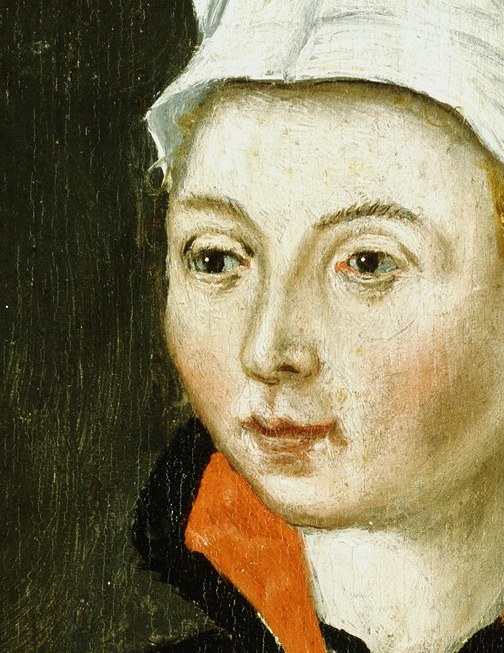
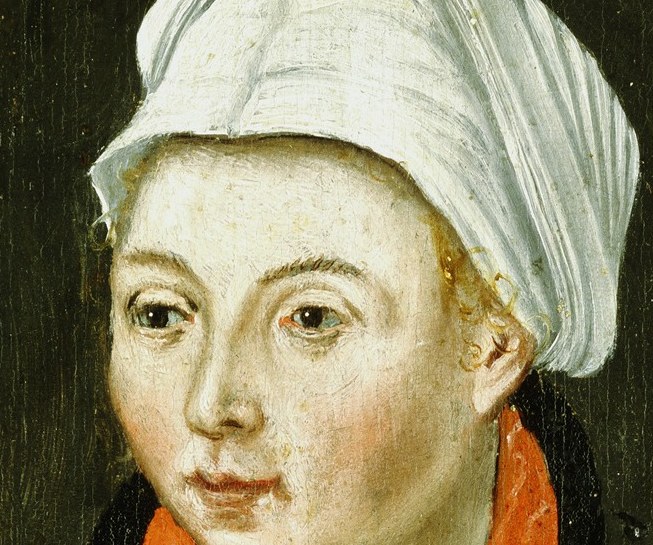
This is Woman from Broek, an anonymous oil painting from around 1550. It belongs to the earliest wave of Dutch portraiture that turned away from saints and rulers and began recording farmers, merchants, and market women, ordinary people whose names were rarely written down. This one is different: her portrait carries its own label.
Look for the two inscriptions painted beside her head. On the left, the word "Broker", the Dutch demonym for a person from the village of Broek, likely Broek in Waterland in North Holland. On the right, "Drou", possibly a family name, a nickname, or a place abbreviation. Together they are the reason we still know anything about her at all.
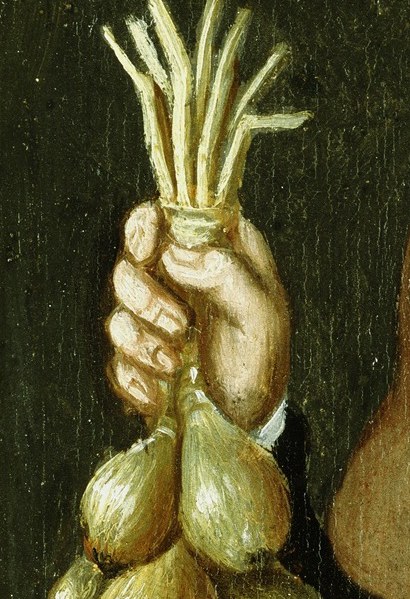
Dutch genre painting would not reach its full flourishing for another century, but this work already shows the instincts that would define it: precise attention to fabric and produce, an unglamorous honesty about working life, and a refusal to idealize the sitter. She is shown with onions in her hand and vegetables at her side, the tools of her trade, not props.
Most people who lived in the 1550s left no name and no face. This woman left both, thanks to two words painted in her own portrait.
Details
Transcript
Around 1550, Dutch painters began recording ordinary people. She meets your eye directly. Not a type, a person. She grips a bundle of onions. This was real labor. Now read the word beside her head: Broker. It means a resident of Broek, her village, named here. And Drou, a second marker. Her identity, written to last. Almost five centuries later, the label still holds.