The Cottage Dooryard by Ostade, Adriaen van
View the artwork: The Cottage Dooryard →
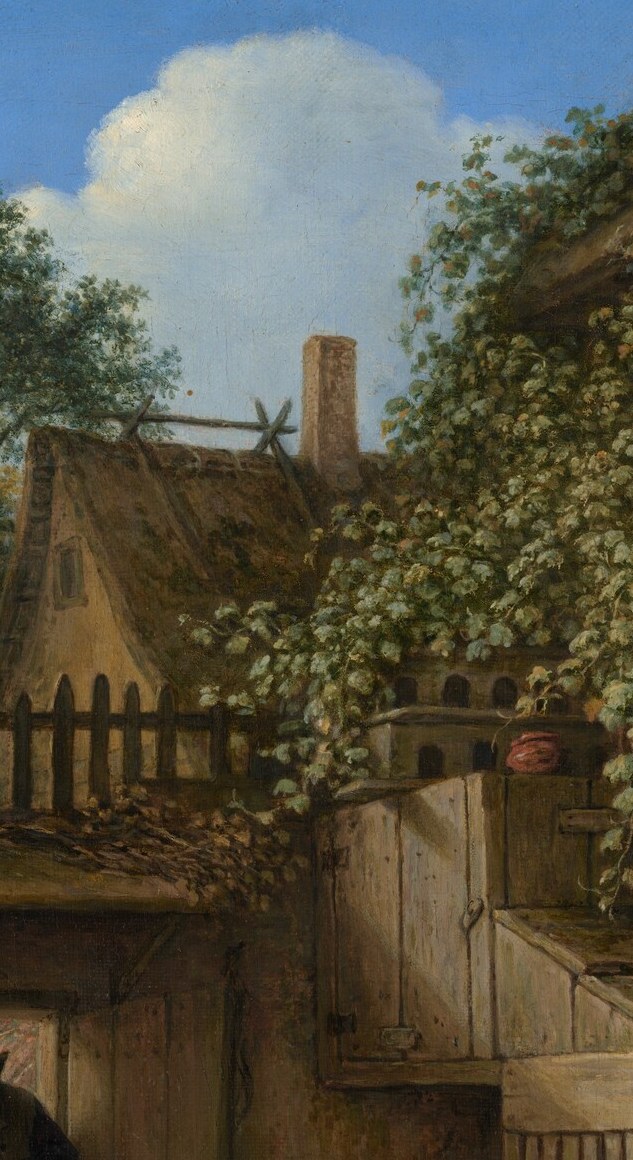
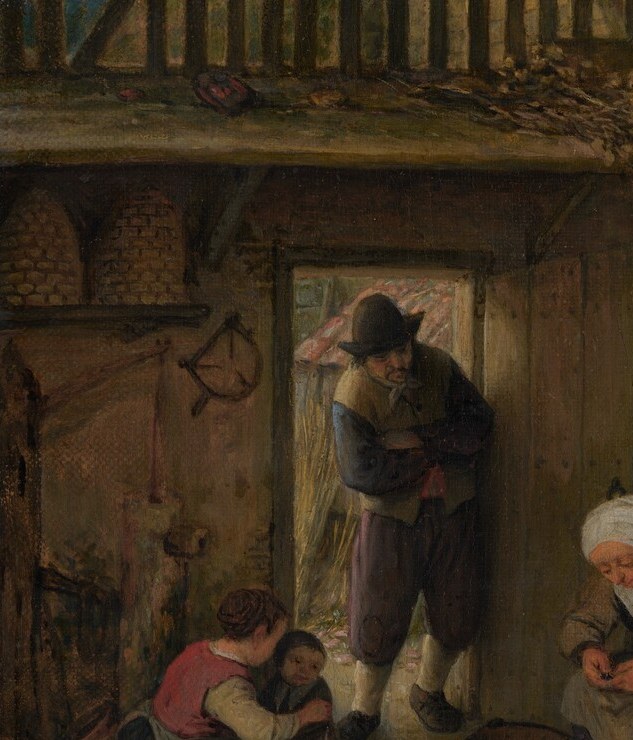
This is Adriaen van Ostade's 'The Cottage Dooryard', painted in 1673 and now in the collection of the National Gallery, London. The painting carries the ordinary quiet of a domestic afternoon: an old woman cards wool, a mother bends to her child, chickens peck the dirt. But 1673 was the year Ostade buried his wife, Macheltje. He painted this afterwards.
Look at the mother's posture. She does not just watch her child; she curves over and around the small seated figure, absorbing the child entirely into her own silhouette. The old woman at left does not look up from her work. Her hands have their own rhythm, separate from grief. These are not posed actors. They are people who keep going.
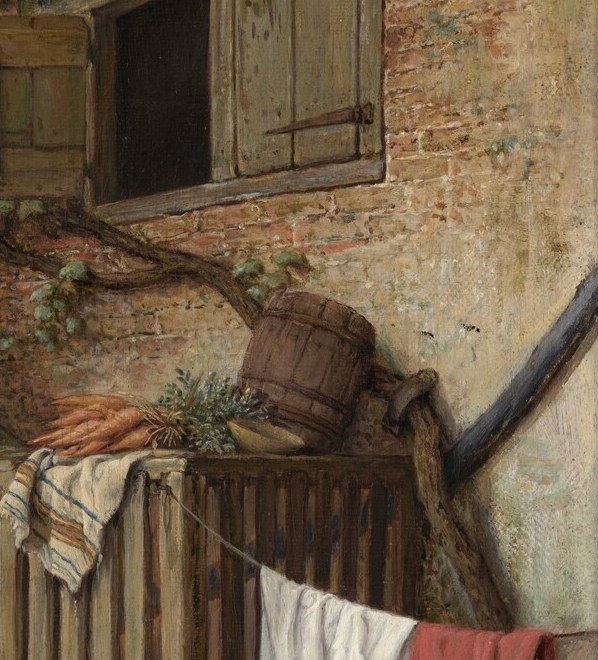
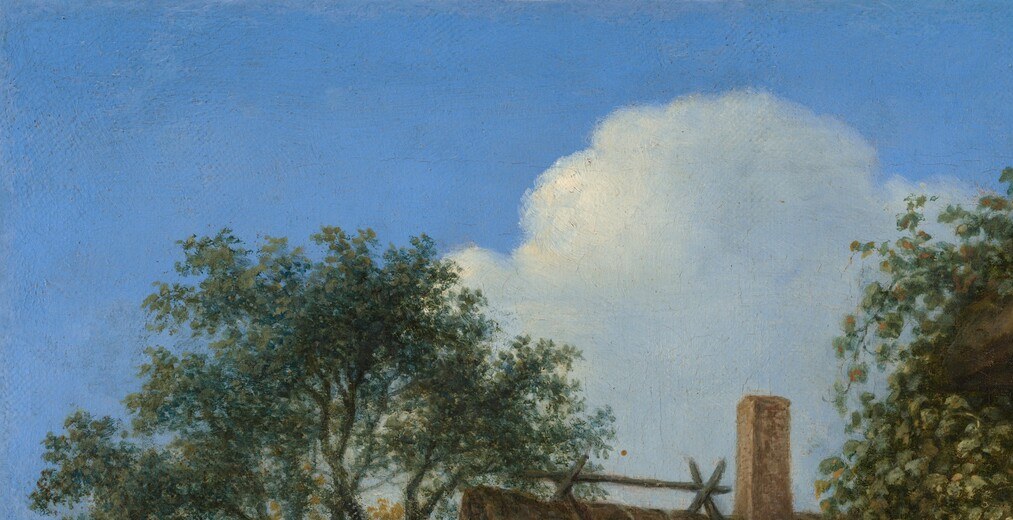
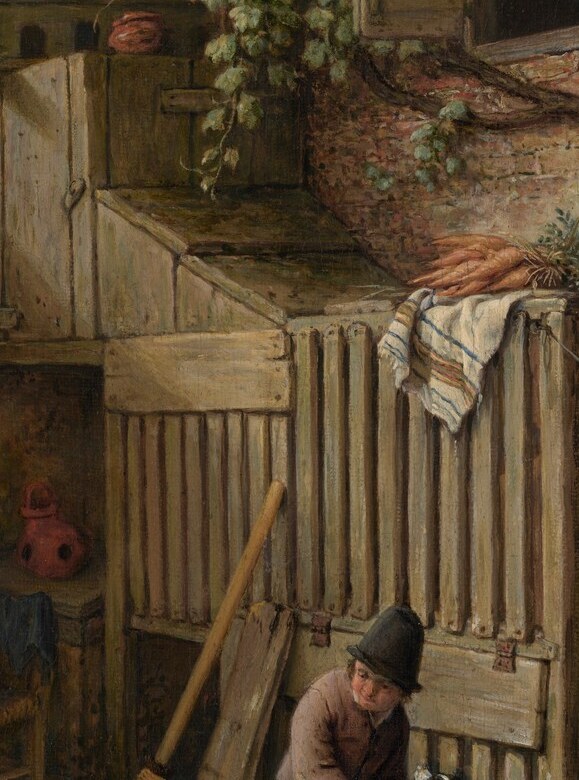
The wall behind them rewards a close look. Ostade rendered every chipped brick, every stain in the plaster, every leaf of the vine. And above the vine, in the same patch of canvas, bare dead branches cut across the sky. He placed the dead wood and the living growth on the same wall, in the same light, without comment. That quiet pairing is the whole painting's emotional logic.
Ostade died twelve years later, still painting peasant interiors and cottage doorways. He never painted grand histories or allegories. He painted ordinary people holding their world together, and that was enough.
#arthistory #dutchgoldenage #adriaenvanostade
Details
Transcript
She has done this work every day of her life. 1673. Adriaen van Ostade is sixty-three years old. His wife died earlier this year. And he keeps painting the quiet shape of a family. A mother leans into her child like a roof. The dead tree and the climbing vine share the same wall. He painted the worn bricks one by one. He was in no hurry to leave this place.