Artwork
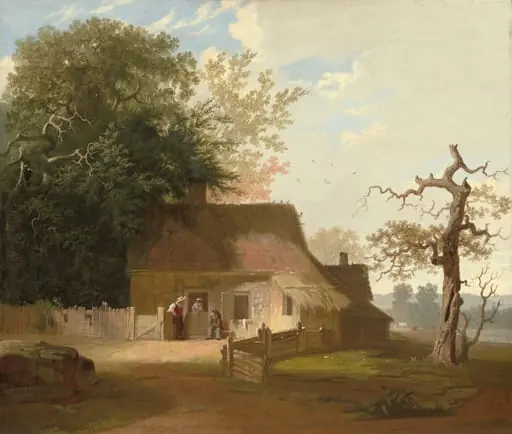
The Cottage Dooryard
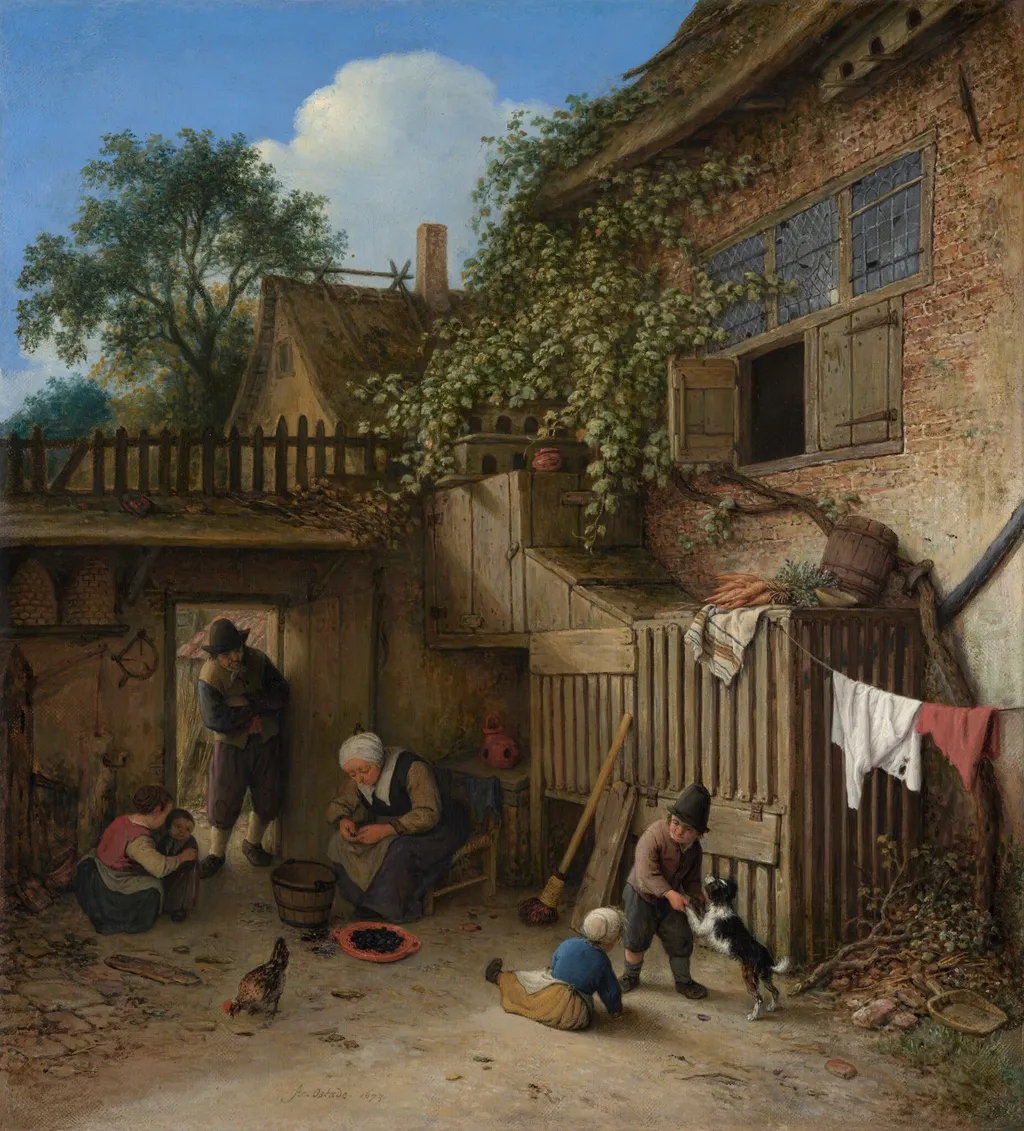
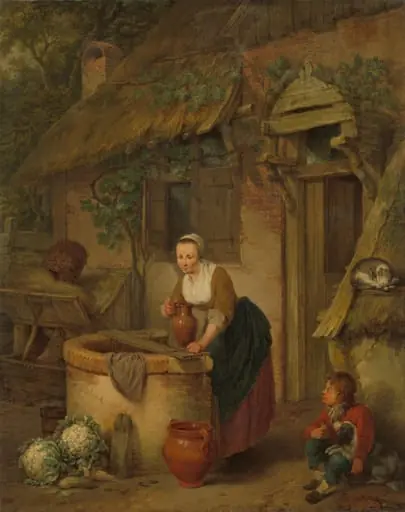
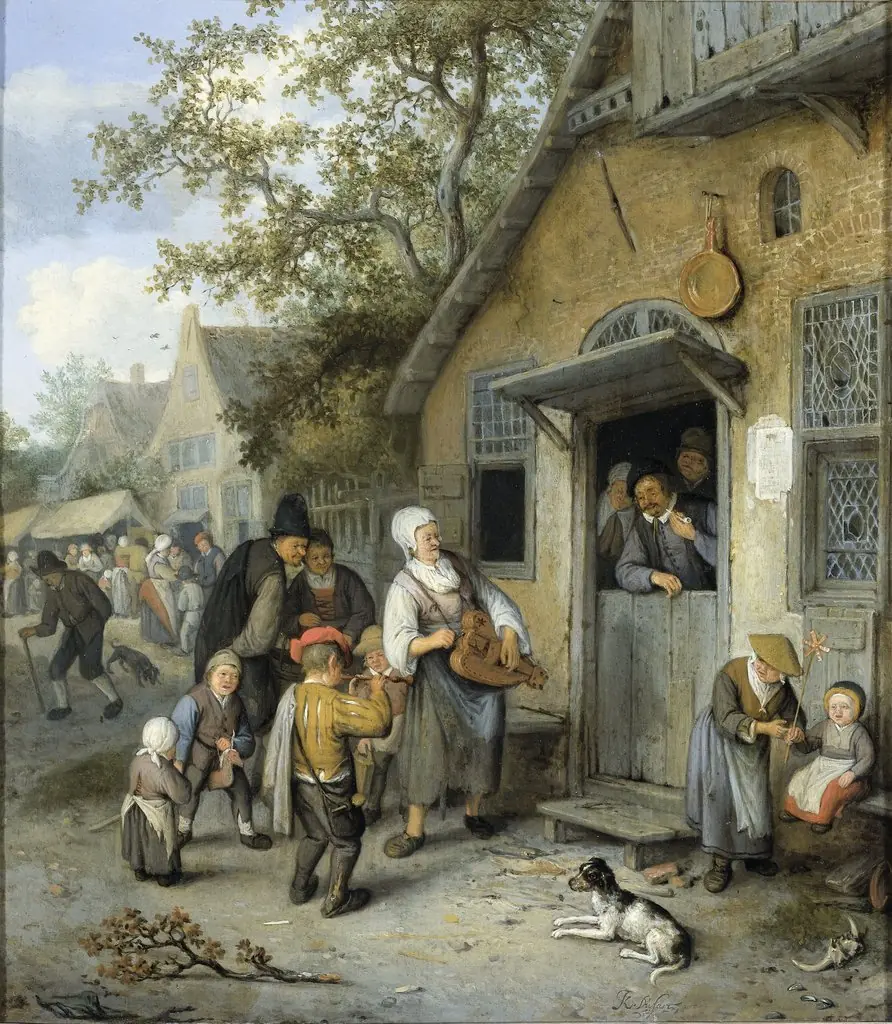
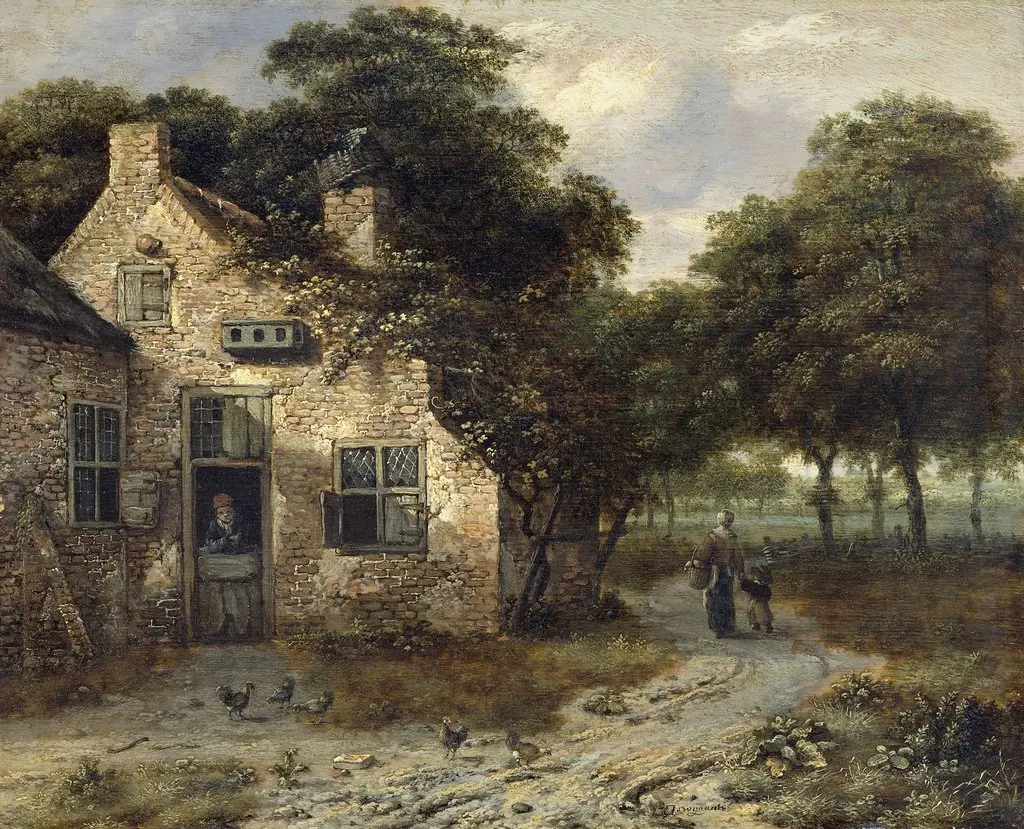
The Cottage Dooryard is an oil painting by the Baroque artist Adriaen van Ostade. It dates from 1673 and is held in the collection of the National Gallery of Art.
- Inscription
- Inscribed:lower center: Av. Ostade 1673 (Av in ligature)
About this work
Technique & Style
Executed in oil on canvas, the painting supports its genre-scene subject with a relatively compact format (44 × 39.
Executed in oil on canvas, the painting supports its genre-scene subject with a relatively compact format (44 × 39.5 cm). The medium and support are characteristic of Adriaen van Ostade’s late work, and the composition centers on a cottage dooryard populated by a man, woman, child, and dog, elements typical of his rustic domestic imagery. The handling and condition are not described in available sources, but the work’s attribution to 1673 places it within the artist’s mature period, when he frequently depicted lively, anecdotal scenes of peasant life.
History & Provenance
Adriaen van Ostade painted The Cottage Dooryard in 1673, likely in Haarlem. The earliest recorded provenance begins with Adriaen Swalmius of Schiedam (1689–1747). The painting then passed through collections of Jacques Ignace de Roore, Pieter and Jan Bisschop, and by 1771 was owned by Adrian and John Hope of Amsterdam.
Following a complex inheritance through the Hope family, it was sold in 1898 to Asher Wertheimer, and in 1899 to Peter A.B. Widener. Joseph E. Widener gave it to the National Gallery of Art in 1942.
Overview
The oil on canvas painting, "The Cottage Dooryard," presents a serene depiction of domestic life. It features a man, a woman, and a child gathered near a modest cottage, offering a quiet glimpse into their daily existence. The artwork's composition and subject matter reflect an interest in the unassuming moments of rural living, characteristic of certain artistic traditions that focused on everyday human experience.
Subject & Meaning
This painting captures a specific moment of ordinary life, portraying a family within their home environment. The interactions among the man, woman, and child, set against the backdrop of their cottage, evoke a sense of routine and normalcy. Such representations offer insight into the social structures and daily rhythms of the era, highlighting the quiet dignity found in common, domestic scenes.
Context
The artistic choice to depict humble domestic settings and the lives of ordinary people in "The Cottage Dooryard" resonates with themes explored by contemporaries such as Adriaen van Ostade. This approach to subject matter was part of a broader artistic movement that sought to elevate scenes from everyday life, shifting focus from traditional religious or aristocratic narratives to celebrate the human experience in its more common forms.
Own this work as a print
Artist & collection

Artist
Adriaen van Ostade (baptized as Adriaen Jansz Hendricx 10 December 1610 – buried 2 May 1685) was a Dutch Golden Age painter of genre works, showing the everyday life of ordinary men and women.