The Marketplace, Vitebsk by Marc Chagall
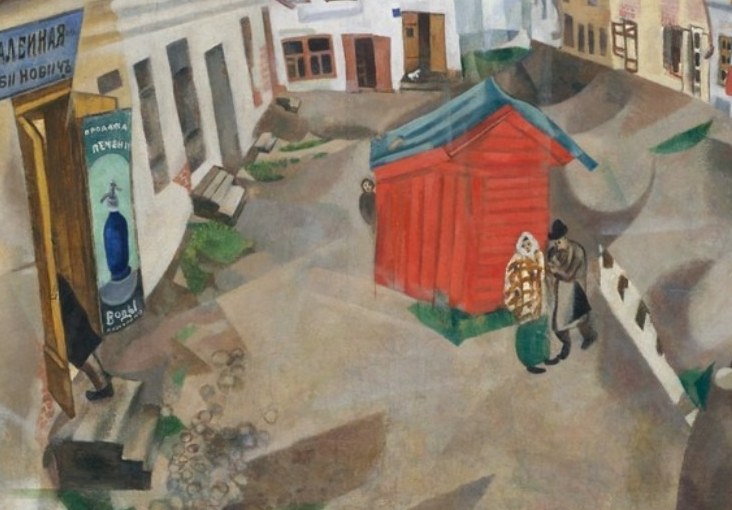
Marc Chagall painted The Marketplace, Vitebsk in 1917, the year the Russian Revolution swept away the world he had grown up in. He was thirty years old, already in Petrograd, and his hometown was about to change forever. The painting is now at The Metropolitan Museum of Art.
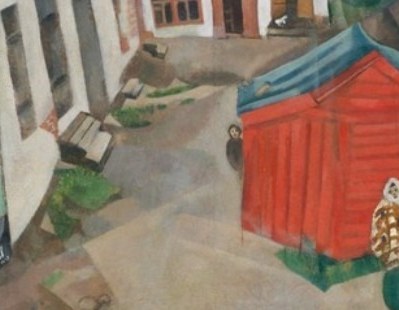
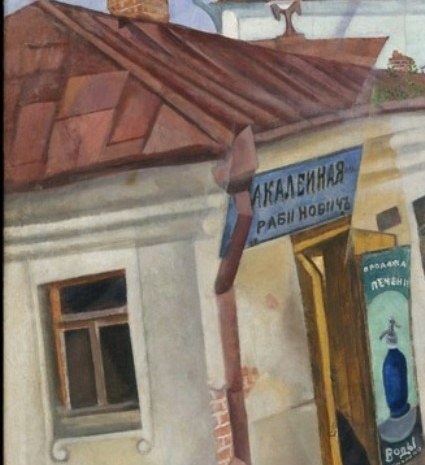
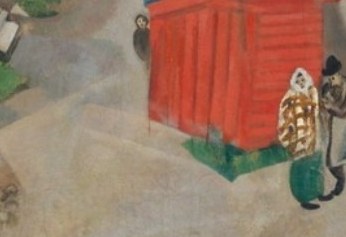
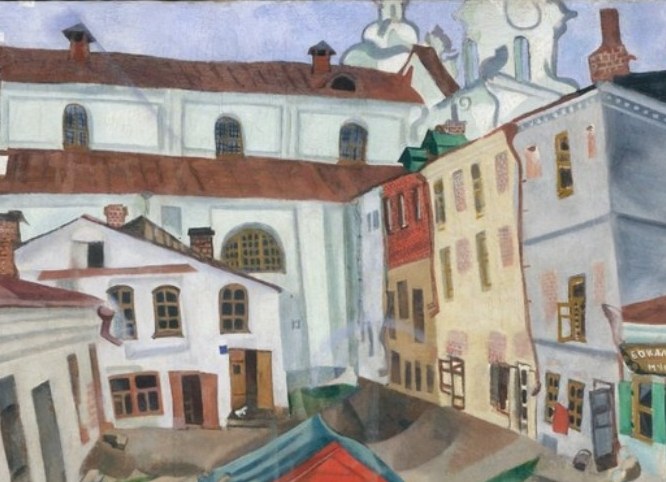
The red central market stall is the painting's engine, the most saturated color on the canvas. Let your eye find the left row of shop fronts and look closely at the painted commercial signs: those are the Yiddish and Russian shop boards of pre-Revolutionary Vitebsk's Jewish quarter, a texture of daily life Chagall knew was disappearing. Then find the impossible detail: the horse floating in the upper right air, untethered from the market street below.
Chagall came from a Hasidic Jewish family in Vitebsk, a provincial city in what is now Belarus. He studied in St. Petersburg and Paris, but his hometown remained his deepest well of imagery. By 1917 he was a mature artist watching revolution erase the physical world of his childhood. He painted this market from memory, with its sacred white church looming over the commercial bustle and its tilted street refusing to sit flat in space, because memory does not hold the world still either.
He would live another sixty-eight years. He never returned to Vitebsk. What looks like a lively market day is really an inventory of everything about to go.
Details
Transcript
Vitebsk, 1917. Revolution is tearing Russia apart. Chagall paints his hometown marketplace from memory. The red market stall burns at the dead center of the canvas. The Jewish shop signs he grew up reading are still visible. Look at the street. It tilts forward like a falling stage set. And there, above the market, a horse drifts through the sky. He wasn't documenting a city. He was saying goodbye to it.