Buffalo Chase by Catlin, George
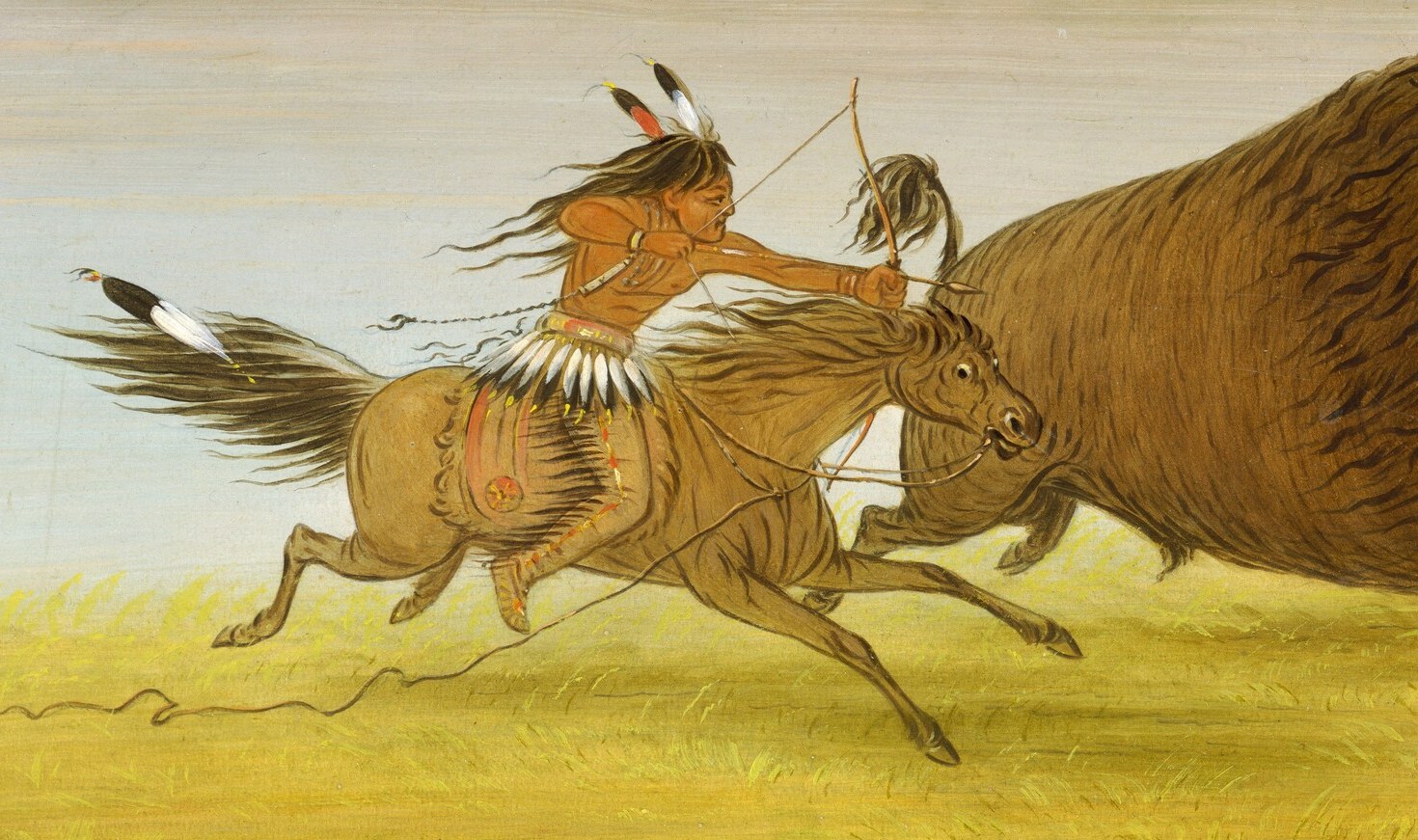
George Catlin's *Buffalo Chase*, painted in 1865, is more than just a dramatic scene; it's a vital historical document housed in a museum collection. Catlin embarked on five expeditions to the American West in the 1830s, dedicating himself to recording the lives of Plains Indians.
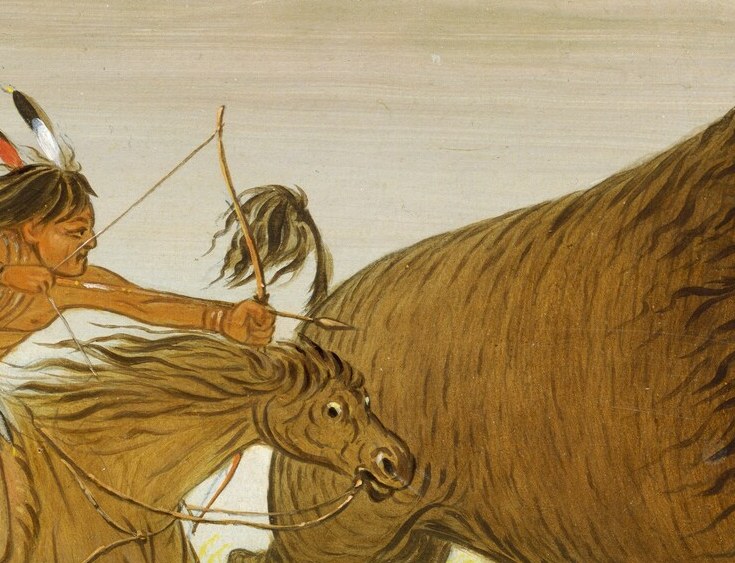
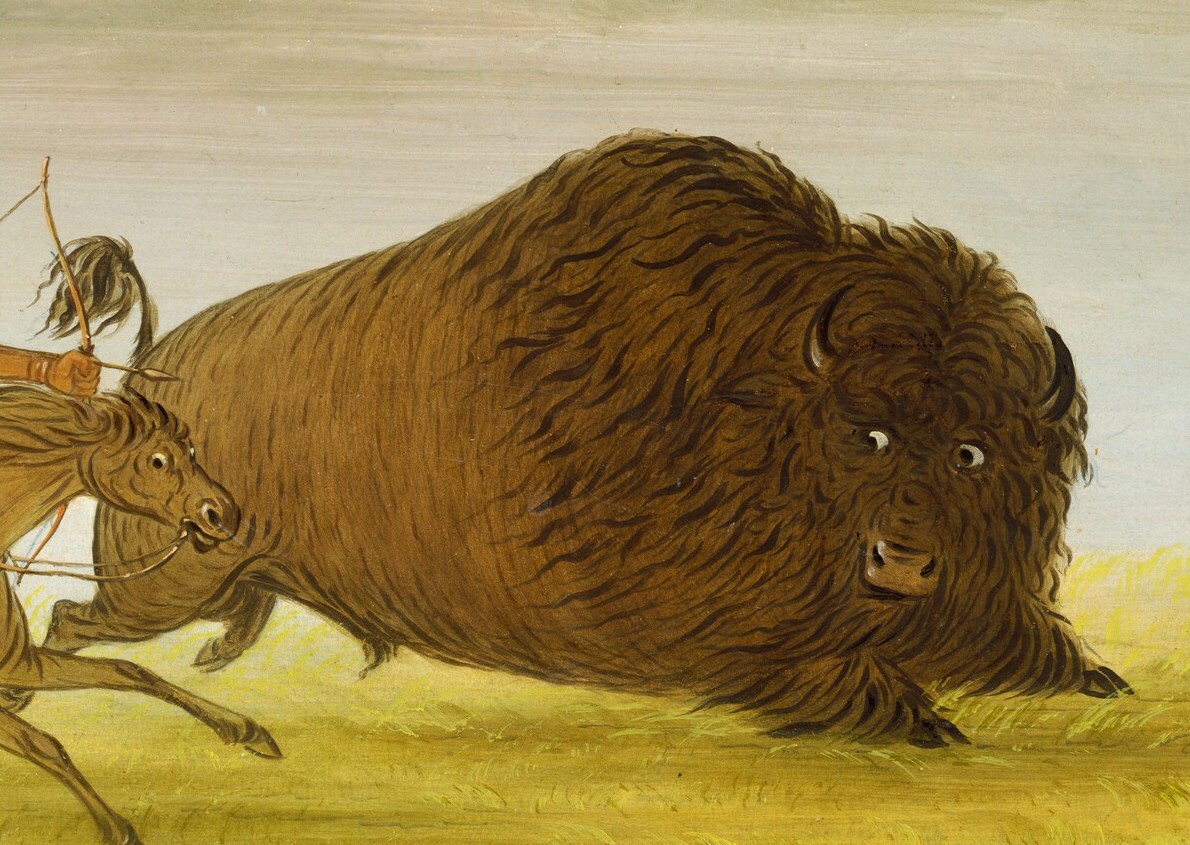
This painting captures a mounted Native American hunter in traditional attire, bow drawn, pursuing a massive bison across the open plains. Notice the intricate details in the hunter's leg wrap and headdress, and the palpable tension in the bison's wide, fearful eye.
Catlin's work, rendered in oil on card, aimed to preserve the cultural practices and subsistence hunts that were rapidly changing on the American frontier. He saw his art as an ethnographic record, documenting a way of life he believed was vanishing.
His dedication provides us with a powerful, immediate glimpse into a significant chapter of American history and Indigenous cultures. What details do you find most striking?
Details

Transcript
In the 1830s, this painter traveled the American West five times. He recorded Native American life, which he saw disappearing. His focus was on their culture and their traditional hunts. Look at the power of this charging bison. Its wide eye reveals fear and desperation. Catlin wanted to preserve these scenes for history. This dramatic moment is an ethnographic record.