Arab Encampment by Fromentin, Eugène
Eugène Fromentin's "Arab Encampment" (1873) at the Museum of Fine Arts, Boston, offers a serene glimpse into daily life in the North African desert. Known for his understated approach, Fromentin chose to depict moments of quiet dignity rather than dramatic spectacle.
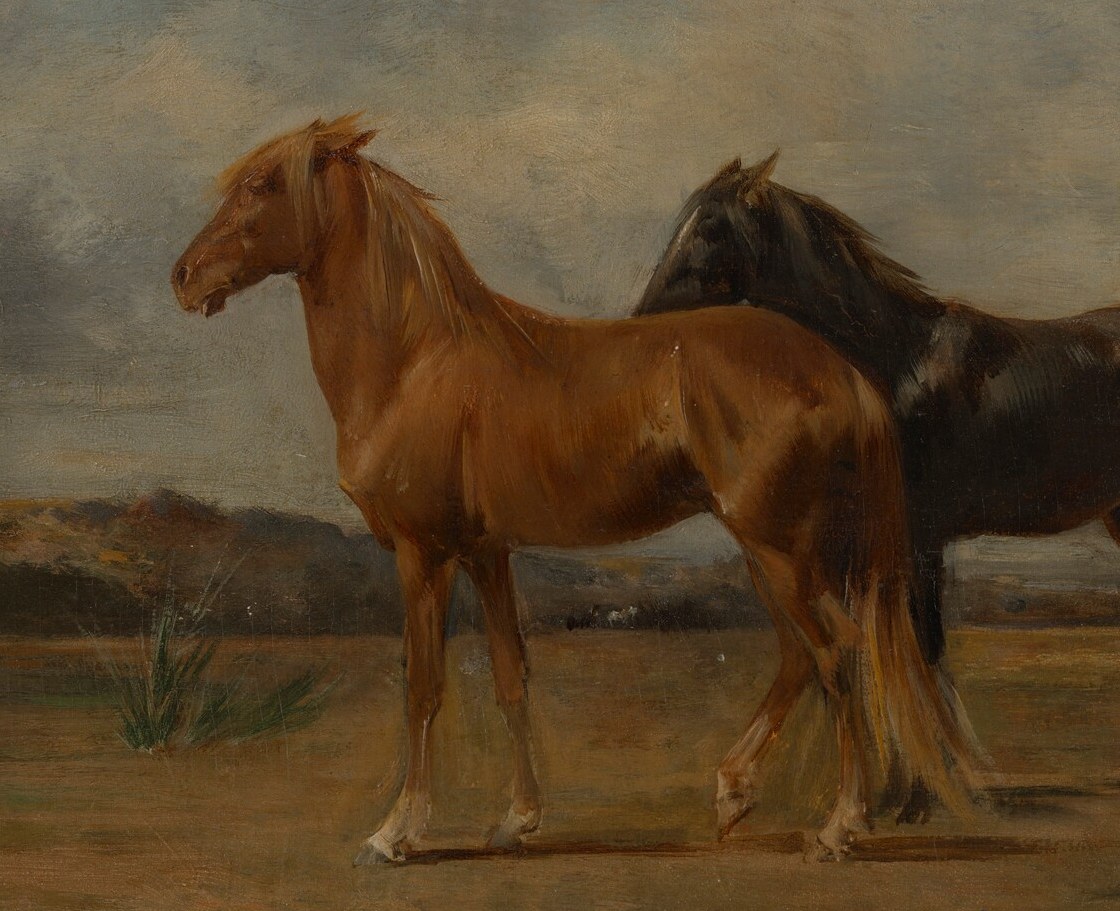
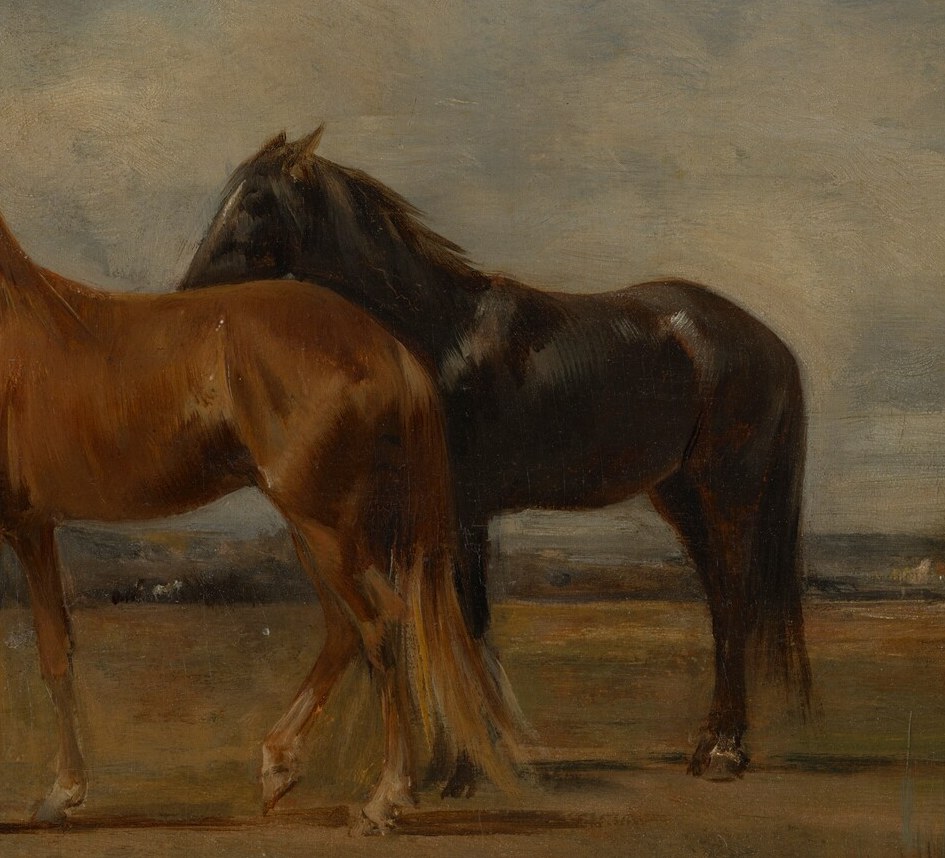
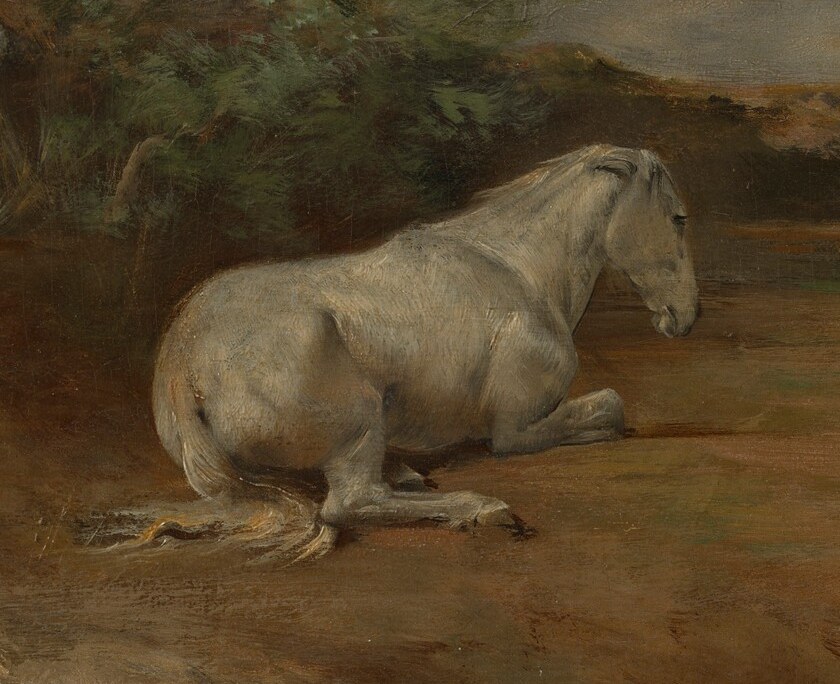
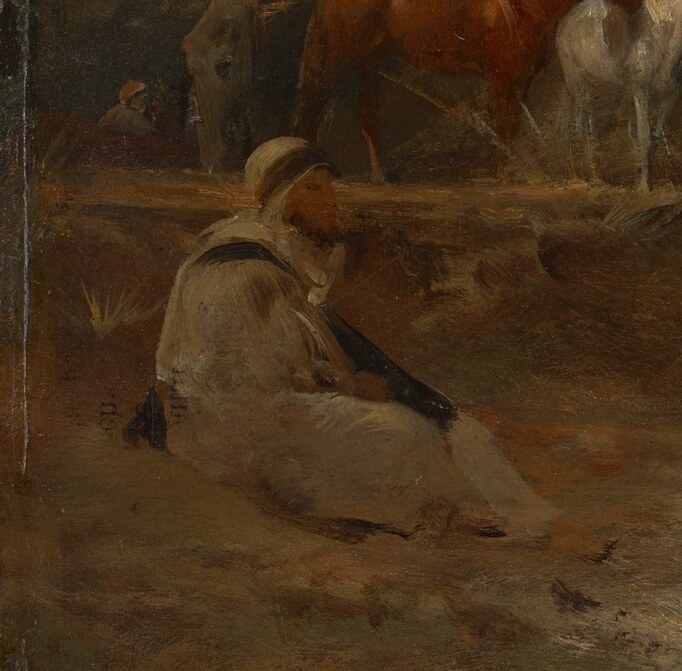
The painting, an oil on wood panel, showcases his precise brushwork and delicate handling of light. Notice how the varied postures of the horses, two standing, one resting, and the reclining figure contribute to a sense of peaceful coexistence within the arid landscape.
Created in the later period of Fromentin's career, this work reflects his enduring fascination with Algerian scenes. He often used wood panels for their smooth surface, which allowed him to achieve nuanced effects of light and texture. This piece is a prime example of French Orientalist art, prioritizing observational accuracy and mood.
What do you notice about the way the light touches the animals in this painting?
Details
Transcript
This painter was known for his quiet, un-sensational desert scenes. He chose oil on wood, allowing for precise details and smooth light. Here, two horses stand, awaiting their next journey. While this white horse rests, in a moment of calm. And a lone figure reclines, almost blending into the landscape. His later work, like this, focused on mood, not dramatic action. A quiet dignity in the North African desert, captured in 1873.