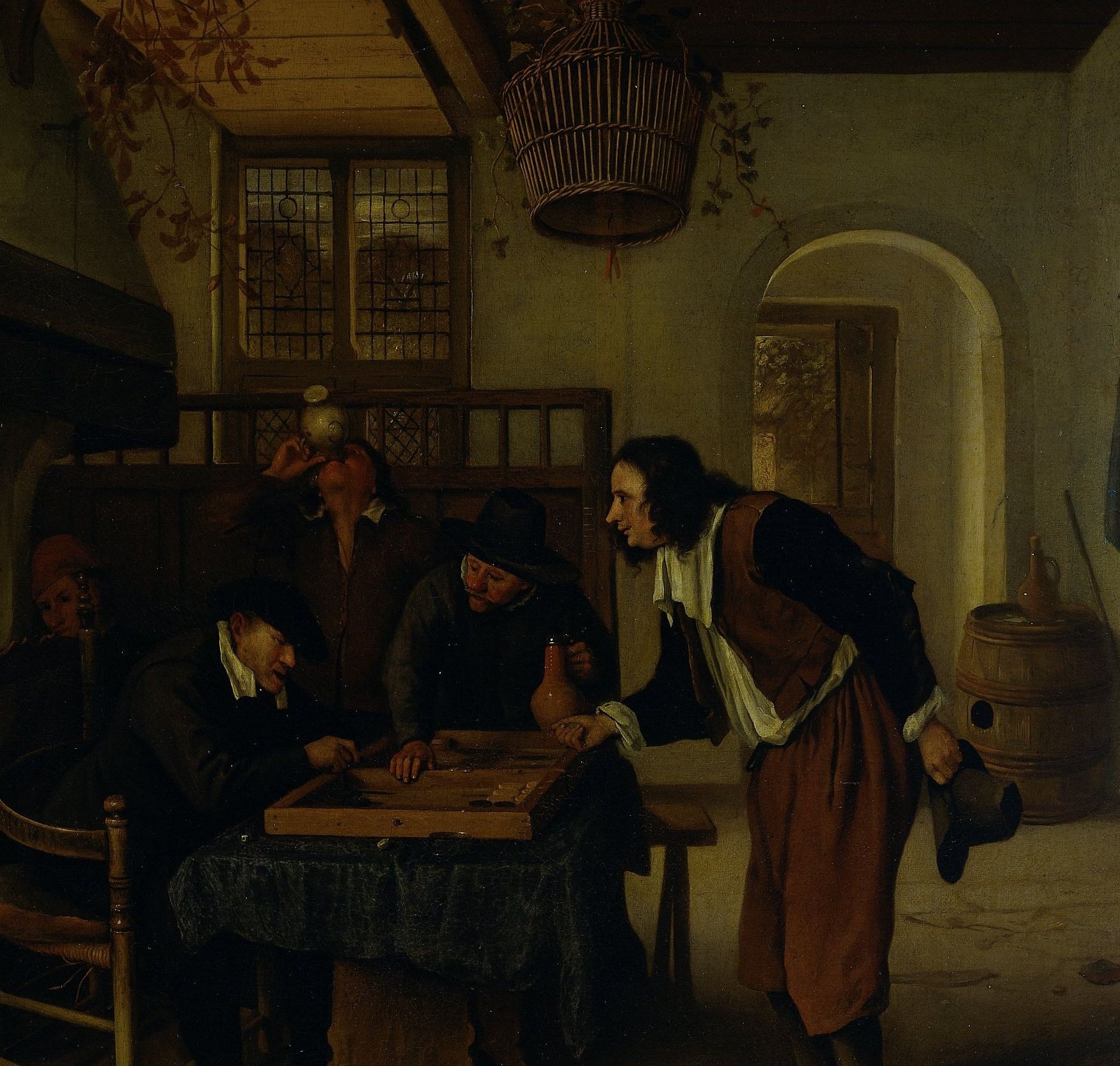
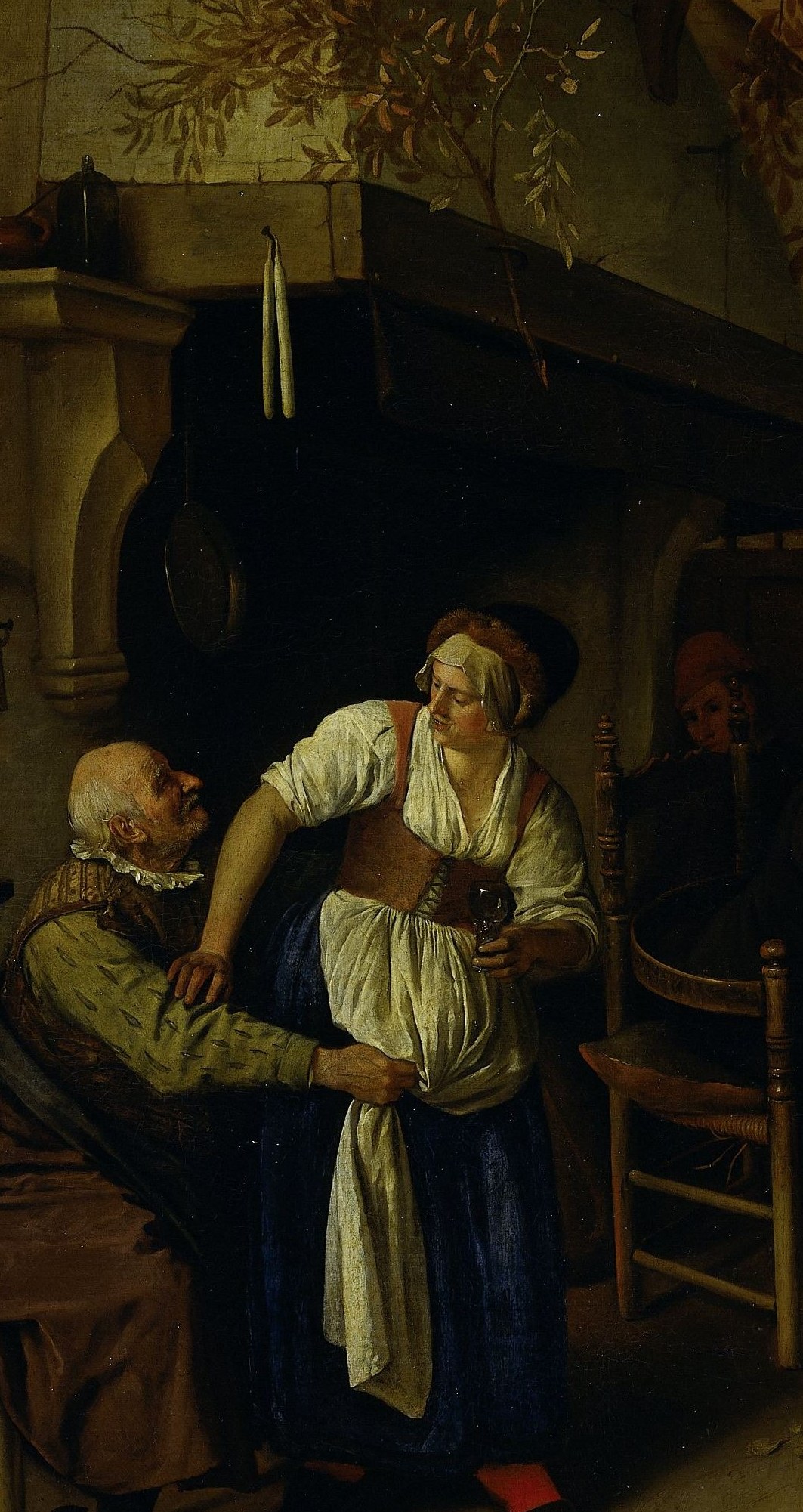
Interior of an inn with an old man amusing himself with the landlady and two men playing backgammon, known as 'Two kinds of games' by Jan Steen
Jan Steen's 'Two Kinds of Games' (1669, Rijksmuseum) is a tavern scene that works like a joke with a long setup and a perfect punchline. Steen was the great comic dramatist of the Dutch Golden Age, and he packed his interiors with enough moral mischief that his name entered the language, a 'Jan Steen household' still means a lively, untidy home in Dutch.
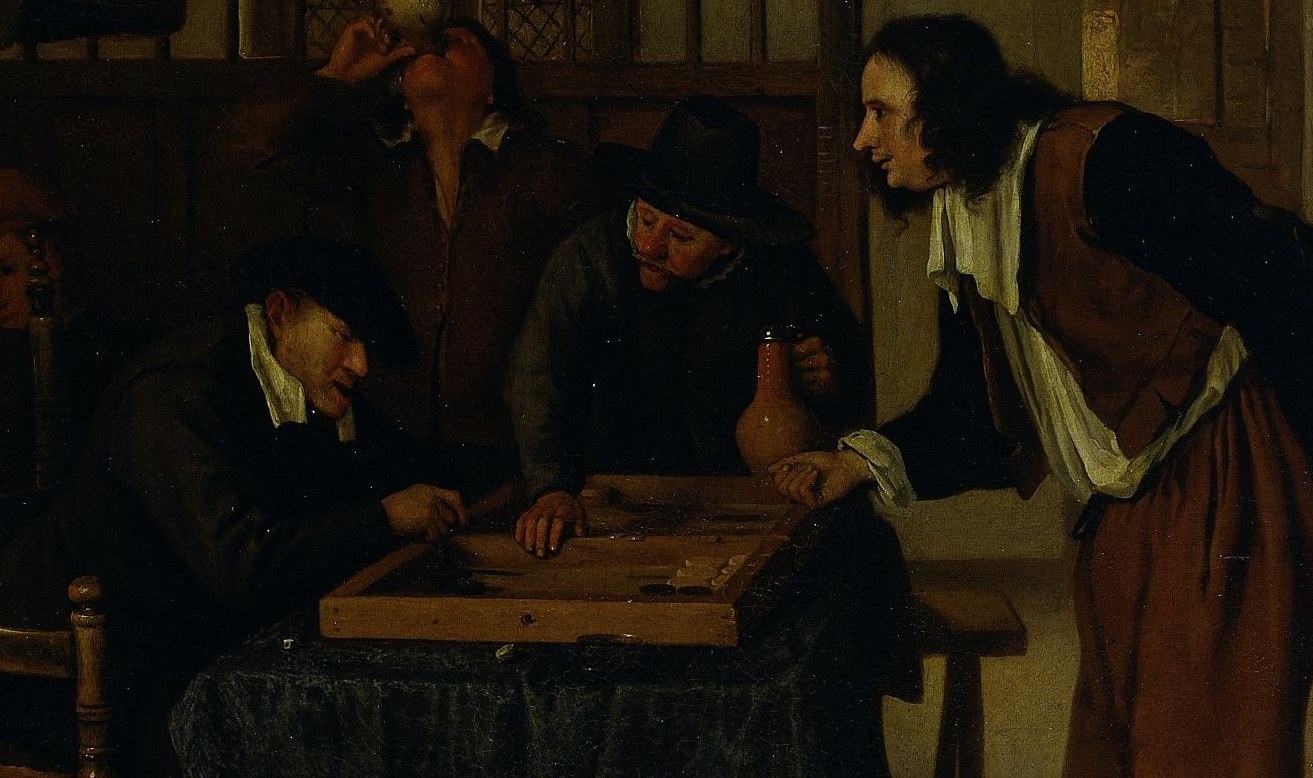
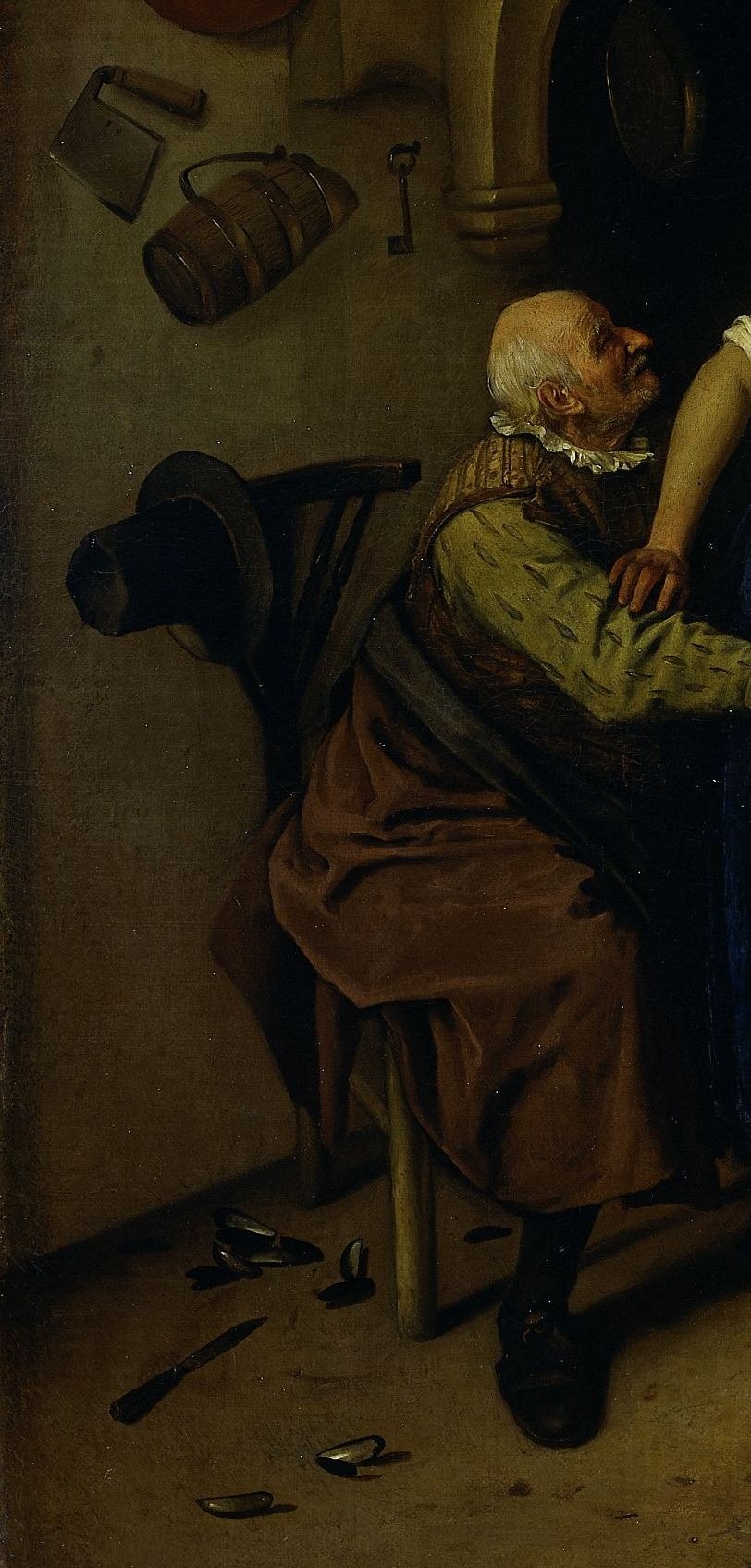
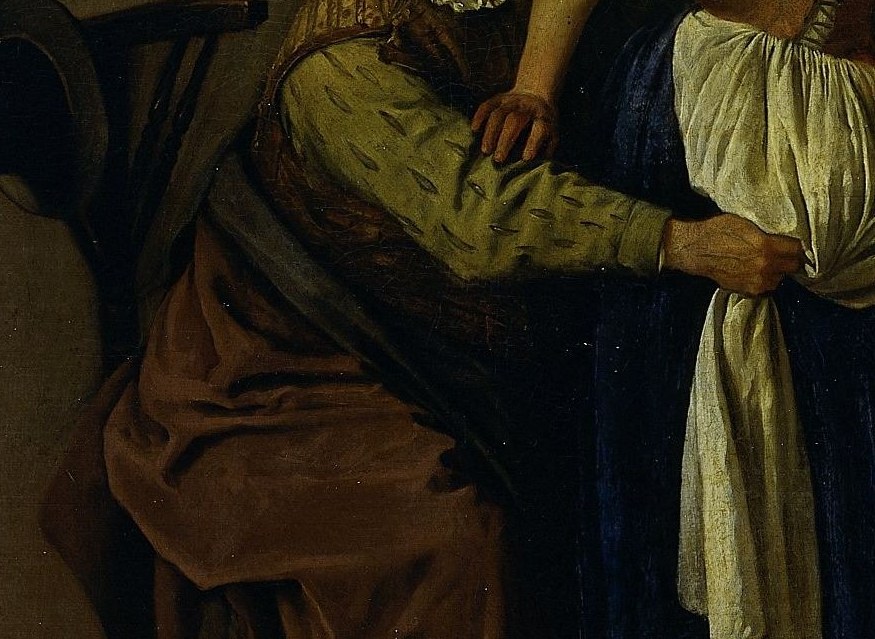
The painting tells two stories at once. Two men play backgammon at the table, fully absorbed in the respectable game. Behind them, an old man has turned his chair away from the table and is reaching for the landlady. Steen freezes his outstretched hand in mid-air so the gesture cannot be missed, the lecherous intent is the visual payoff. The landlady's face holds the ambiguity: amusement, mild rebuff, or both.
Steen painted this in 1669, at the height of his powers, when his reputation for psychological insight and abundant color was well established. The two kinds of games in the title are the board game and the flirtation, one cerebral, one bodily, and the painting quietly asks which is the more ridiculous. Even the litter on the floor plays its part: scattered objects were Steen's shorthand for the wages of idle pleasure.
Next time you look at a crowded genre scene, check the corners. Steen almost always tucked a witness, a joke, or a broken jug somewhere in the room.
Details
Transcript
In a 17th-century Dutch inn, two men are absorbed in backgammon. They are playing one kind of game. But the painting has a second title. Behind them, an old man is reaching for the landlady. Look at his hand. It hangs in mid-air, the whole punchline. Her apron pulled his attention first. Now it's her attention he wants. Jan Steen loved moral comedy. His own name became a Dutch verb for a messy household. The scattered floor tells the same story as the title: pleasure, and its little disarrays. And that grin? It knows exactly how foolish he looks. And he doesn't care.