The Feast of Acheloüs by Peter Paul Rubens
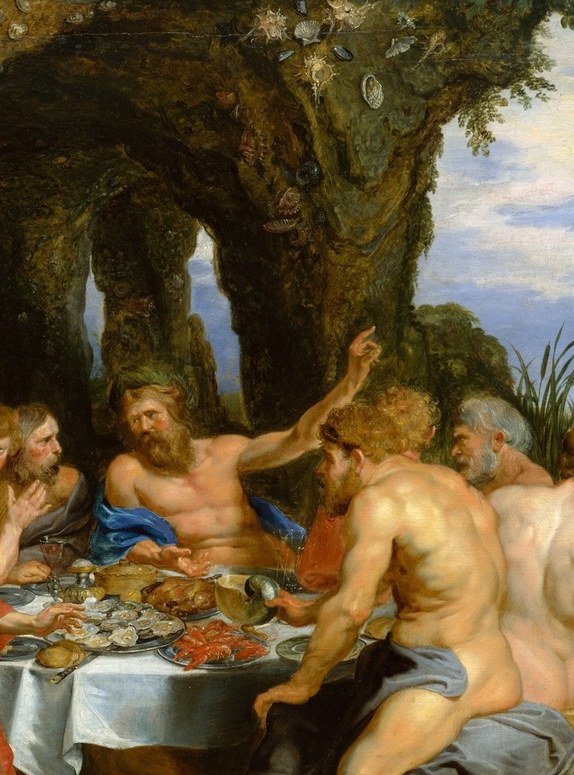
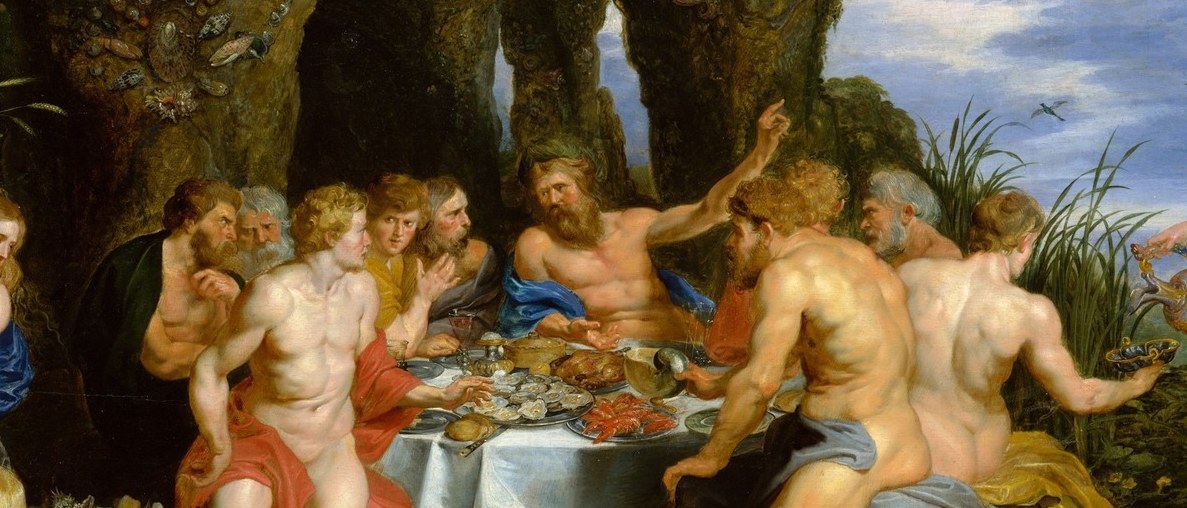
Rubens painted 'The Feast of Acheloüs' in 1615, drawing directly from Ovid's Metamorphoses. It is a mythological dinner party: the river god Acheloüs hosts the hero Theseus in his grotto and recounts his own story over a crowded table of fish, fruit, and wine.
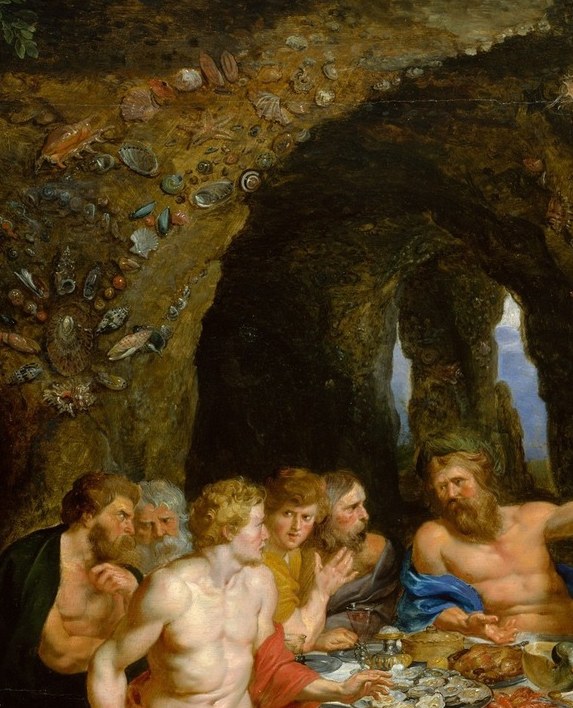
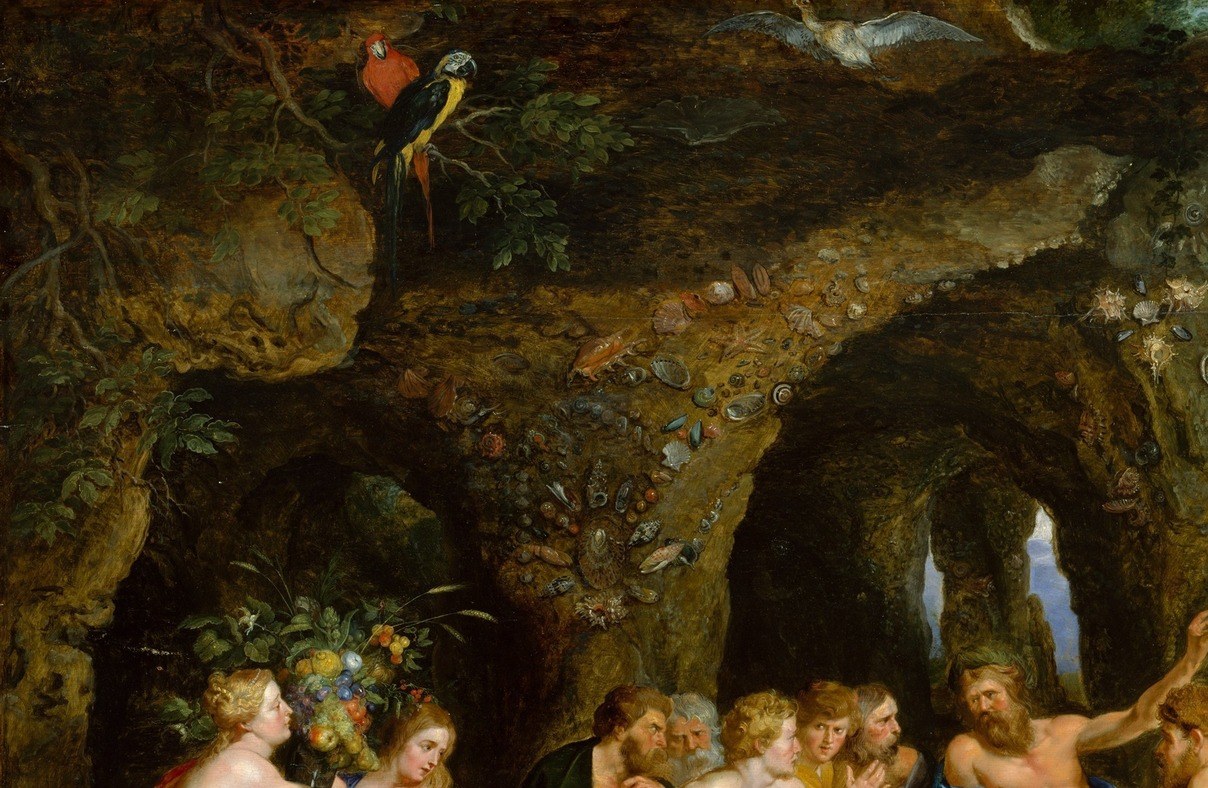
Look at the bearded figure commanding the center. That is Acheloüs himself, gesturing mid-narrative. To his left, the hero Theseus leans in, listening. The rocky arch behind them is the god's river cave, and the abundant food piled on the table is his gift as host. Every detail reinforces the story being told.
The tale Acheloüs tells is one of defeat. He fought Hercules for the hand of a woman and, during the battle, transformed into a serpent, and lost. The feast is what comes after: a peace offering, a god humbled, still powerful enough to host a hero in a beautiful, living grotto. The wine vessel in the foreground belongs to a divine banquet, not a mortal one.
Rubens painted this shortly after returning to Antwerp from Italy, full of classical learning and Baroque energy. The painting itself was likely a collaboration: the lush food on the table was probably painted by his friend Jan Brueghel the Elder, a specialist in still life. The work lives now at the Metropolitan Museum of Art.
Details
Transcript
A river god hosts a hero for dinner. His name is Acheloüs. He commands the whole grotto. The rapt listener is Theseus, the hero who will soon leave. This dense, dark arch: the god's own river cave. The piled fish and fruit are his gift of abundance. But the story Acheloüs tells is about losing his power. He once transformed into a serpent. Hercules defeated him. Now he offers wine, not battle. The feast is a peace.