Windflowers by Ruger Donoho
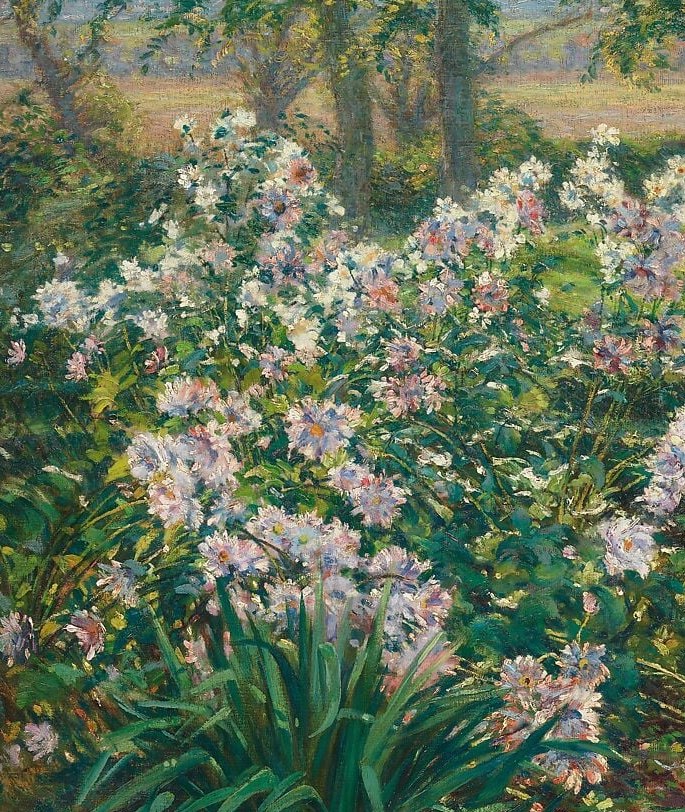
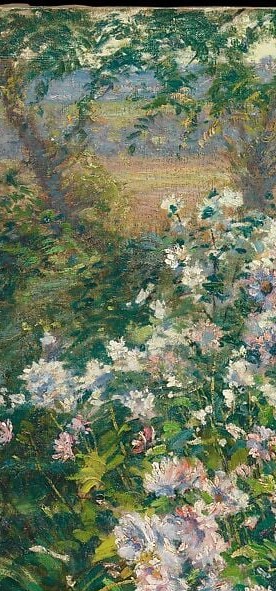
Ruger Donoho’s *Windflowers*, painted in 1912, holds a small secret in plain sight. The canvas is an explosion of white and lavender petals built up with thick, unblended brushstrokes that make the garden seem to shiver in a breeze. It lives in the American Wing of the Metropolitan Museum of Art.
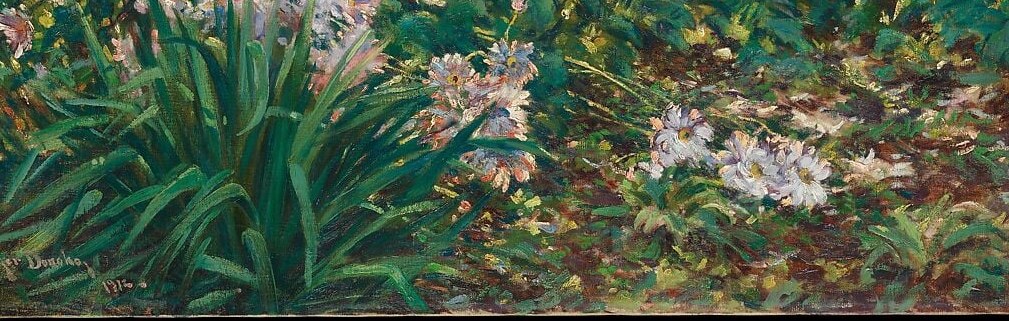
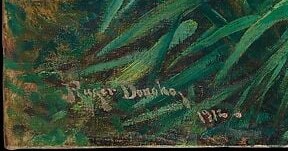
Let your eye sink through the flowers and the strappy green leaves in the lower left corner until you find his signature. The name “Ruger Donoho” and the date are legible at this resolution, tucked beneath the foliage like a footnote to all that blossom. It’s a detail many reproductions crop out, but it rewards the close viewer with a direct link to the man holding the brush.
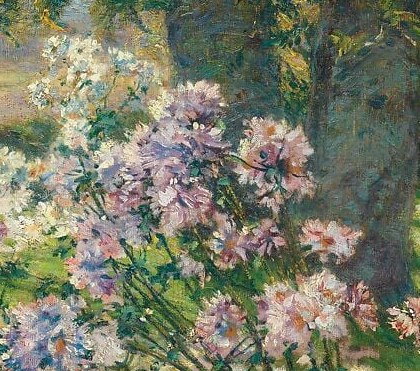
Donoho was an American painter born in Church Hill, Mississippi, who settled on Long Island. That is where he painted *Windflowers*, working outdoors to record exactly how afternoon light pools on grass and dissolves petals into near-white impasto. The thickest, brightest spot sits on the upper right cluster, a virtuoso passage of sunlight rendered in oil paint that, up close, borders on abstraction.
The painting is a study in fleeting beauty, but the signature grounds it. A hand was here.
Details
Transcript
A garden in full, trembling bloom. Hundreds of petals built with nothing but dabs of paint. Ruger Donoho painted this en plein air, chasing sunlight on Long Island. He signed it in the lower left. See it? Tucked beneath the strap-like leaves. Easy to scroll past. It's a quiet reward for the slow looker.