Telemachus and Calypso by West, Benjamin
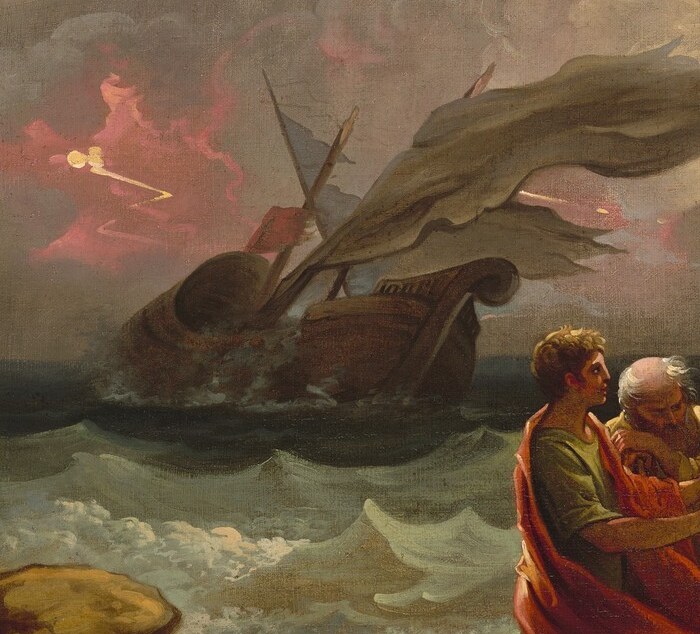
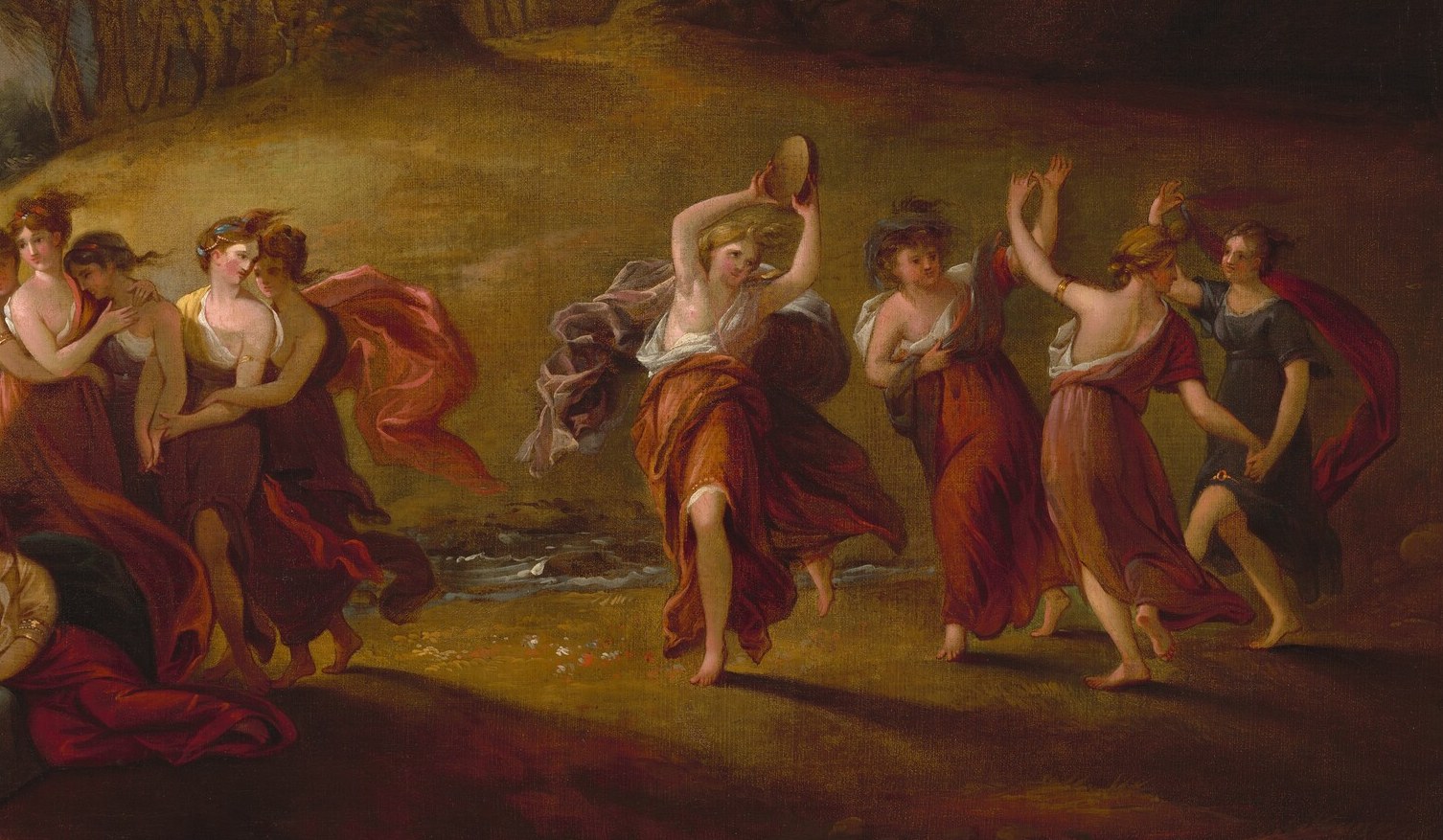
Benjamin West's "Telemachus and Calypso," painted around 1809, captures a poignant moment from Greek mythology. Telemachus, son of Odysseus, finds himself shipwrecked on the island of the nymph Calypso, who offers him immortality if he stays with her.
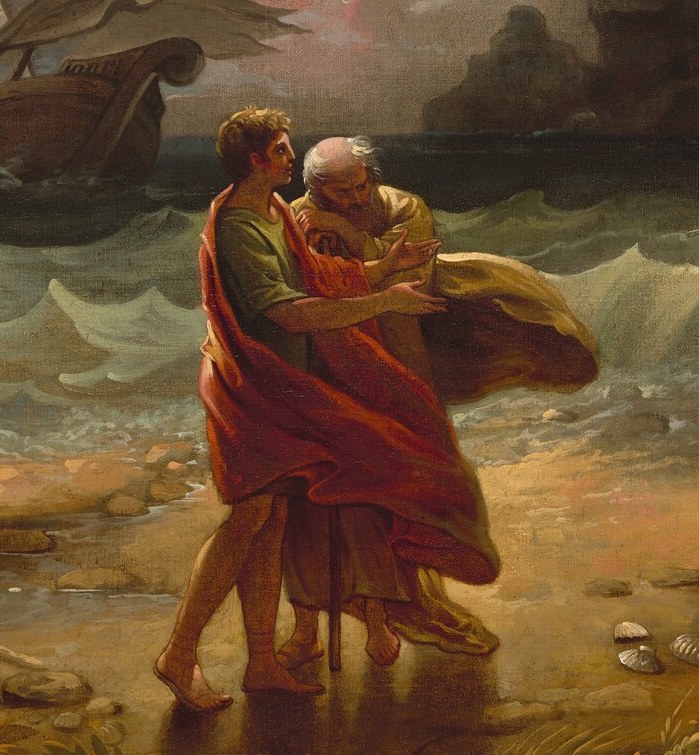
The painting skillfully illustrates the emotional conflict: Calypso reaching out with enticement, contrasted by Telemachus's reluctant posture and averted gaze. Look closely at his hands and the way his body language conveys his longing for home over the allure of a goddess.
West, an American expatriate who became a leading figure in the British art world, often used classical themes to explore moral and heroic ideals. This work exemplifies the early 19th-century fascination with antiquity and dramatic narrative painting.
The tension between divine temptation and the human desire for home resonates deeply. What would you choose?
Details

Transcript
This painter often drew on ancient myths for his grand scenes. Here, the nymph Calypso entreats Telemachus on her island. He has just been shipwrecked. His boat lies broken nearby. Calypso wants him to stay forever, but he yearns for home. Look at his hands, his posture, his reluctance to stay. It shows the tension between temptation and returning home.