Bouquet of Sunflowers by Claude Monet
Claude Monet painted Bouquet of Sunflowers in 1881, now held by the Metropolitan Museum of Art. This still life was made at a pivotal moment, just after his financial situation began to improve and a few years before the first Impressionist exhibition. By this point, Monet was already a master of the loaded brush.
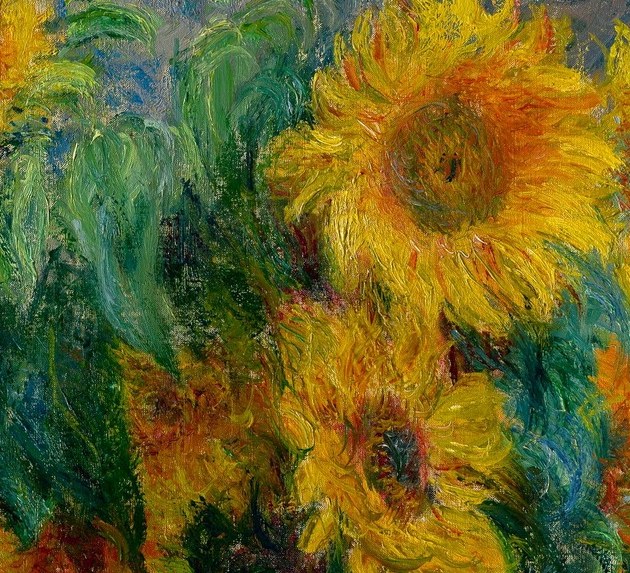
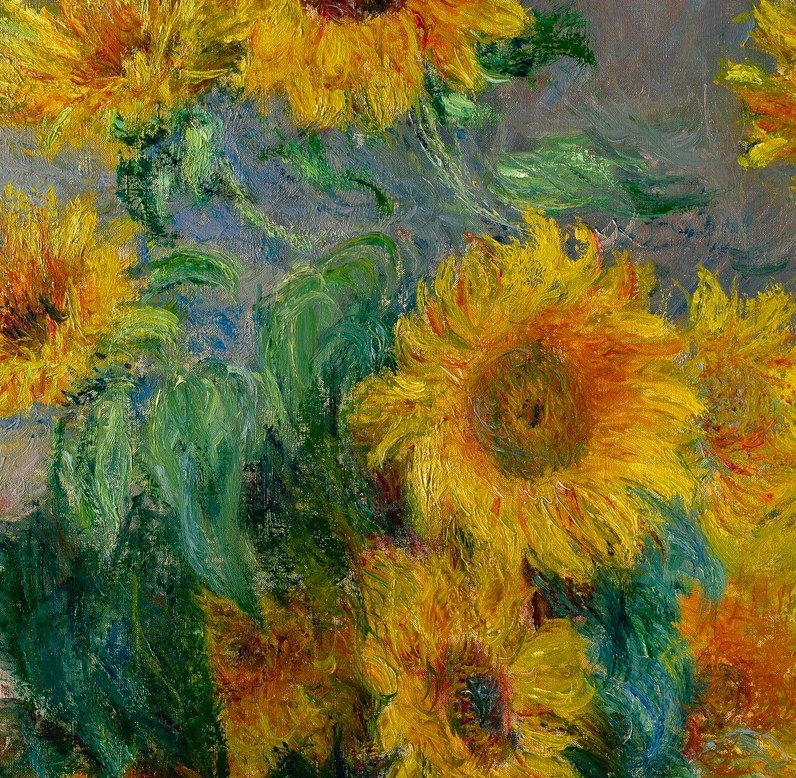
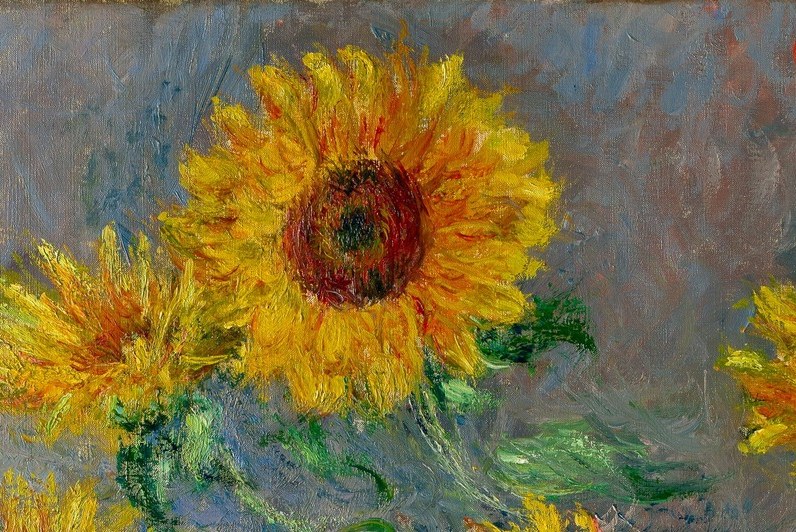
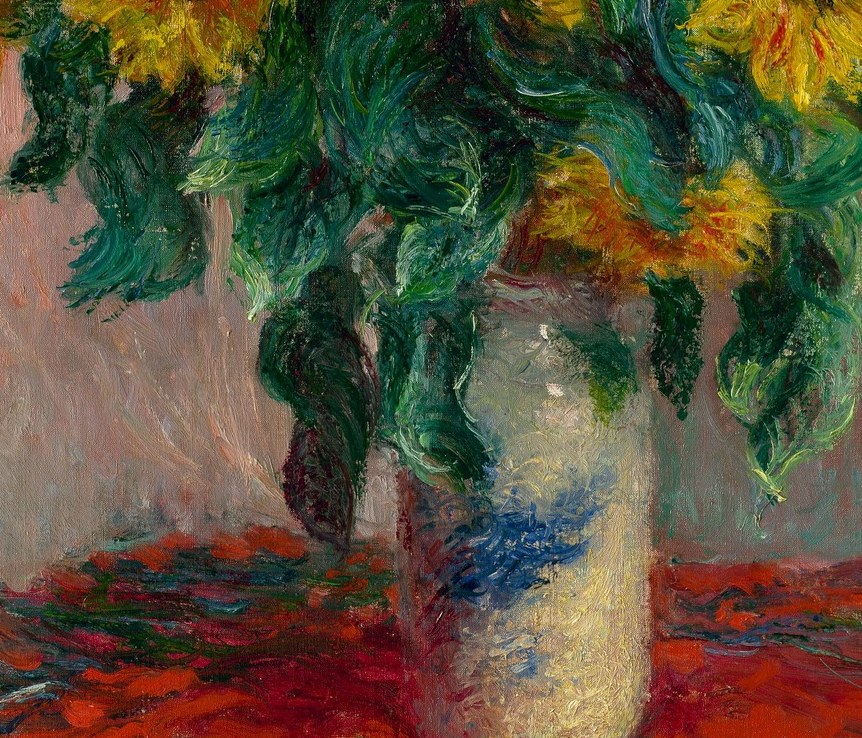
Look at any single yellow petal. You are seeing one motion: a thick, dragged load of paint laid down wet and never reworked. The ridges are the stroke itself. The centers are built the same way, with individual dabs of burnt orange and ochre that read as seed heads only when you step back.
Monet painted quickly because he believed the first perception was the truest one. His brush tracked the speed of changing light. That philosophy defines the Impressionist movement, and you can see its purest form in the petals of this bouquet: each one is a decision, not a correction.
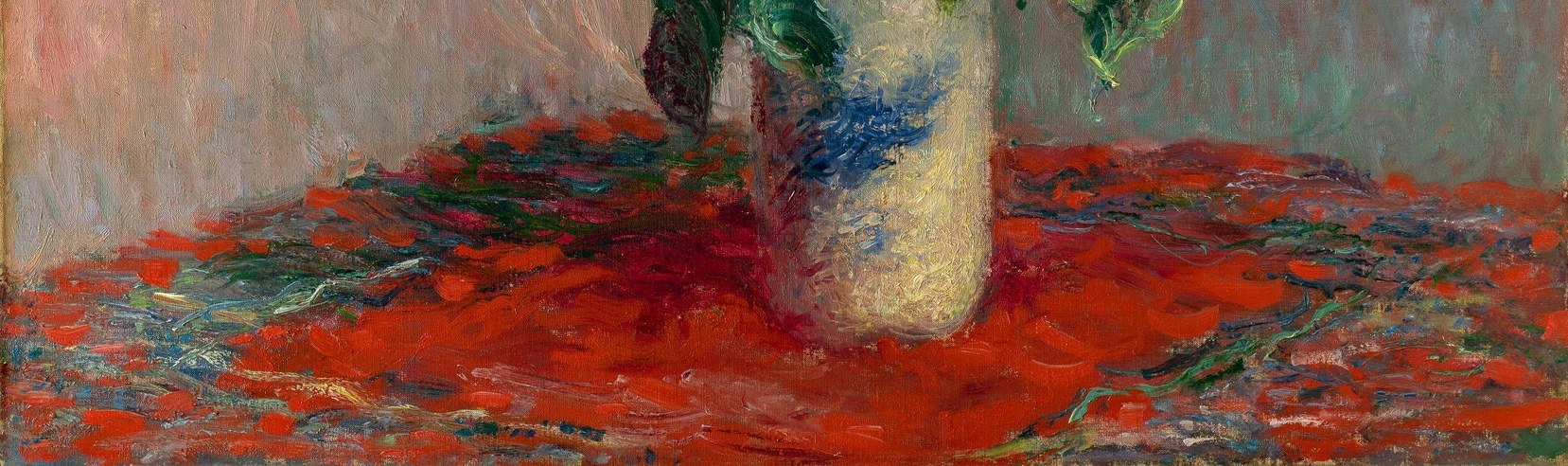
The red patterned tablecloth is another clue to his visual thinking. The dark diamond motif, almost certainly a Japanese-inspired textile, sits beneath all that yellow, making the flower color vibrate by complementary contrast. He designed the whole surface, not just the flower.
Details
Transcript
First, look at the whole thing. It explodes. Now look closer, at any yellow petal. Each petal is a single stroke. A finger's load of oil paint. He never goes back over it. Wet paint into wet paint exactly once. Those orange centers are built the same way: one dab per seed. Monet believed light moved faster than the brush. Speed was the point.