Portrait of Tiburcio Pérez y Cuervo, the Architect by Francisco Goya
Francisco Goya painted this portrait of Tiburcio Pérez y Cuervo in 1820, a year of seismic political upheaval in Spain. The painting hangs in a museum collection and captures the architect with an alert, searching expression that seems to hold the uncertainty of his times.
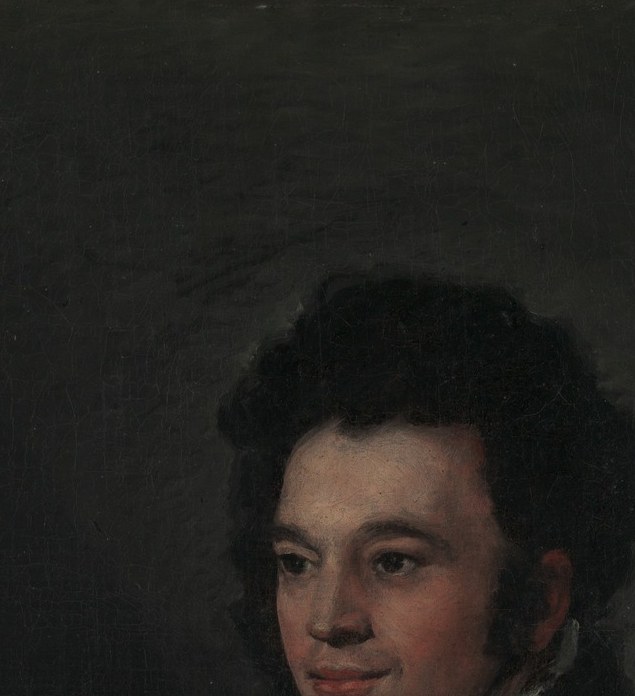
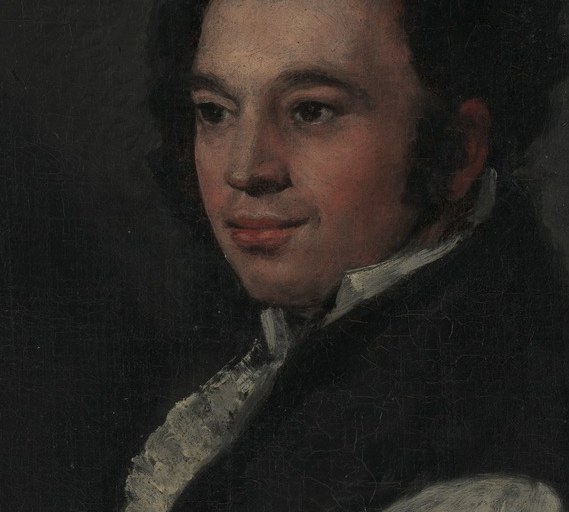
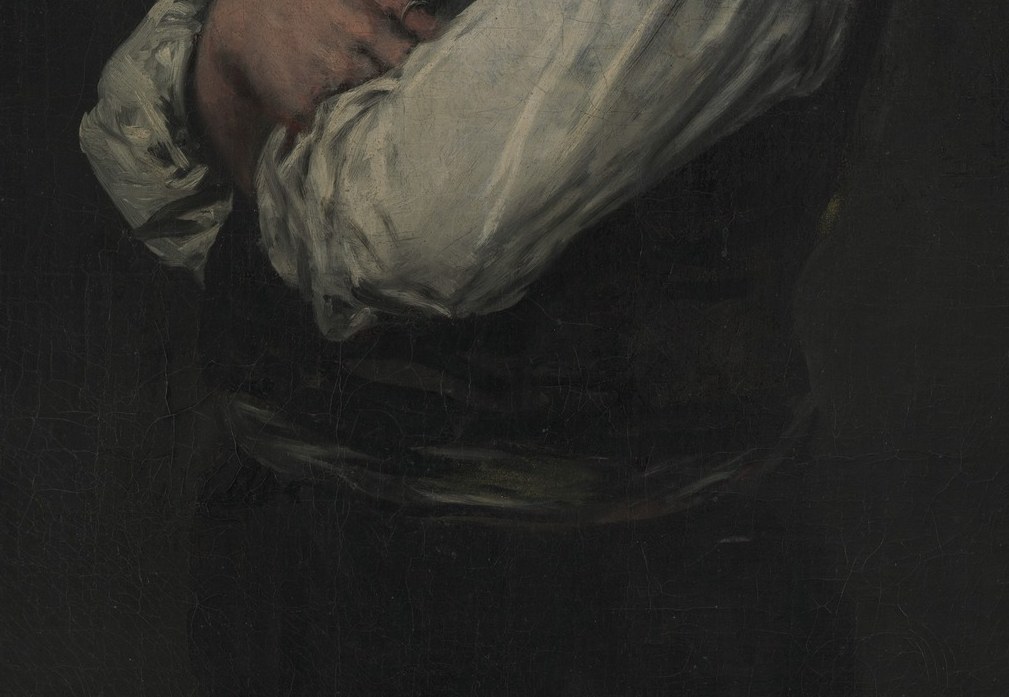
Look at the sitter's eyes first. Goya renders them with enough specificity to convey a restless intelligence, while keeping the surrounding paint loose and murky. Then look at the brilliant white shirt and neckcloth, the brightest passage in the painting, which acts as a reflector bouncing light up toward the face. Finally, notice the crossed arms, a pose of self-containment that was an unusually assertive choice for a civilian professional rather than a general or grandee.
The year 1820 had begun with a military revolt that forced King Ferdinand VII to restore the liberal constitution of 1812, ushering in a brief period of progressive reform known as the Liberal Triennium. Against this backdrop, Goya depicts Pérez y Cuervo not as an aristocrat but as a member of a rising bourgeois professional class, a new kind of power in Spanish society. Goya himself was seventy-four years old, profoundly deaf since a severe illness in 1793, and living through his own dark late period.
This is a painting about a threshold: between old Spain and new, between aristocratic rule and liberal reform, between the Old Masters Goya had inherited and the modern sensibility he was inventing. What do you see in the architect's eyes?
Details
Transcript
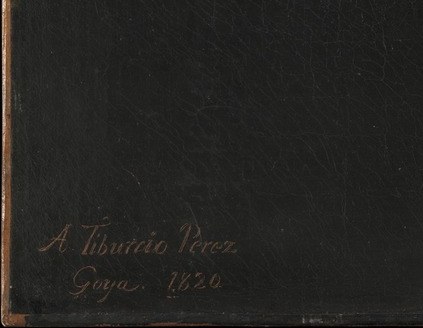
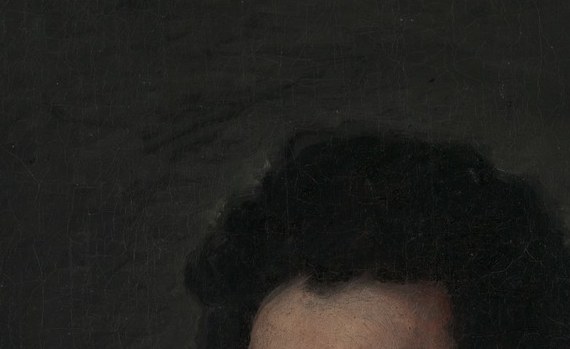
The year is 1820, the date engraved in the corner. Spain is in political turmoil. A liberal revolution has just forced the king to accept a constitution. This man is not an aristocrat. He is an architect. His dark, direct eyes search out of the murk. He is alert to the moment. The blazing white shirt and neckcloth mark him as a prosperous bourgeois professional. His arms are crossed, a posture of self-contained authority, very rare for a civilian then. Goya, deaf and isolated, paints him with almost architectural simplicity: a dark horizontal band for the shoulders, a face floating in space. A new kind of man, witnessed by an old master at the edge of a new world.