Abigail Smith Babcock (Mrs. Adam Babcock) by Copley, John Singleton
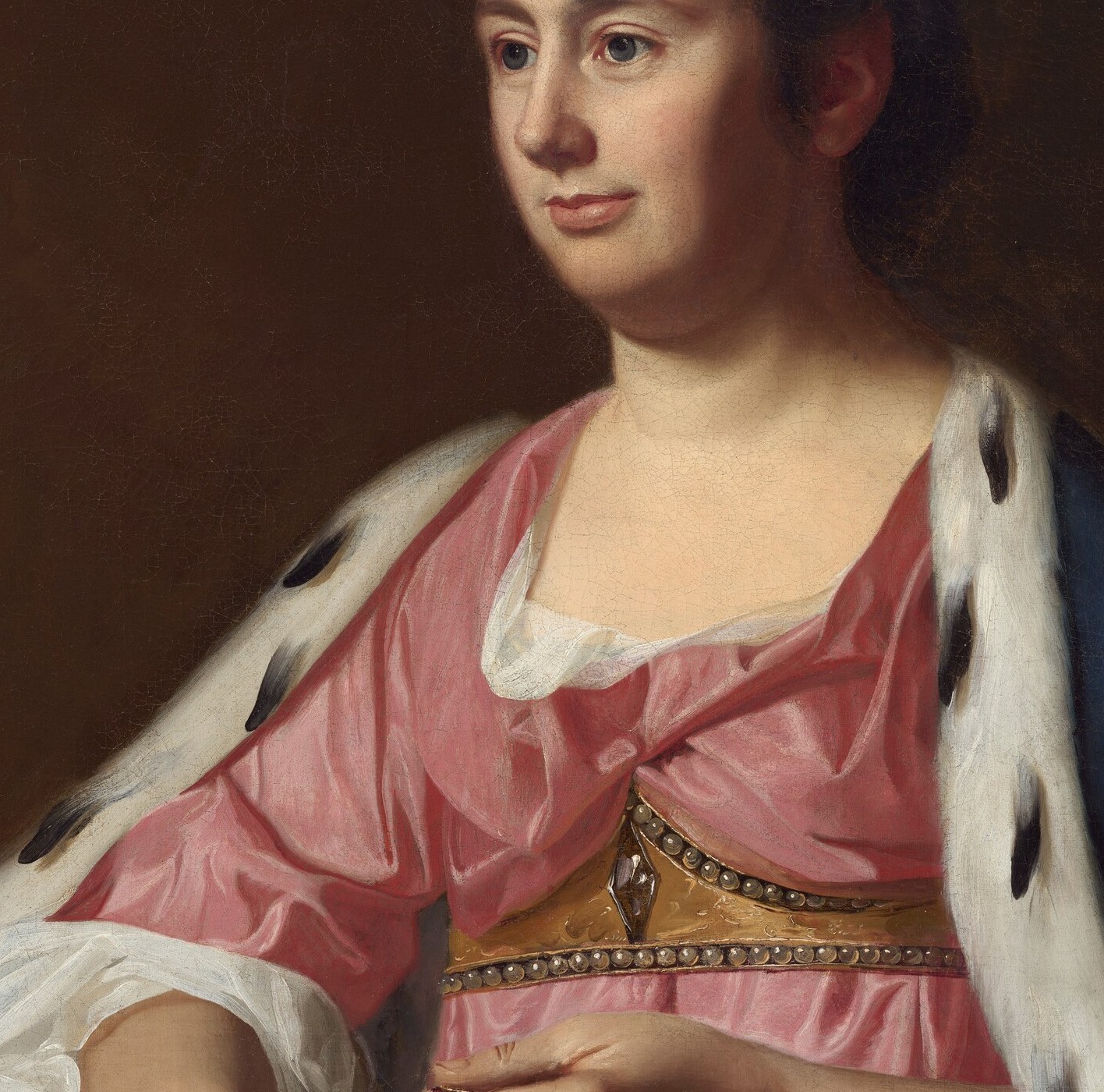
Abigail Smith Babcock (Mrs. Adam Babcock), painted by John Singleton Copley around 1774, hangs in the collection of the National Gallery of Art. The portrait captures the wife of a wealthy Boston merchant in the final months before the American Revolution shattered the colonial elite's world.
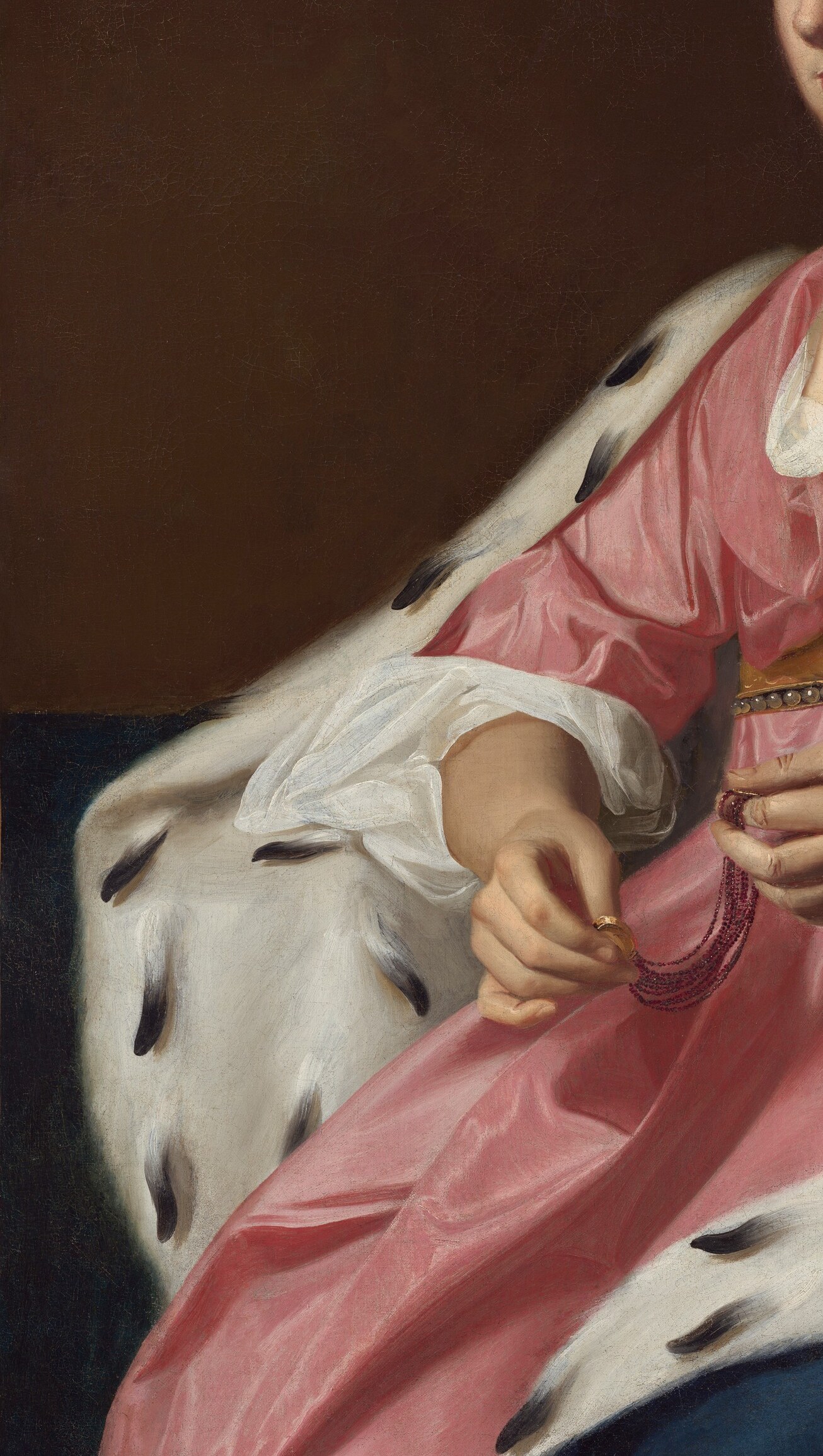
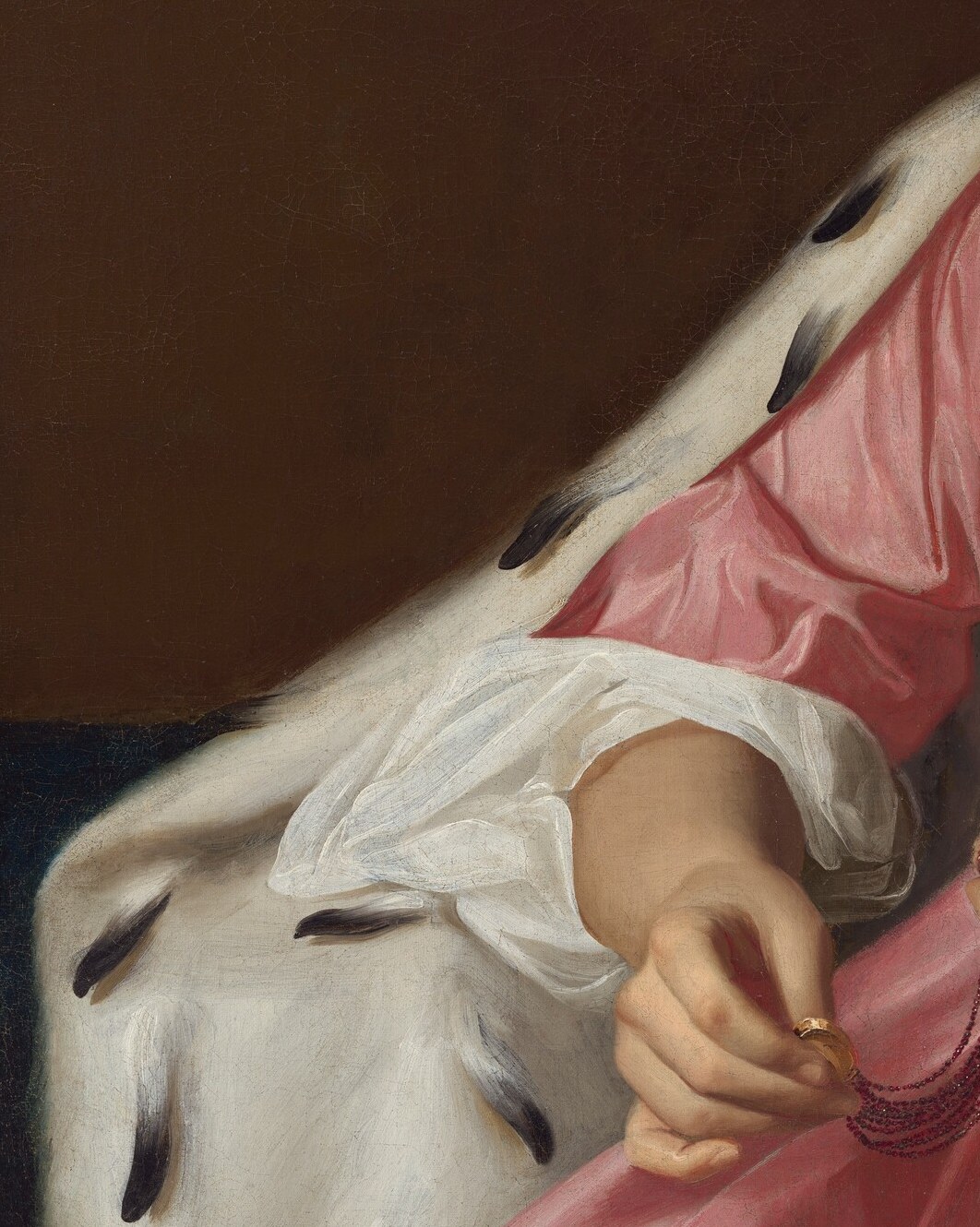
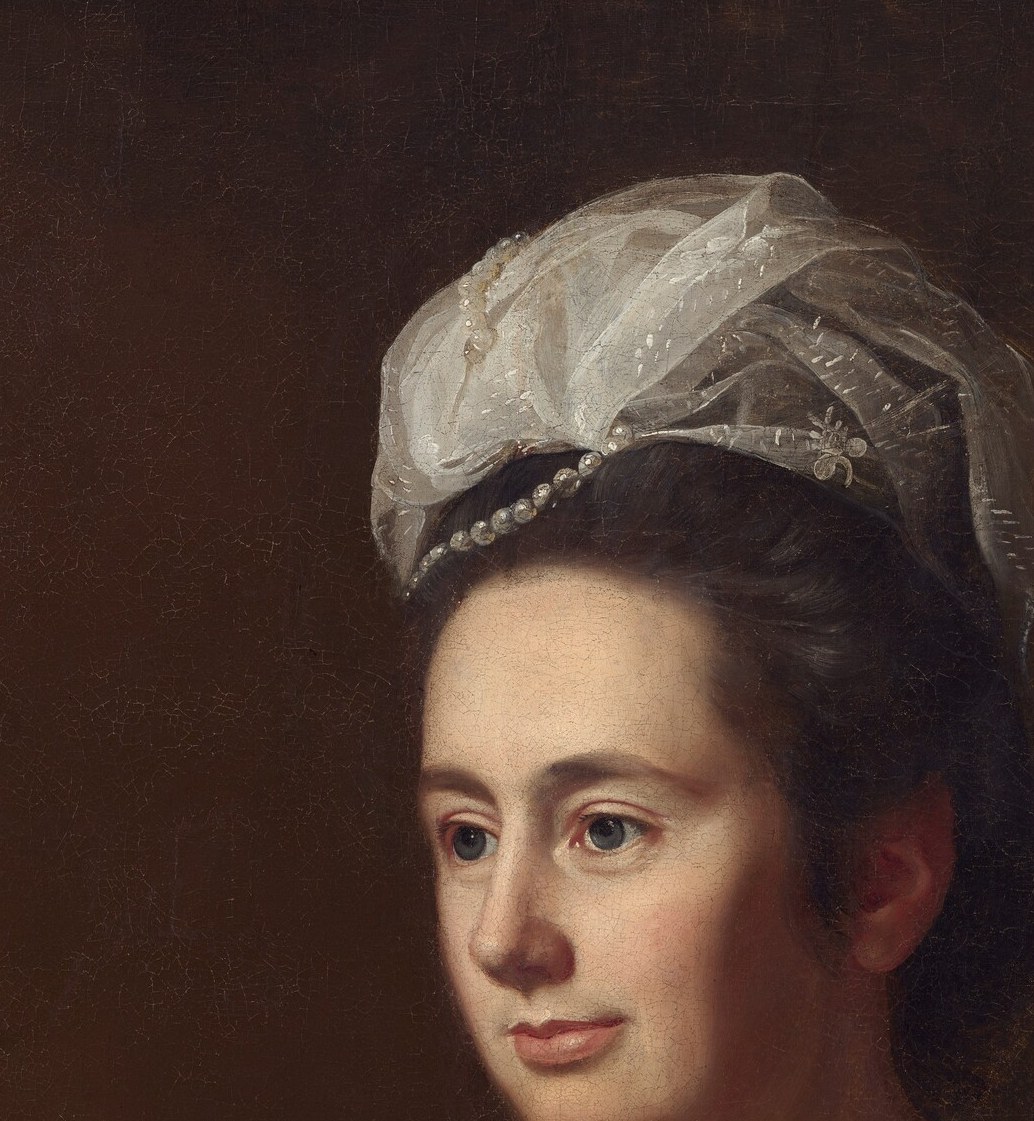
Look first at the white fur draped over her arms. That is ermine, a fur historically reserved for royalty and the highest nobility. Copley painted each small black tail spot individually, a technical flourish visible only on close inspection that separates real ermine from cheaper imitations. Her direct, unguarded gaze was unusual for a colonial wife's portrait and signals a social confidence that reads as almost modern.
Adam Babcock was a successful merchant whose fortunes depended on transatlantic trade, the very system about to be severed by revolution. Copley himself would flee to London in 1774, just after completing this portrait, correctly reading the political winds. The Babcocks remained, and the genteel Anglo-colonial identity this portrait projects, complete with ermine and imported lace, was precisely what the revolution would sweep aside.
A single portrait can hold an entire world on the edge of disappearance. What do you see in Abigail's face, knowing what was coming?
Details
Transcript
Boston, 1774. The tea is already in the harbor. Merchant Adam Babcock commissions this portrait of his wife, Abigail. Look at what's draped over her arms. Ermine. Royal fur, forbidden to commoners for centuries. Copley painted every black tail spot individually. But she is not royal. She is the wife of a colonial merchant. A merchant whose whole trading world is about to explode. Copley would flee to London. The Babcocks' world would vanish.