Untitled by Bhadrabahu
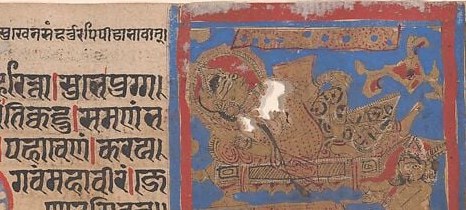
This untitled painting, created by Bhadrabahu in 1449, is a religious work that beautifully illustrates principles of Jainism, an ancient Indian faith. Rendered with ink, opaque watercolor, and gold on paper, it offers a glimpse into spiritual teachings.
The artwork portrays a robed monk seated beneath a stylized tree, imparting wisdom to two smaller, intently listening individuals. The extensive use of shimmering gold leaf in the background is not just decorative; it aims to evoke a sense of the sacred and the transcendent, creating an ethereal light around the central figures.
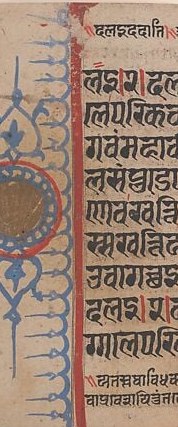
Originating from Gujarat, India, this painting is characteristic of Jain artistic traditions. It exemplifies how visual art was employed to articulate and disseminate spiritual doctrines, serving as aids for contemplation and instruction within the community. The delicate floral motifs and intricate borders further enhance its contemplative aesthetic.
What details do you find most striking in this portrayal of an ancient wisdom tradition?
Details
Transcript
This 15th-century painting uses gold to evoke the sacred. It illustrates principles of Jainism, an ancient Indian faith. A monk, serene and robed, imparts wisdom. Two smaller disciples listen intently to his teaching. The flat gold leaf background suggests a divine, ethereal light. Such works were visual aids for contemplation and instruction.