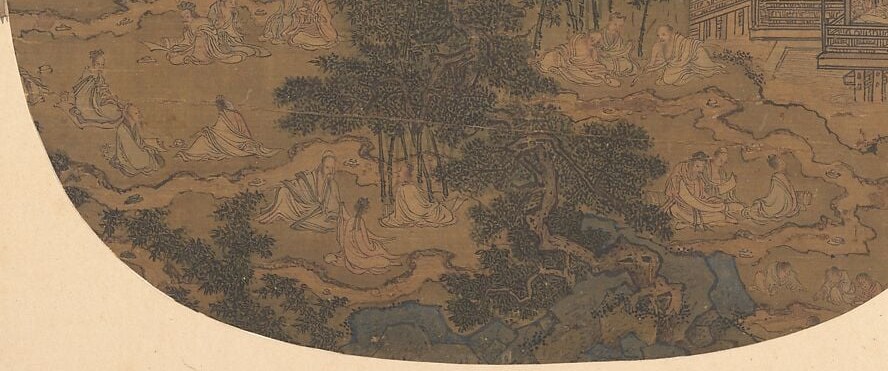
明 佚名 舊傳李公麟 蘭亭修禊圖 團扇|Gathering at the Orchid Pavilion by After Li Gonglin
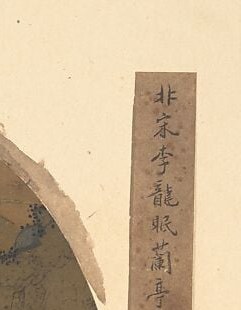
This is "Gathering at the Orchid Pavilion," an ink and color on silk fan from 1549, held in the Metropolitan Museum of Art. For generations, it was attributed to Li Gonglin, the great Northern Song master. The little label in the upper right made that claim, and collectors paid accordingly. Modern pigment analysis tells a different story.
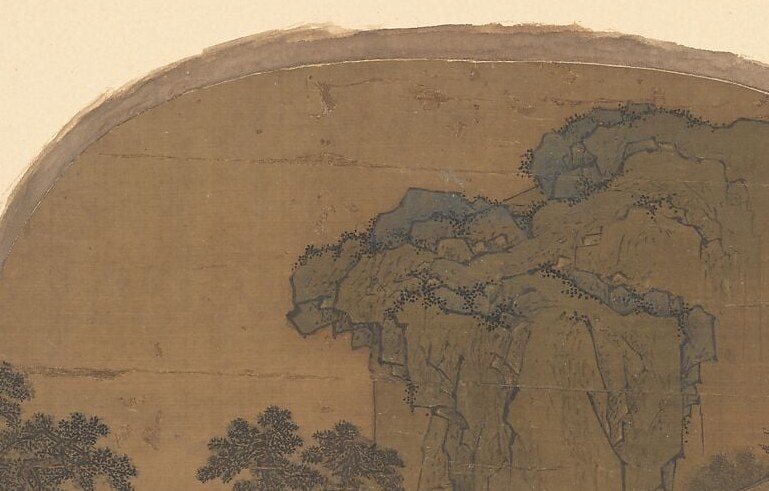
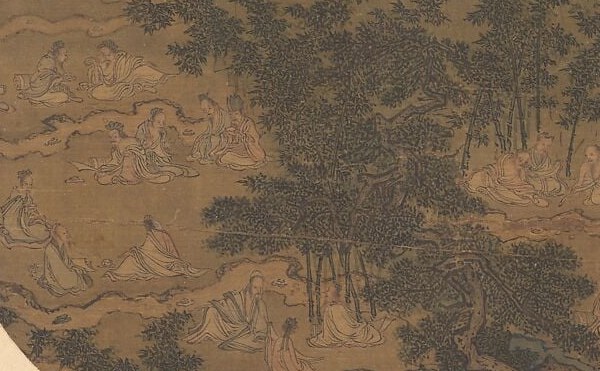
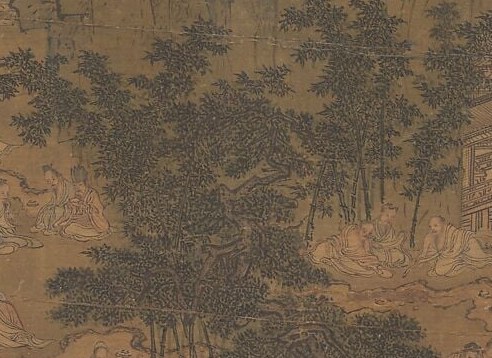
The painting itself is a meticulous time machine. The tiny figures by the stream are 41 scholars recreating the most famous literary party in Chinese history: the Orchid Pavilion Gathering of 353 CE. Look closely at the winding water: they floated cups of wine on it. If a cup reached you before you finished a poem, you drank the forfeit. The pale cliff rising behind them is painted in the baimiao style, an intentional revival of Li Gonglin's own technique, used here to sell the lie.
This kind of commercial forgery was common in the late Ming dynasty. A booming economy created a new class of wealthy collectors eager for Song masterworks, and anonymous painters were happy to supply them. The unknown artist didn't just copy a style, they understood its scholarship, its technique, its pigment chemistry. The malachite-green and azurite-blue washes on the trees are real crushed minerals embedded in the silk.
The irony: the forgery is now four centuries old and a masterpiece in its own right. The label that once inflated its value is now a historical artifact of how the Ming art market worked. We collect the deception.
Details
Transcript
For centuries, collectors believed this was painted in 1100. The label credits Li Gonglin, a master of the Northern Song. But the label is a lie. The pigment chemistry and silk weave pin it to the late Ming dynasty. An unknown painter forged the past to sell to a hungry market. The scene they chose was China's oldest literary party: 353 CE. Poets floated wine cups on this stream, racing for a verse.