The Marriage at Cana by Master of the Catholic Kings

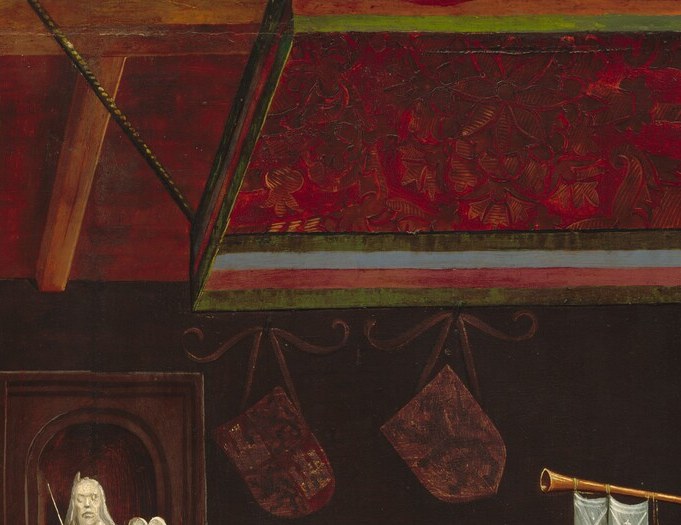
In "The Marriage at Cana," painted around 1496 by the Master of the Catholic Kings, a subtle detail at the top of the canvas adds profound meaning to this biblical scene. While the eye is drawn to the vibrant wedding party and Christ's miracle, two small white birds perch almost unnoticed above the festivities.

These birds, likely doves, would have been immediately recognized by a 15th-century viewer as symbols of the Holy Spirit. Their quiet presence transforms a lively wedding banquet into a moment imbued with divine significance, underscoring the spiritual power of Christ's first miracle.

The Master of the Catholic Kings, an anonymous but influential artist of the period, created this oil on panel work, now in a museum collection. His meticulous attention to both grand narrative and subtle symbolism is a hallmark of his style.

Next time you see a religious painting, consider what small details might be speaking volumes.

Details
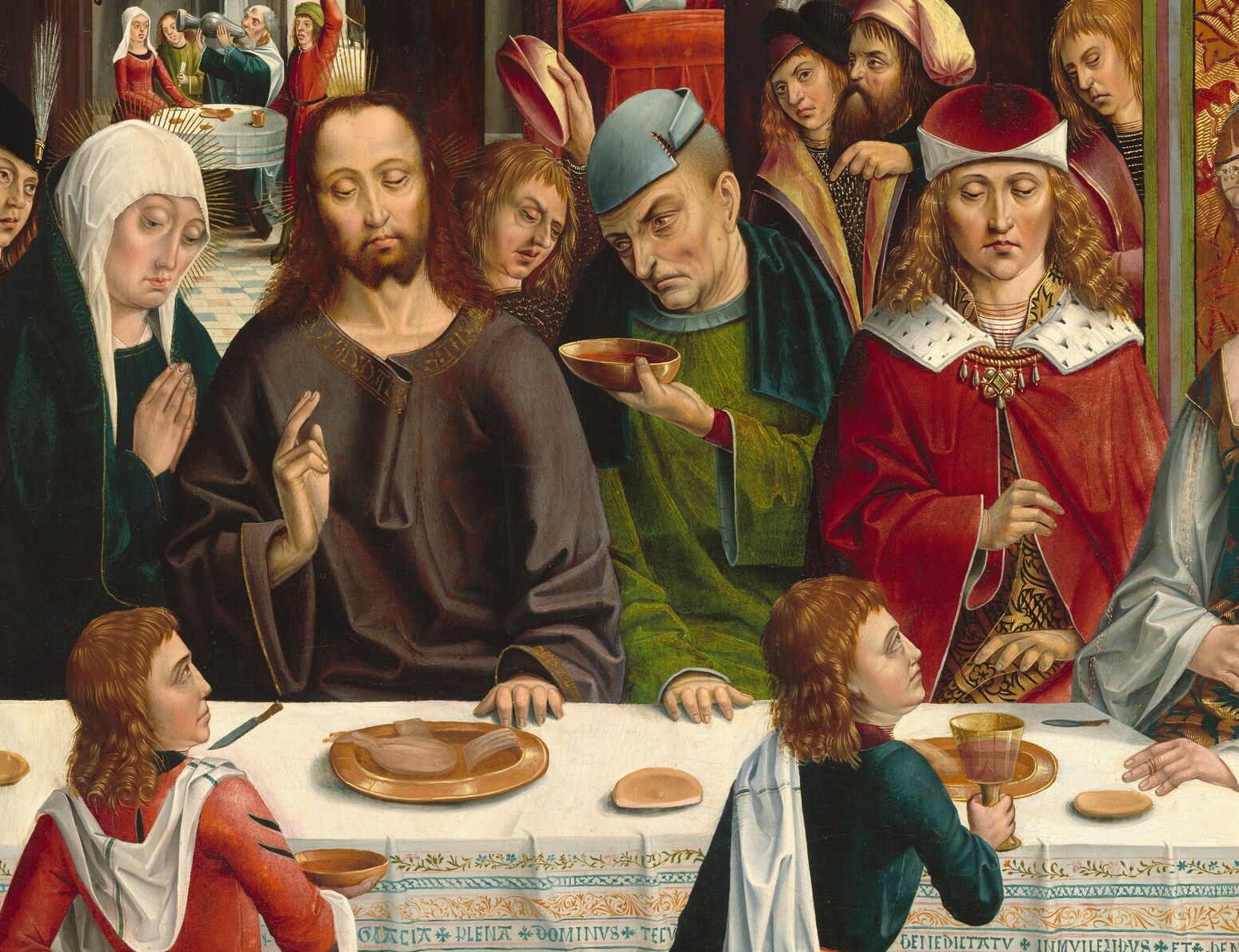
The feast is underway, with a richly dressed wedding party.
Look closely at the very top, almost out of frame.
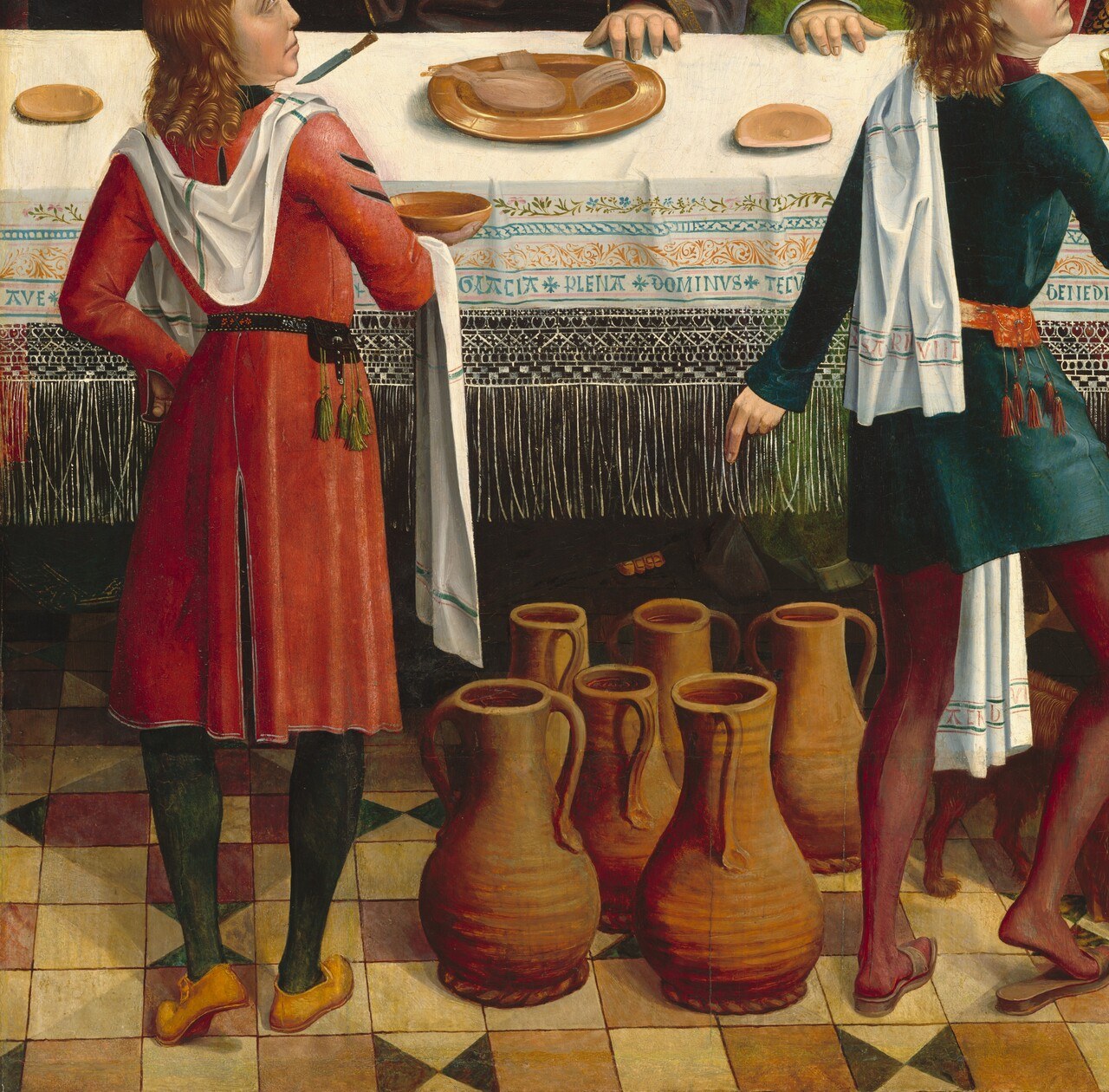
The miracle's literal props , the six stone jars filled with water that Christ turned to wine; their monumental placement in the foreground anchors the entire biblical narrative and would be instantly legible to a 15th-century viewer
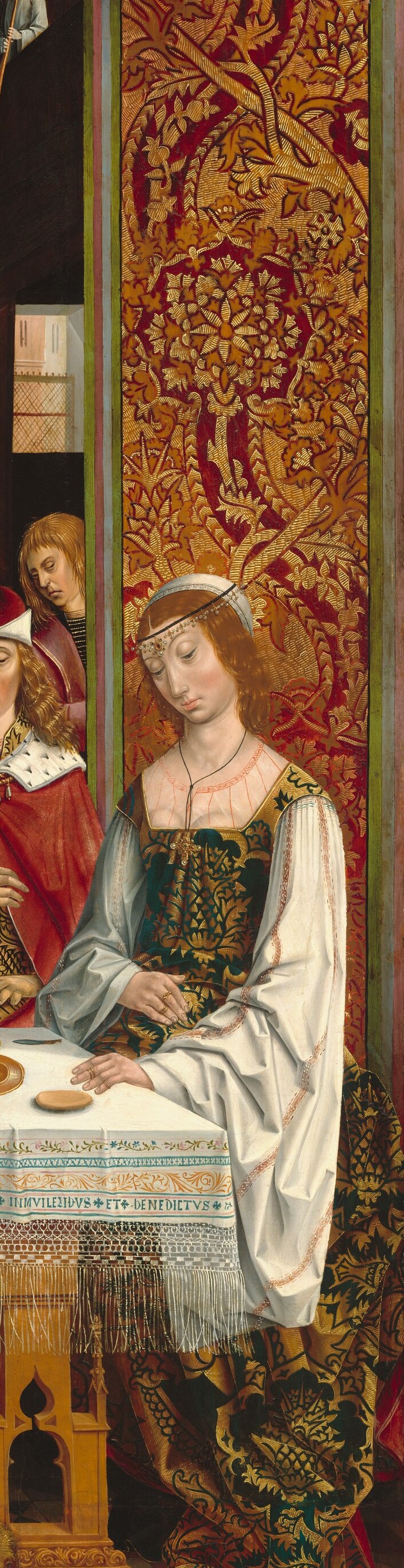
Her richly detailed Spanish late-Gothic costume and towering headdress signal aristocratic status; the costume is a primary document of Catholic Kings-era fashion and gives the scene its courtly register
Dense gilt interlace decoration in the Isabelline Plateresque style , one of the clearest markers of Spanish patronage in the period; frames the composition like a reliquary border
Transcript

This painting shows Christ's first miracle, turning water into wine. The feast is underway, with a richly dressed wedding party. Look closely at the very top, almost out of frame. Two small white birds perch above the celebrations. In this era, doves often represented the Holy Spirit. Their presence elevates a wedding feast to a divine event.