The Assumption of the Virgin with Saints Michael and Benedict by Luca Signorelli
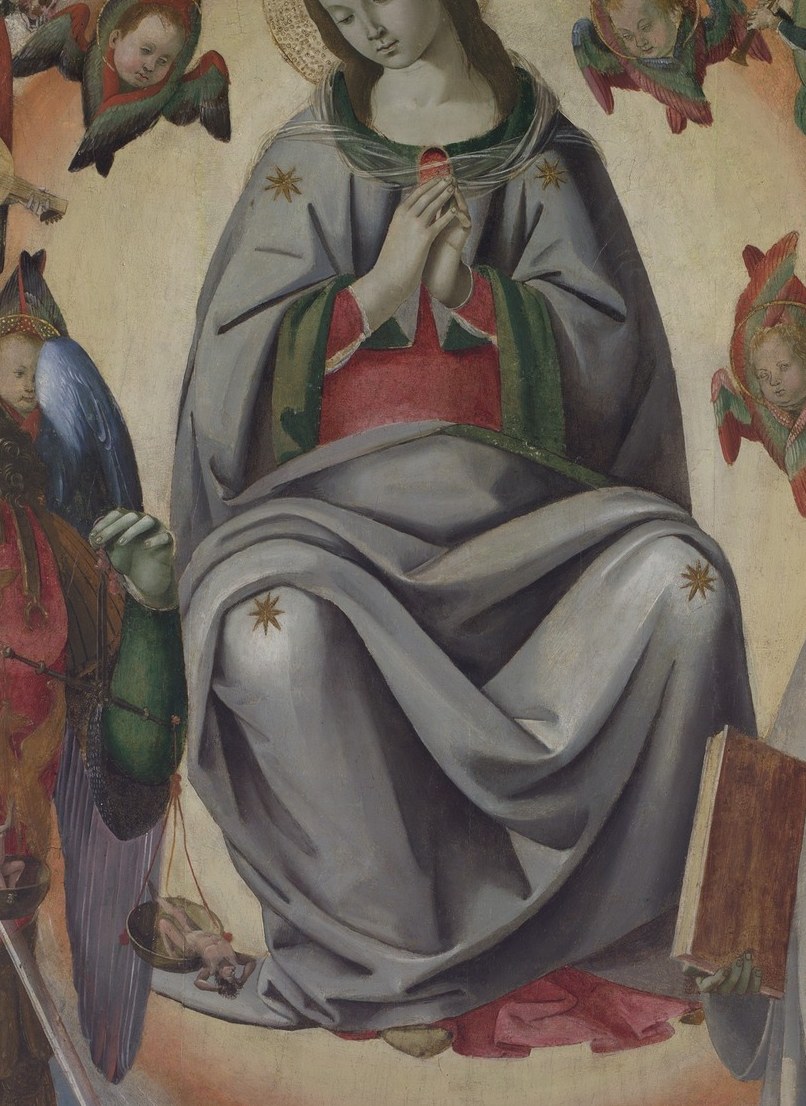
This is Luca Signorelli’s altarpiece The Assumption of the Virgin with Saints Michael and Benedict, painted around 1493. It is a compact theological argument made visible: the active life, the contemplative life, and the body taken into glory are all encoded in the figures and objects across the panel.
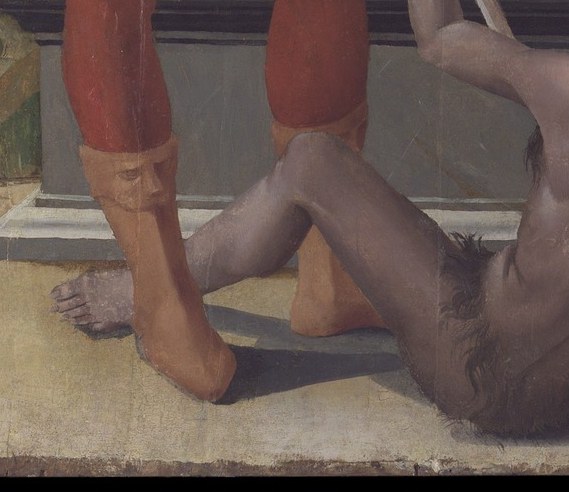
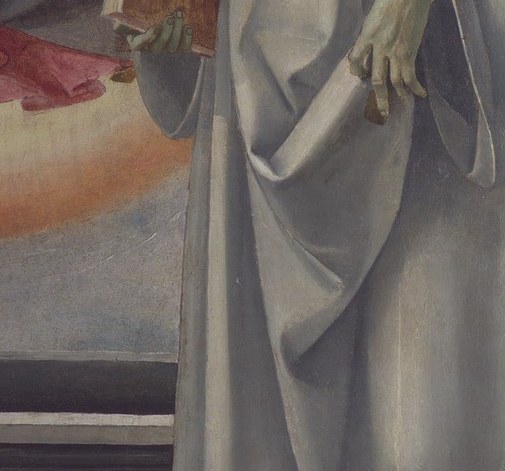
Look first at the bottom shadows. Under Saint Michael’s armored foot is a dark, defeated demon. It is easy to miss, but it legitimizes his warrior stance. Across from him, Saint Benedict holds an open book, his monastic Rule. Where Michael fights, Benedict orders. Together they represent two paths to grace: action and contemplation.
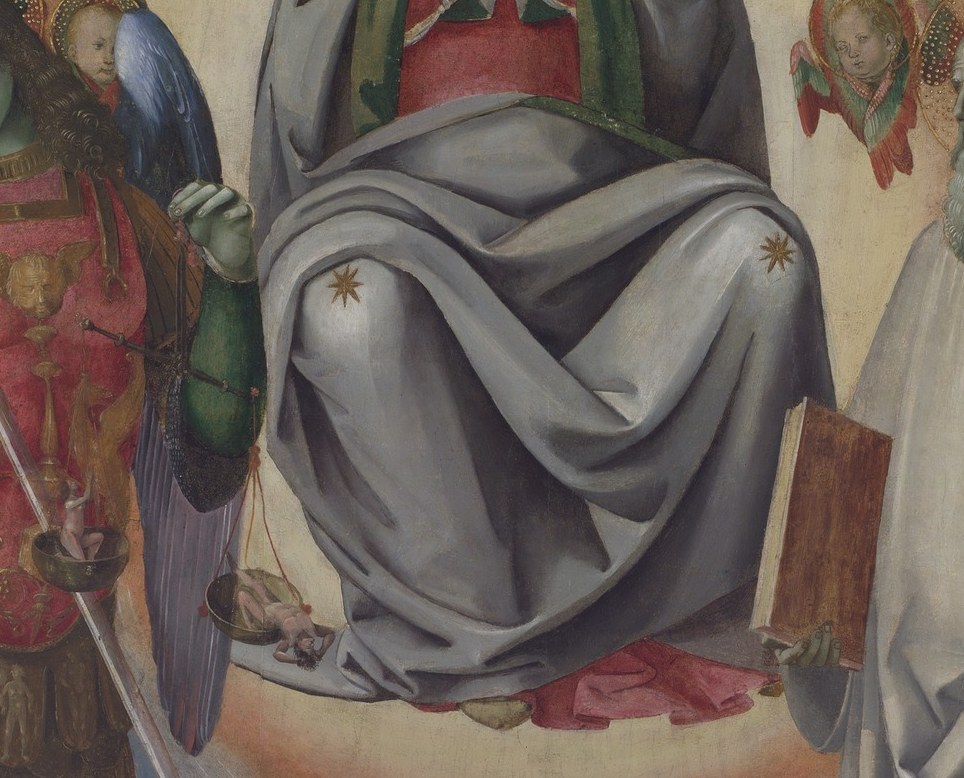
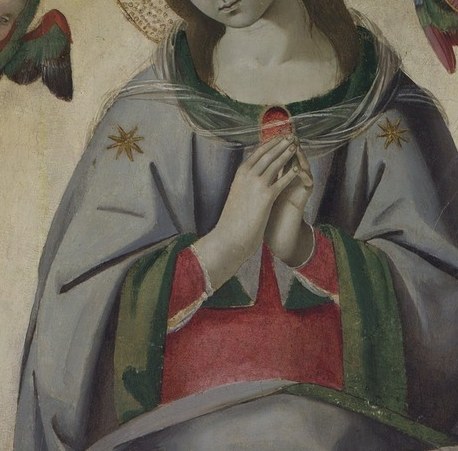
Above them, the Virgin sits inside a luminous almond-shaped mandorla. In Catholic iconography, a mandorla signals a boundary between worlds. Mary is shown crossing from earthly to heavenly space, body and soul. Signorelli, trained by Piero della Francesca and later famous for his monumental Last Judgment in Orvieto, was in his early fifties when he painted this. He understood how to make doctrine legible.
The painting rewards slow looking. The corner angels, the slight tilt of the Virgin’s head, the metallic glint on Michael’s armor, each detail was chosen to teach. What detail did you notice first?
Details
Transcript
This is not a casual gathering. The warrior stands on a dark, defeated creature. It is Satan, crushed under Saint Michael’s heel. The monk holds an open book, not a weapon. It is his monastic Rule, a guide for an ordered life. The almond-shaped light encloses the Virgin completely. In iconography, a mandorla marks a figure leaving earthly space. Together they encode a central claim: the active life, the contemplative life, and the body taken into glory.