Madonna and Child with Angels by Ferrarese 15th Century
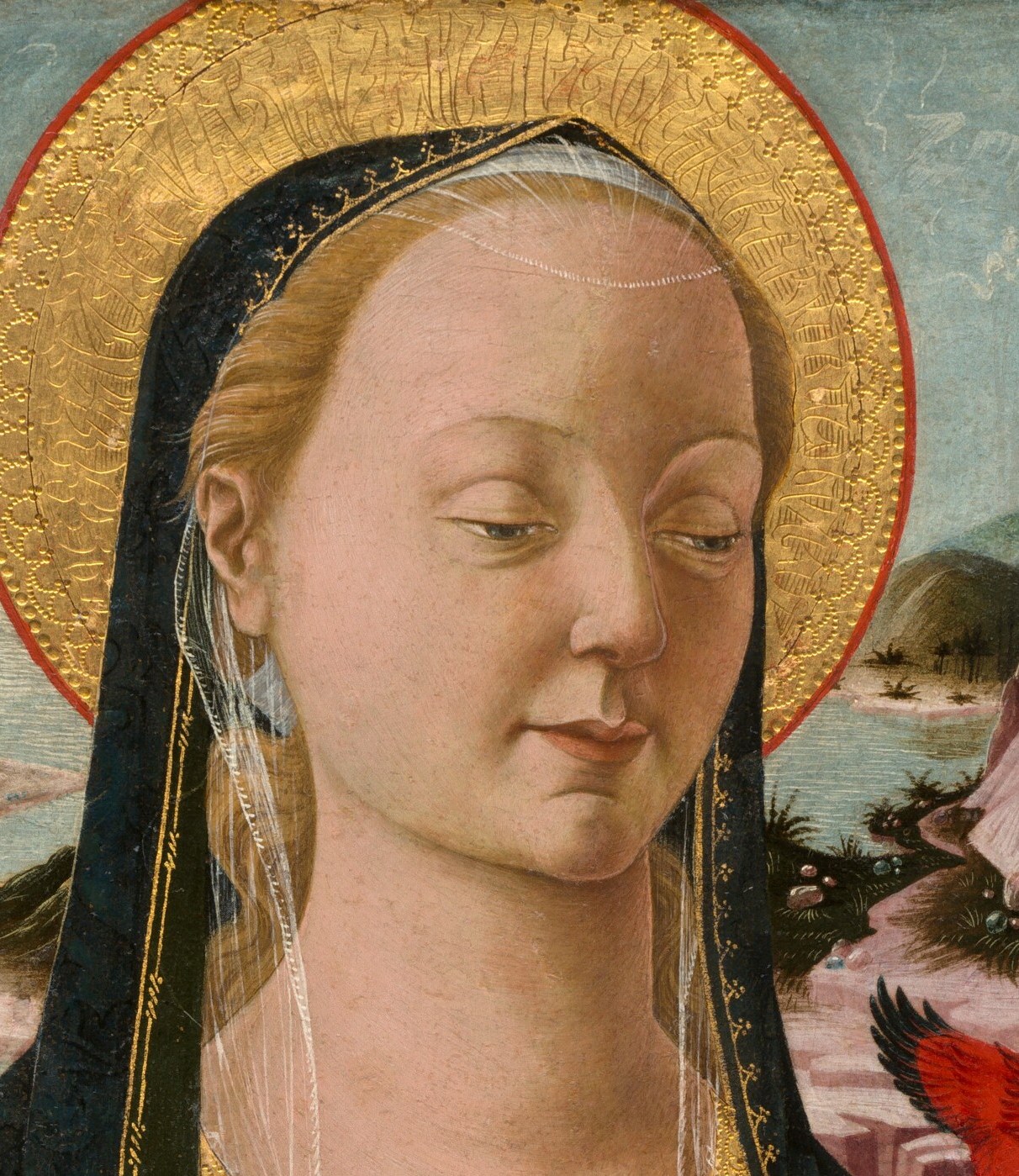
This is Madonna and Child with Angels, painted in tempera on poplar panel around 1460 by an unknown artist in Ferrara, and now in the National Gallery of Art. The first thing that catches the eye is the blue, a deep ultramarine mantle made from crushed lapis lazuli that cost more than gold, signalling the patron's wealth and Mary's celestial status.
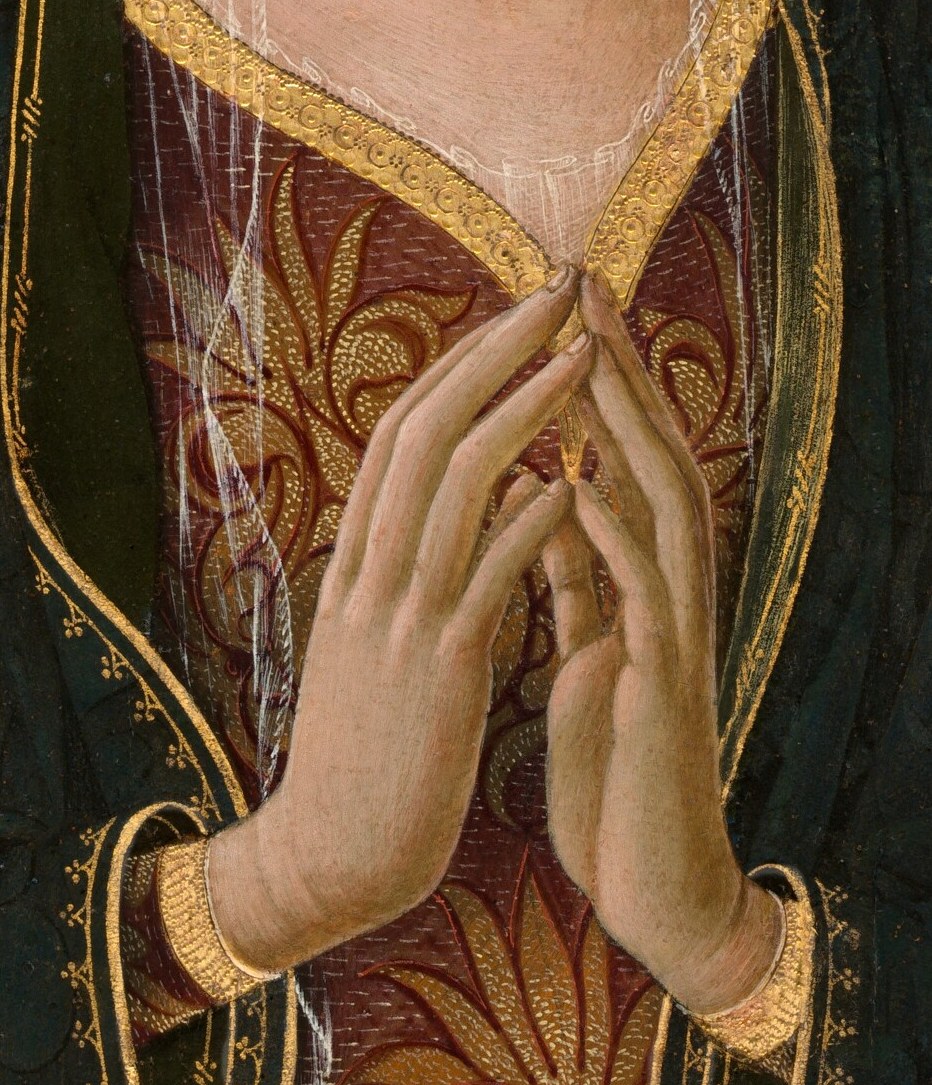
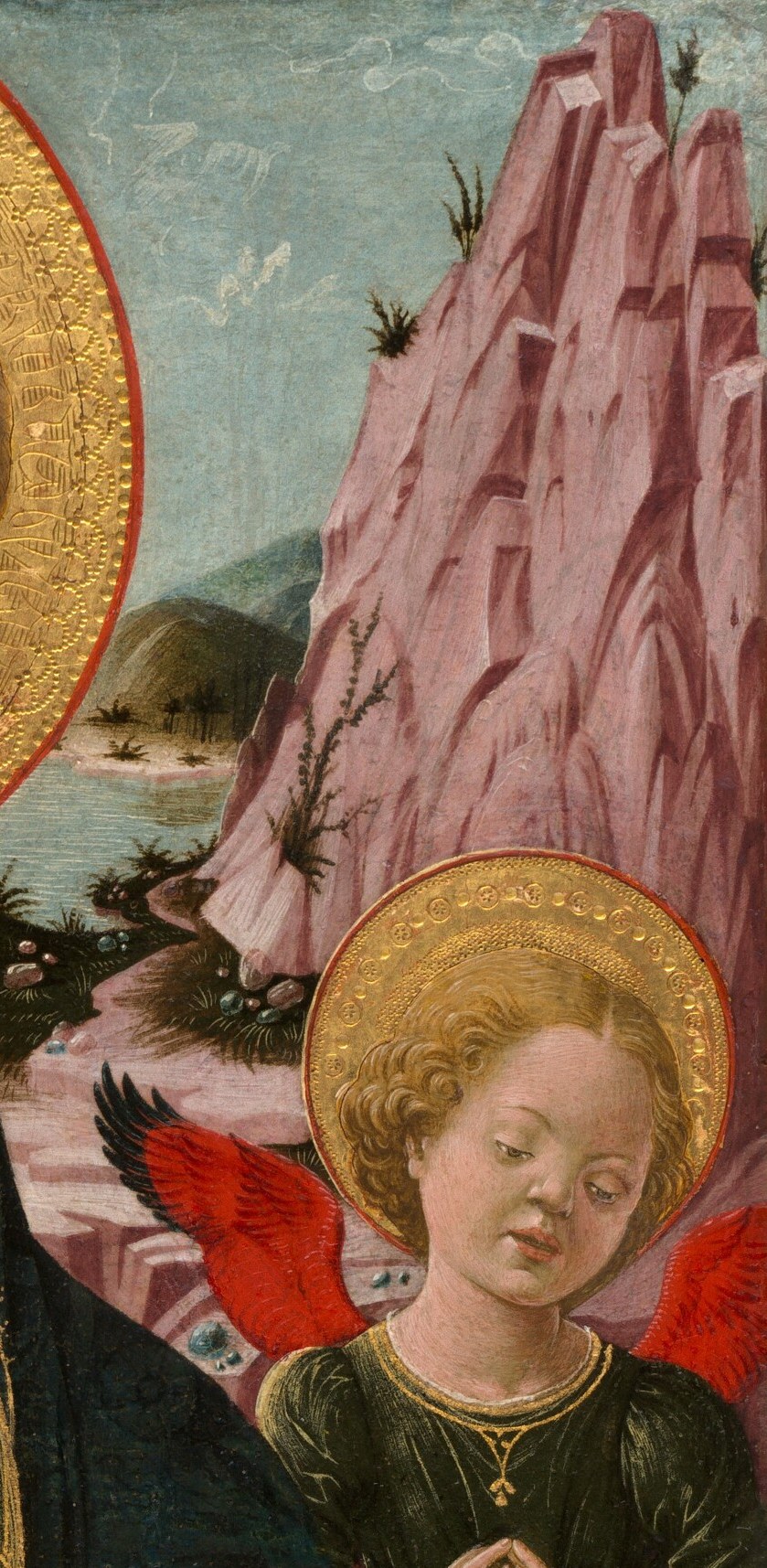
But the real tension is in her hands. Mary does not cradle the infant Christ. She presses her palms together in prayer, her head bowed. She is not just a mother, she is the first person to worship her own son. The two angels participate as well, one holding a white lily of purity, another in vivid red breaking the fourth wall to look directly at us.
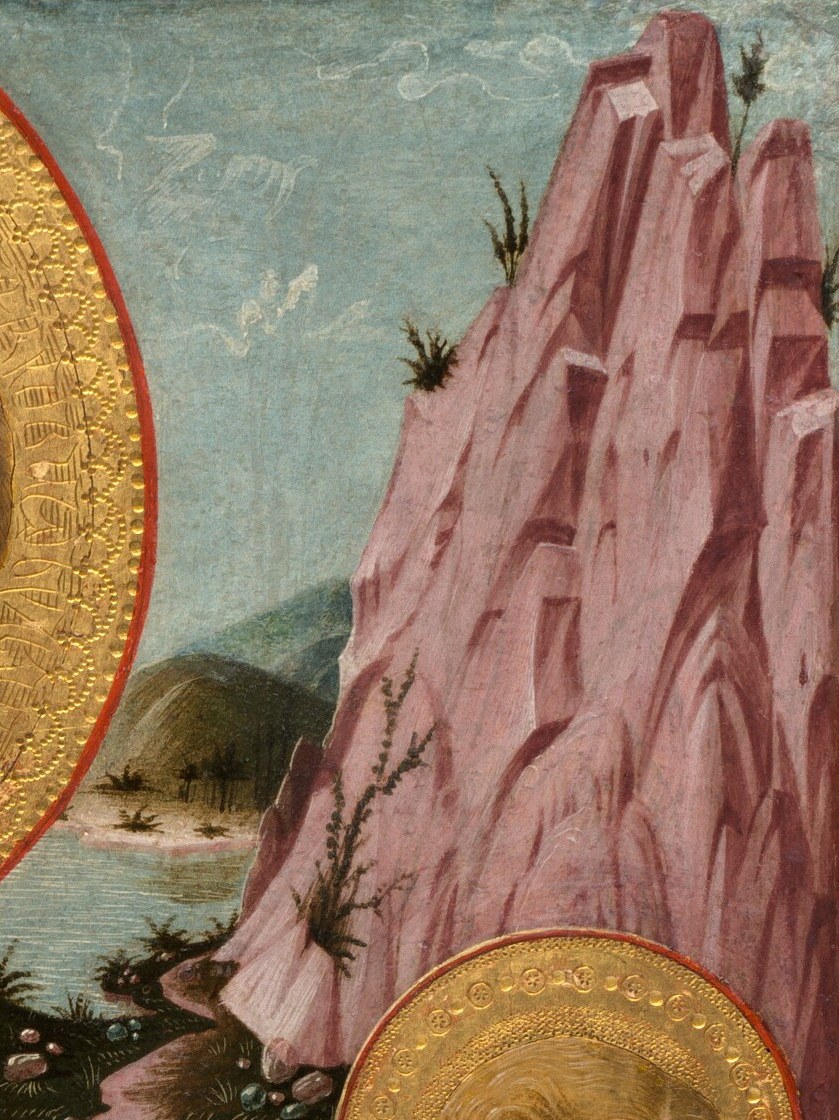
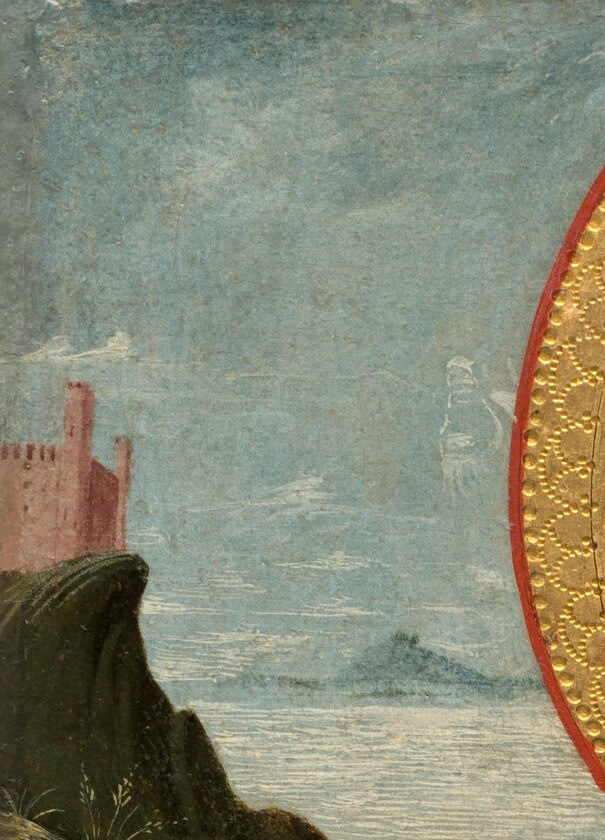
Look past the figures, into the background. Tucked in the upper left corner is a tiny fortress on a hill above a pale sea inlet. It is almost certainly a real view of the Ferrarese landscape or the Adriatic coast, grounding the sacred scene in a specific, recognizable world. The artist played with spatial boundaries even further: the gold halo of the upper-right angel physically overlaps the pink rock formation, making the divine and earthly touch.
The painting is a quiet puzzle box. A devotional icon on the surface, and underneath, a landscape portrait of a place and a people who saw their geography as holy.
Details
Transcript
Look at her hands. She does not cradle her child. She prays to him. She is both mother and first worshipper. Go deeper. Look at the rock behind the angel's halo. The gold touches the stone. Two worlds overlap. Now look to the top left corner. A tiny fortress stands on a hill, above a real sea inlet. A 15th-century painter hid the Ferrarese coast inside a sacred scene.