The Brioche by Édouard Manet
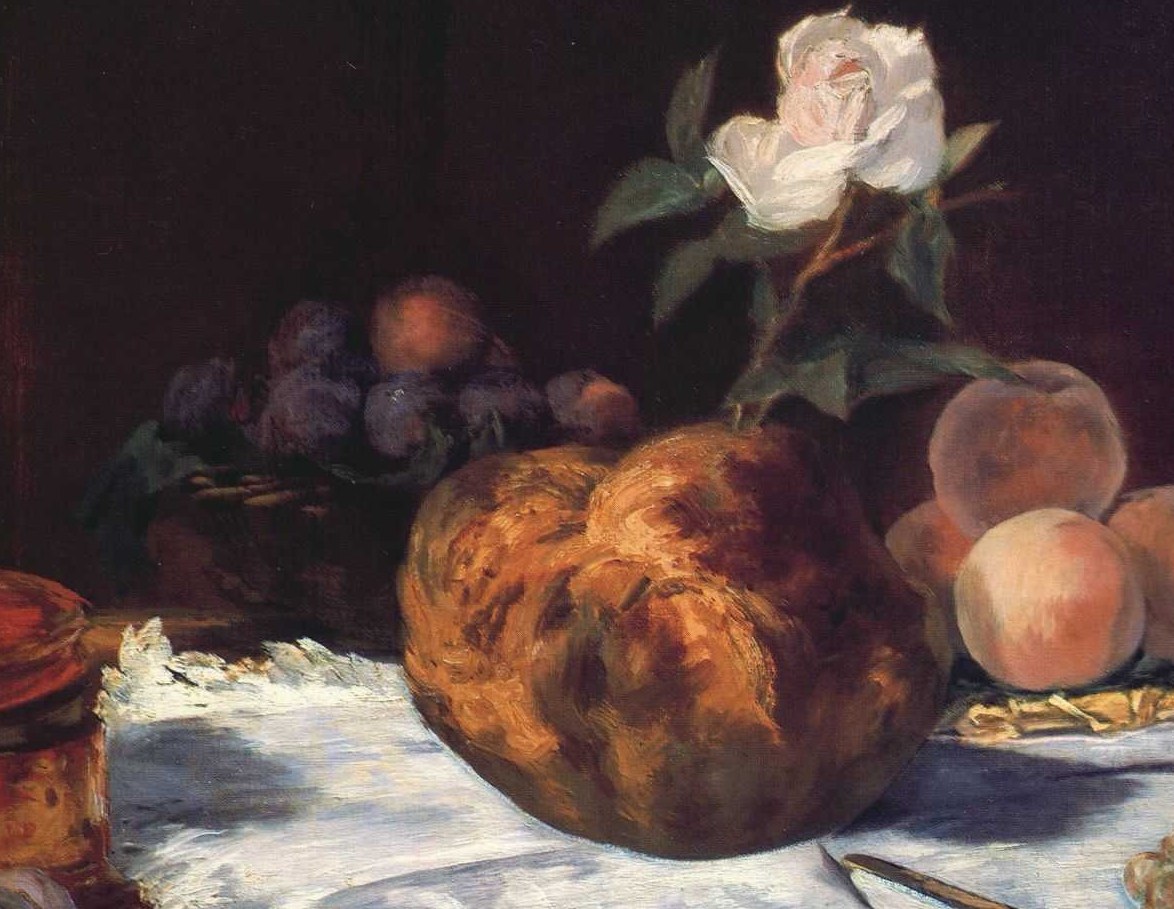
This is Édouard Manet's "The Brioche" from 1870, now at the Metropolitan Museum of Art. It was painted as a direct and deliberate response to an 18th-century still life by Jean Siméon Chardin that had just entered the Louvre. Manet, the great painter of modern life, paused to have a conversation with the old master, and the result is one of his most formally stunning tabletop compositions.
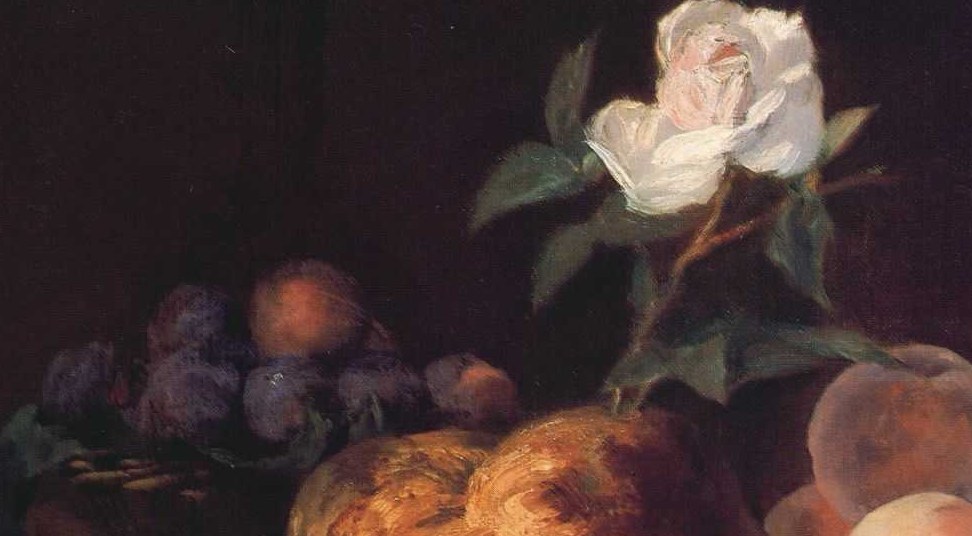
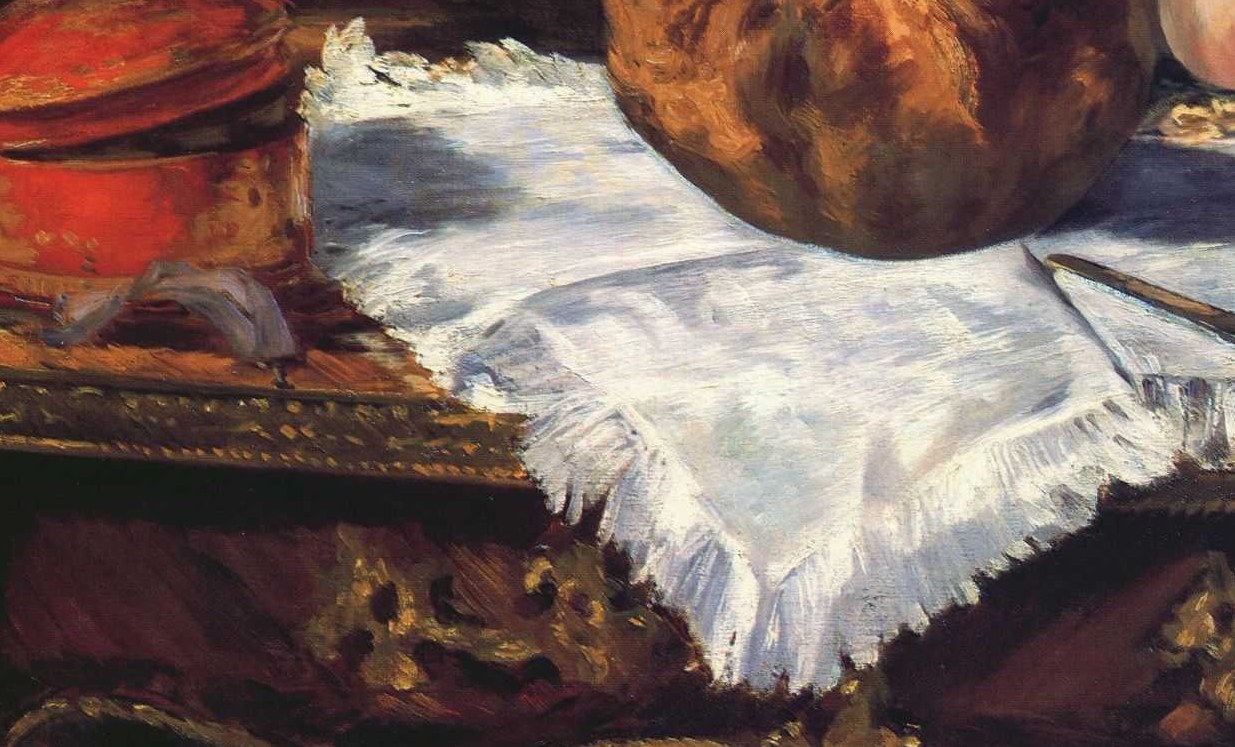
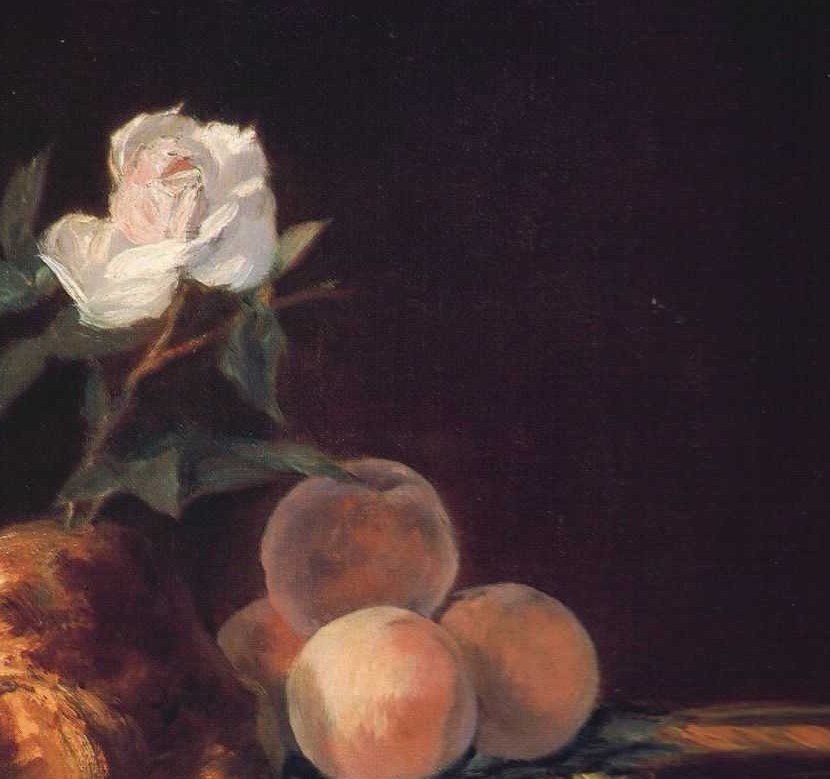
Look at the brushwork on the brioche itself. The crust is built from fast, separate strokes of gold and ochre. Manet doesn't blend them into a smooth photographic glaze. He lets the paint sit on the surface, mimicking the crust's texture. And the white linen in the foreground is even bolder: just a few quick flicks of the brush to suggest a whole folded cloth.
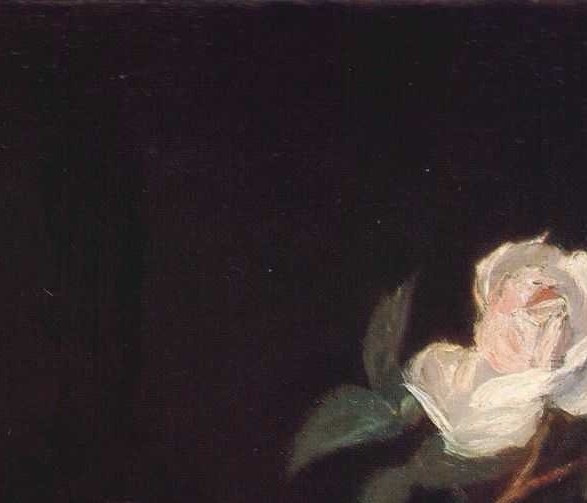
The cut white rose on top of the loaf was Manet's own invention. It's the one element not in Chardin's version. In a painting about pleasure and luxury, the rose acts as a gentle vanitas symbol, a quiet note of fleeting beauty amidst the peaches, plums, and that formidable brioche.
This was the last time Manet would create such an elaborate, formal still life. It's him, at his peak, showing he could out-Chardin Chardin with sheer painterly nerve, and then walking away to do something else entirely.
Details
Transcript
In 1869, the Louvre acquired a small painting of a brioche. It was by Chardin, an 18th-century master of the still life. Manet saw it and, in a flash of rivalry and respect, answered. On top, he added a cut white rose. Chardin's didn't have one. The brushwork is so fast you can see the drag of the bristles. It was his last grand, formal still life. He put his whole technique into a loaf of bread.