Broadway and 42nd Street by Childe Hassam
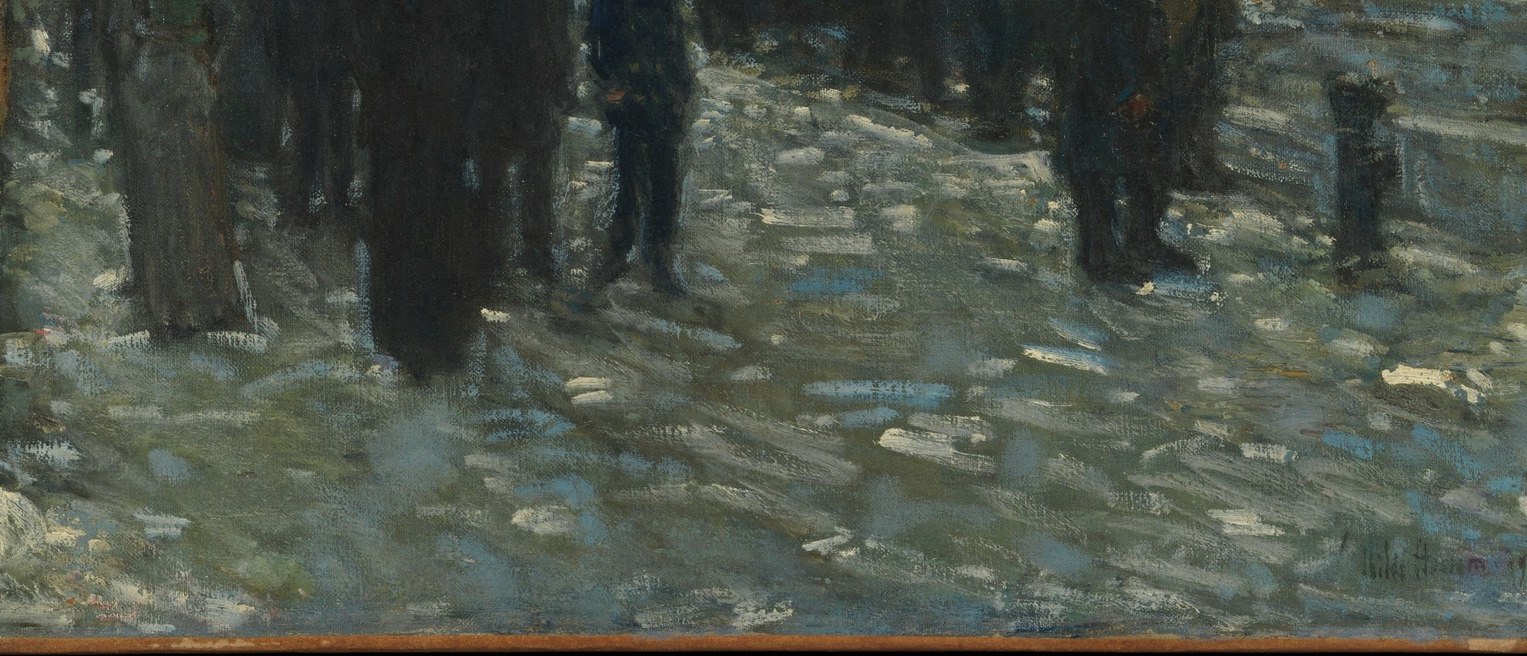
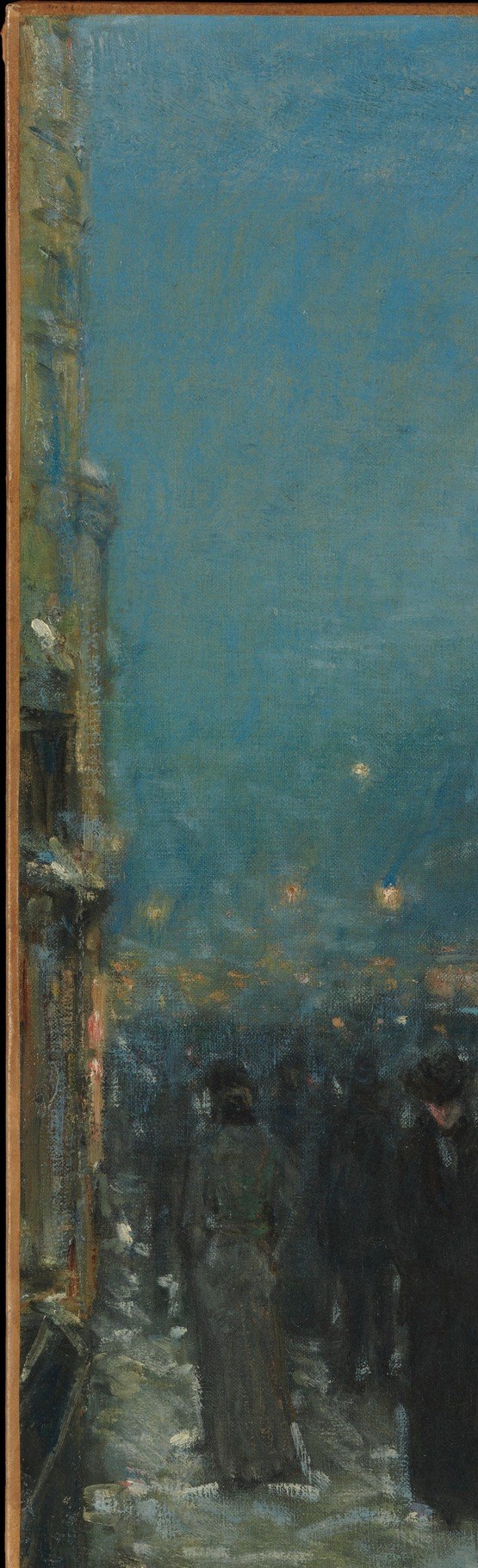
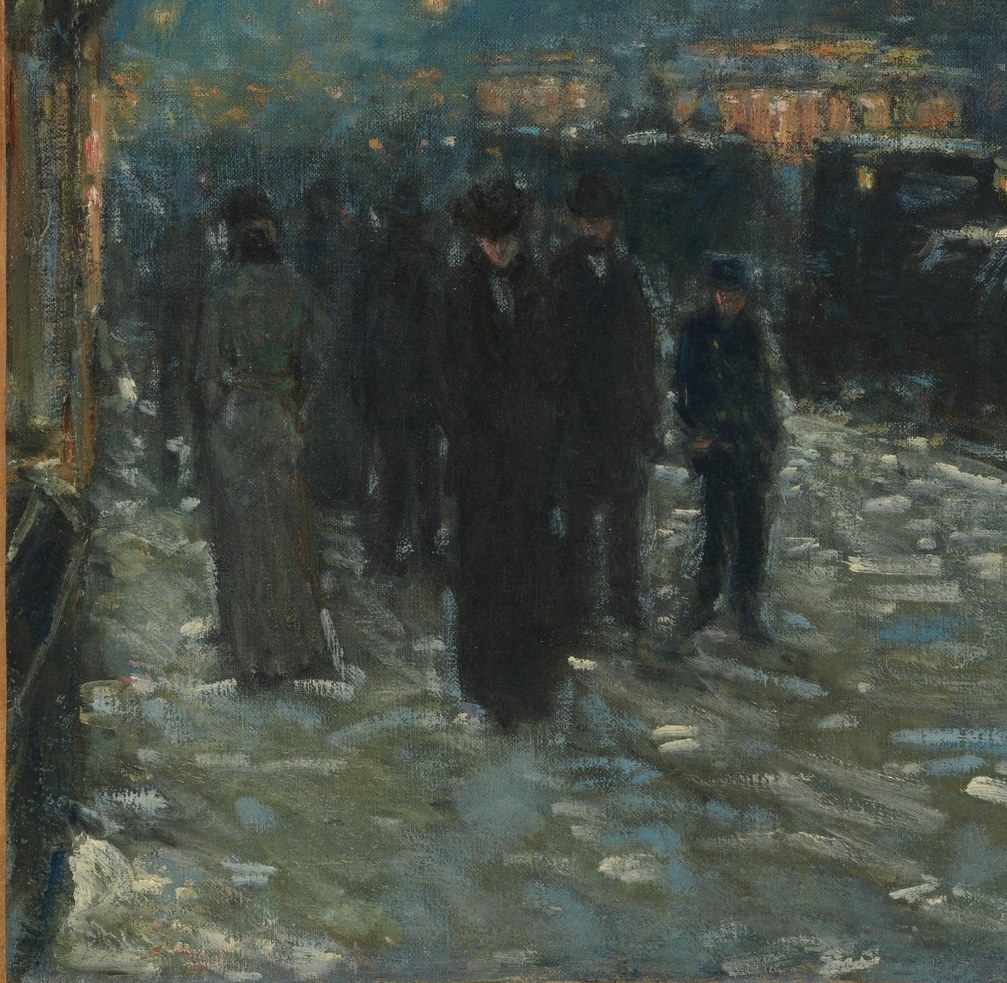
This is Broadway and 42nd Street, painted by the American Impressionist Childe Hassam in 1902. It hangs in the Metropolitan Museum of Art. At first glance, it is an iconic image of the electric glow that would make Times Square famous, the new arc lamps and trolley lights reflecting off wet winter pavement. But hidden in the painterly blur is a deeper story about the exact moment New York was changing.
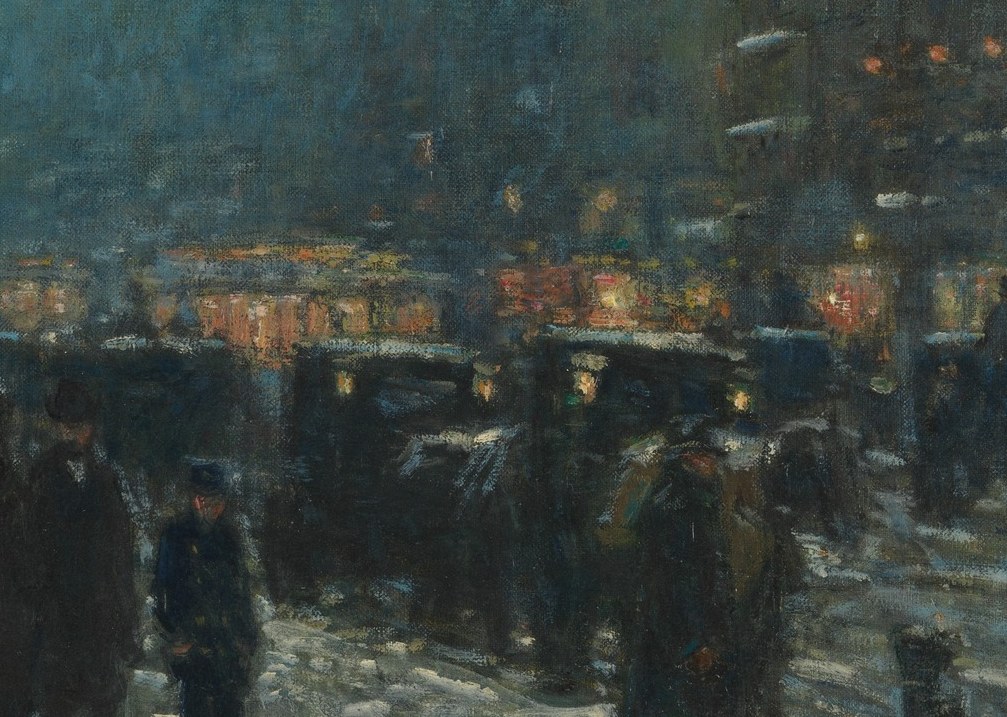
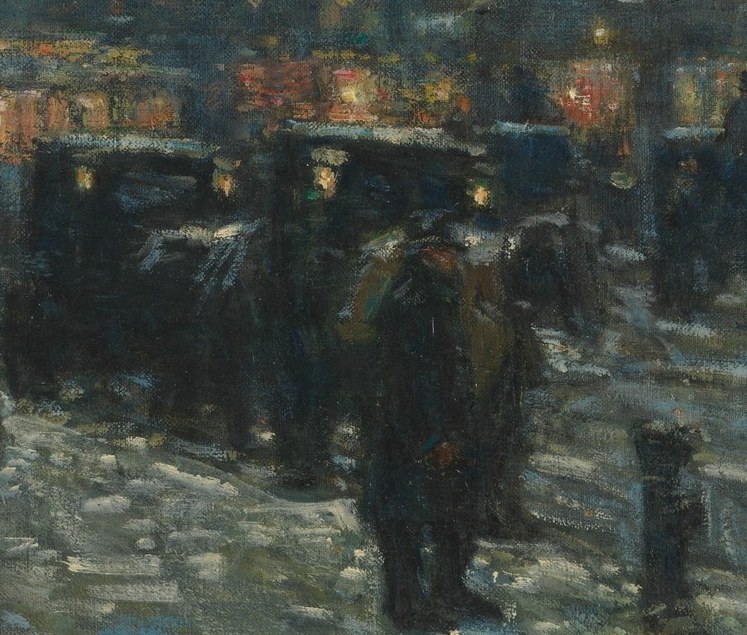
Let your eye drift past the brilliant electric trolleys, back into the dark blue middle distance. Hassam has buried a line of dark horse-drawn carriages there, almost dissolving into the evening gloom. They are rendered in the same thick, loose brushwork as the pedestrians and street slush, making them easy to miss. That is the point. They are literally fading from view.
Hassam completed this canvas in 1902, right as Times Square, then called Longacre Square, was being electrified. The automobile had barely arrived, and the horse was still the dominant mode of city transport. But the new century was clearly electric. Hassam gives the trolleys all the light and energy, while the old horse-drawn cabs are painted as silent silhouettes at the edge of visibility.
This painting is a document of a transition. One way of moving through a city is blazing with new light; the other is receding quietly into the slush and shadow. Next time you see a photo of a jammed, neon-lit Times Square, think of the last horses of 1902 disappearing into this winter night.
Details
Transcript
Everyone knows the electric glow of Times Square. This is where it began, in 1902. Hassam painted the new electric trolleys lighting up Broadway. But look deeper into the dark blue middle. Fading into the blur: a line of horse-drawn carriages. The last winter of the horse, before the car took over.