Virgin and Child under a Canopy by http://www.wikidata.org/.well-known/genid/5094be70dacb58becbd296dec7702848
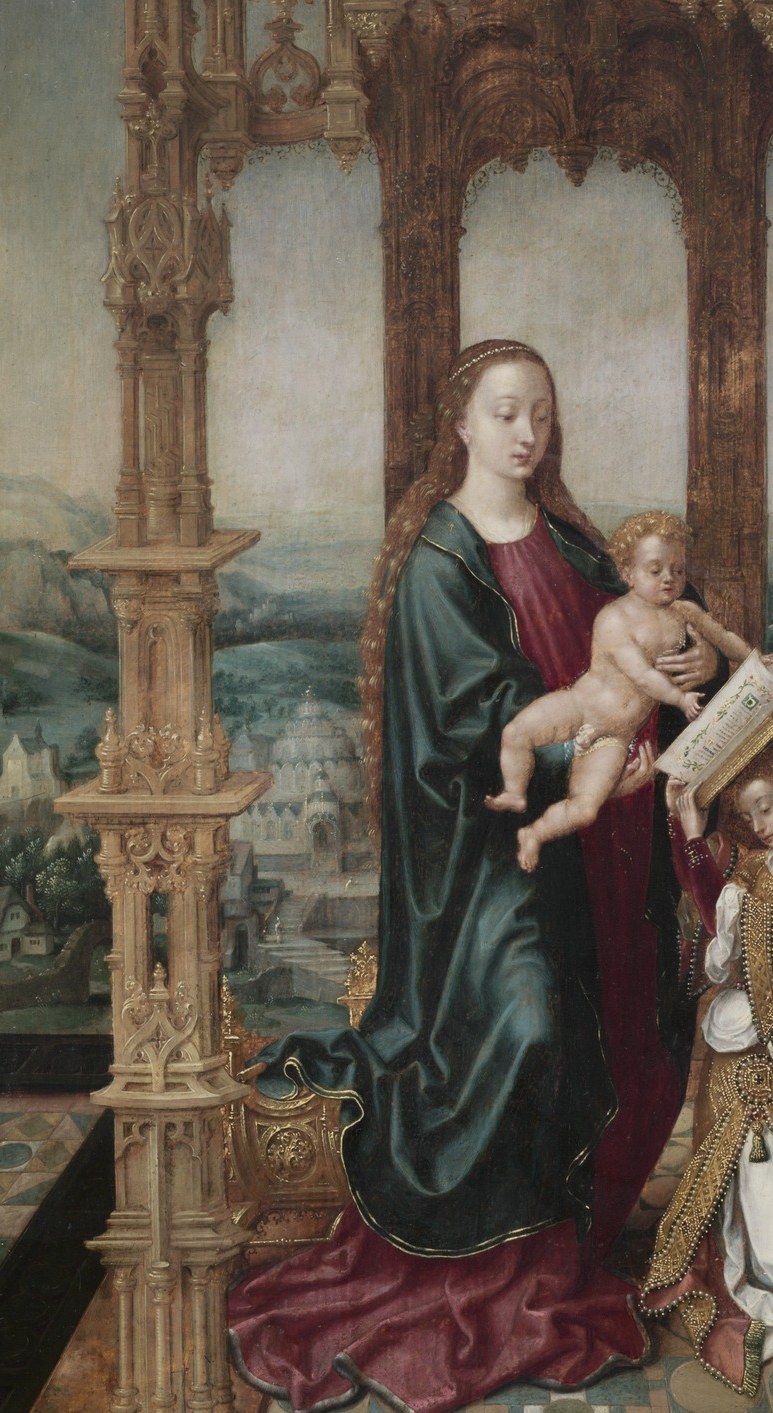
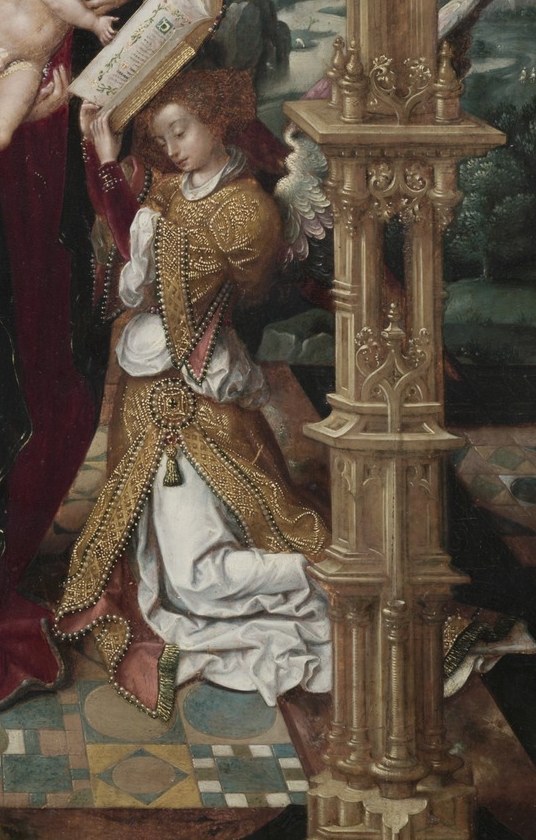
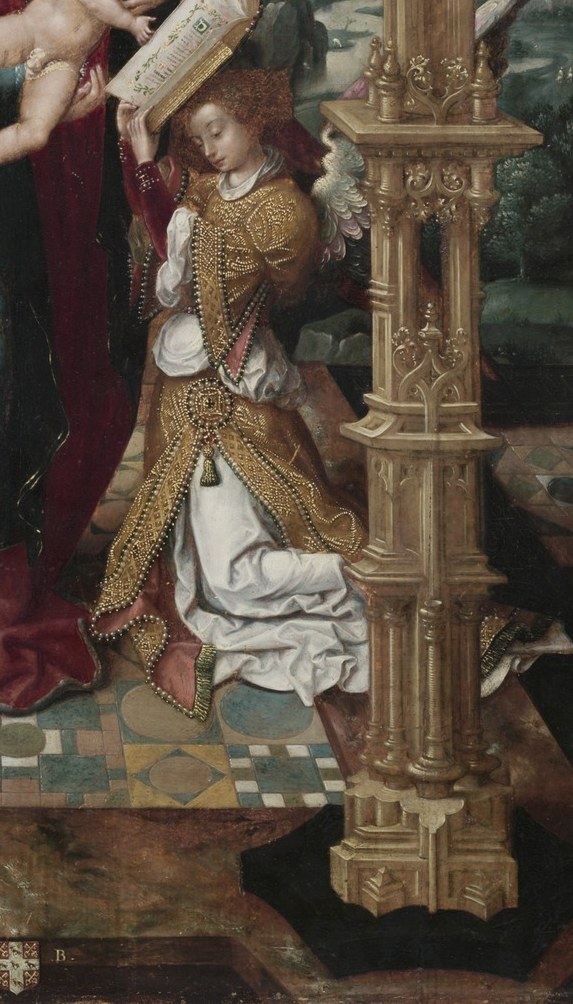
This is Jan Gossaert's 'Virgin and Child under a Canopy', painted around 1525. The entire composition is an argument made in expensive materials. The patron, kneeling in the foreground, did not just donate to a church. He had himself painted into the biblical scene, dressed in red brocade and gold armor, to place his own status directly next to the divine.
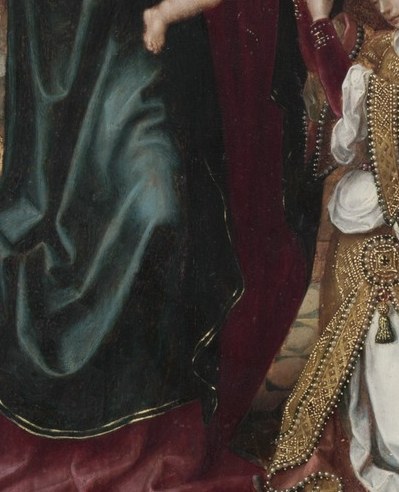
Look first at the Virgin's blue mantle. It is ultramarine, a pigment ground from lapis lazuli stones imported from a single mountain range in Afghanistan. In the 1520s, it cost more than gold leaf. A patron paid for every brushstroke of that blue, and its lavish use here is a direct statement of wealth. Then look down at the donor's hands. They are outstretched in a gesture of offering, but they stop short. He can spend his fortune to enter the scene, but he cannot touch the holy figures.
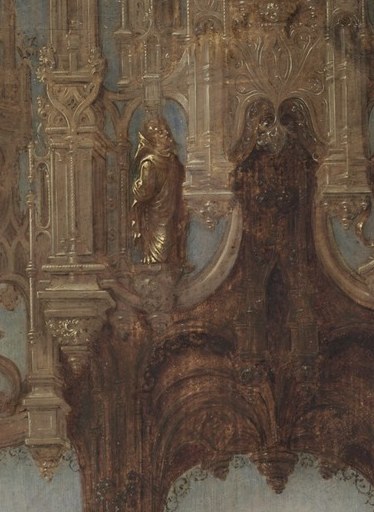
The painting fuses two worlds that were usually kept apart: the sacred realm under the gilded Gothic canopy, and the physical world of Flemish landscape and portraiture visible behind the columns. Gossaert was among the first Northern painters to bring the Italian Renaissance's sculptural figures and classical poses into Netherlandish oil painting, and this work shows him balancing the two traditions. The kneeling figure remains unidentified, but his heraldic insignia would once have told every viewer which noble house paid for this proximity to salvation.
The sum spent on ultramarine here would have clothed a noble household for a year. All of it is draped across the shoulders of a woman who, in the biblical story, owned nothing. That was the point.
Details
Transcript
Ultramarine was literally worth its weight in gold. The patron paid for this entire sweep of blue. The pigment came from a single mine in Afghanistan. Look at his armor. Cloth-of-gold and jeweled gilding. He commissioned this to prove his status was close to heaven. His hands reach toward Christ but never touch. Earthly wealth could buy paint, but not contact with the divine.