The Death of the Virgin (The Dormition) by http://www.wikidata.org/.well-known/genid/b1d4d478962eccfa1877ed1499adfe64
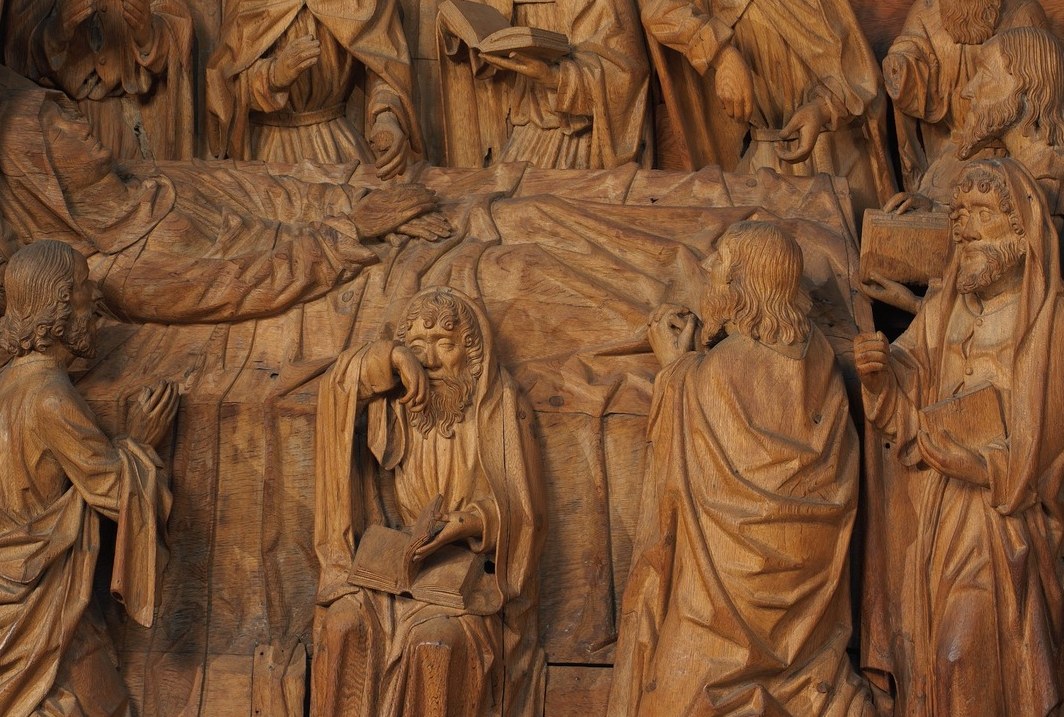
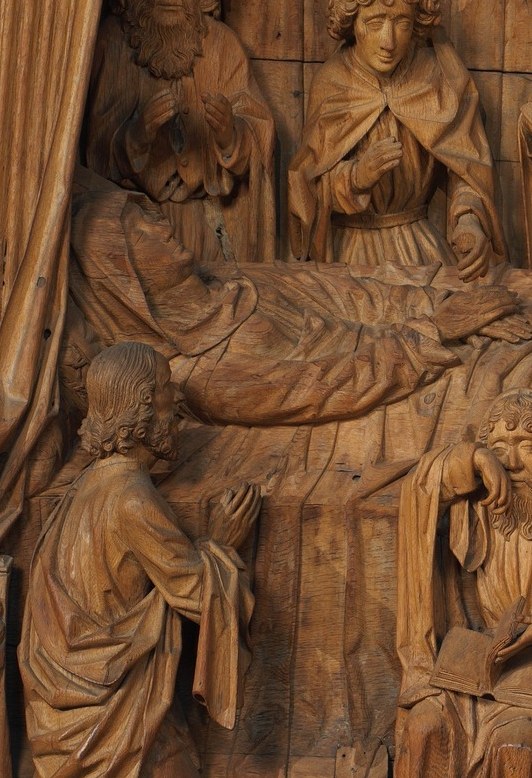
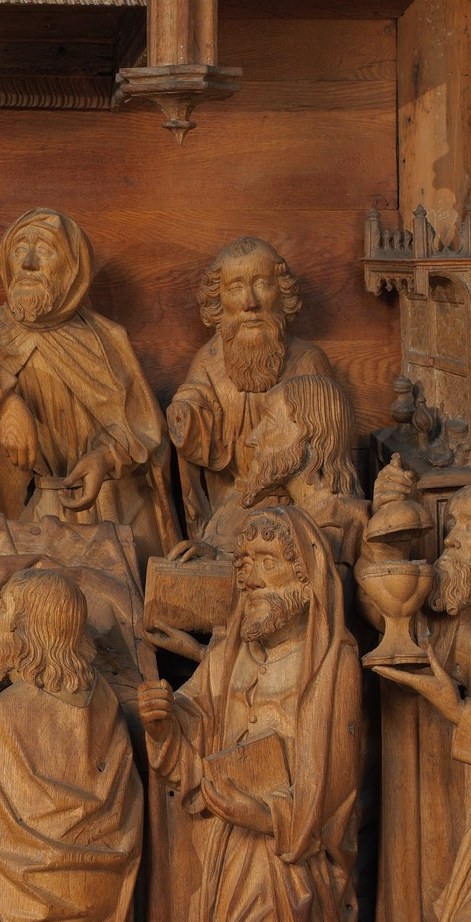
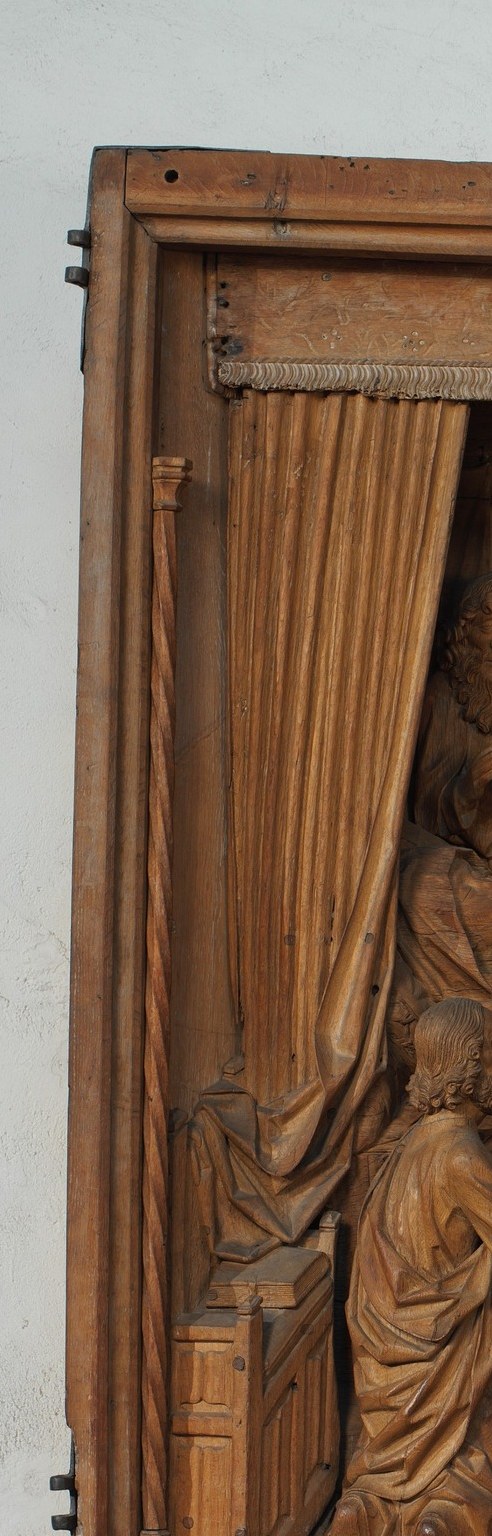
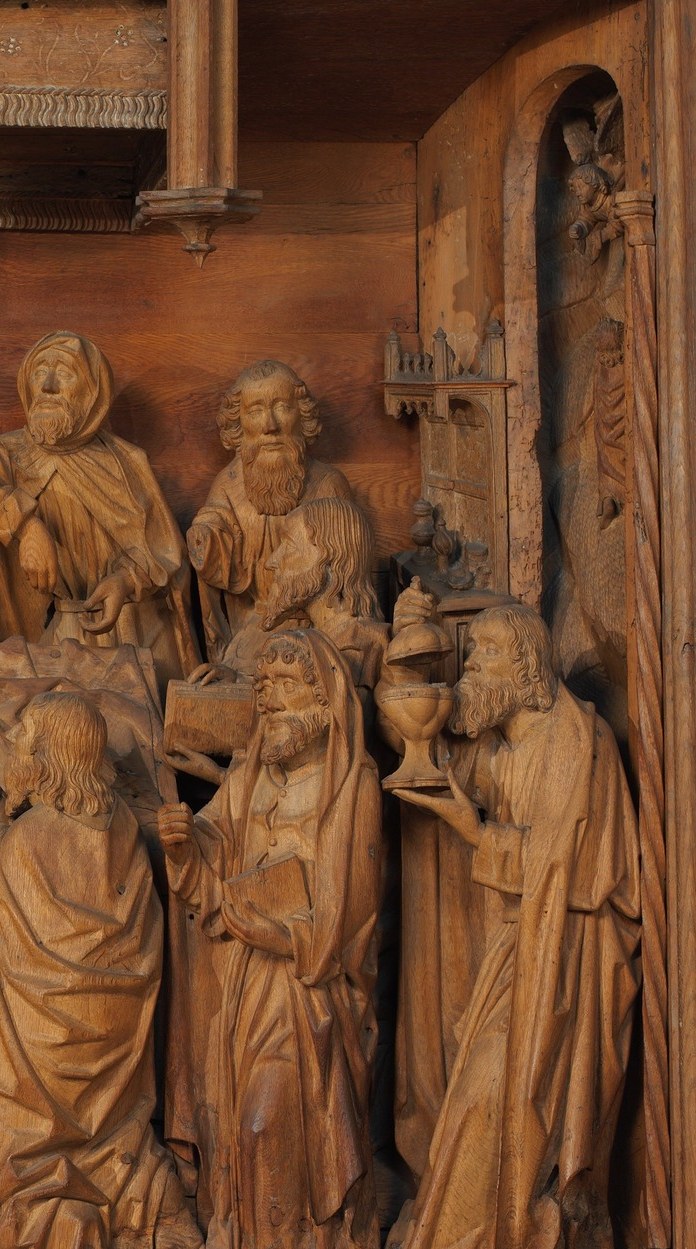
This is "The Death of the Virgin," a limewood relief carving from around 1450 by an unknown master, likely from the Upper Rhine region. The scene captures the Dormition: Mary's peaceful passage from earthly life, surrounded by the apostles. What is remarkable here is not just the story, but the physical evidence of how it was meant to be seen. This sculpture was never intended to remain raw wood.
Look at the bold undercutting in the central mourner's robe. Those deep, shadowed folds were not a stylistic flourish for monochrome. They were engineered to hold paint and glazes, creating dramatic tonal shifts between light and dark blue or crimson fabric. The carver was building a scaffold for color that has since vanished, leaving us with a pure structural skeleton of grief.
In the 15th century, such relief panels were essential teaching tools. They served as vivid, three-dimensional storyboards for biblical narratives in churches. The open book held by the figure at center reinforces the liturgical weight of the moment; someone is reading the last rites. Every gesture, from the kneeling figure at the foot of the bed to the solitary apostle at the far left, was carved to be legible from a distance in a candlelit interior.
It is a quiet masterpiece of planning. Without a single drop of surviving pigment, we can still trace exactly where the light was meant to hit.
Details
Transcript
They gathered around her deathbed in silence. This is the Dormition, Mary's final sleep. Look at the deep cuts in the drapery. Every fold was carved for paint to pool and glow. The book at center holds the prayers for the dying. Before photography, these panels taught the story.