The Murder of Patrona Halil and his Fellow Rebels by Jean Baptiste Vanmour
Jean Baptiste Vanmour's The Murder of Patrona Halil and his Fellow Rebels (1730) records the brutal end of an uprising against the Ottoman Sultan. Now at the Rijksmuseum, it is both news report and warning.
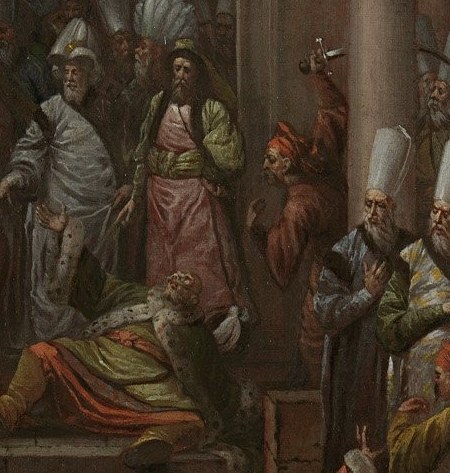
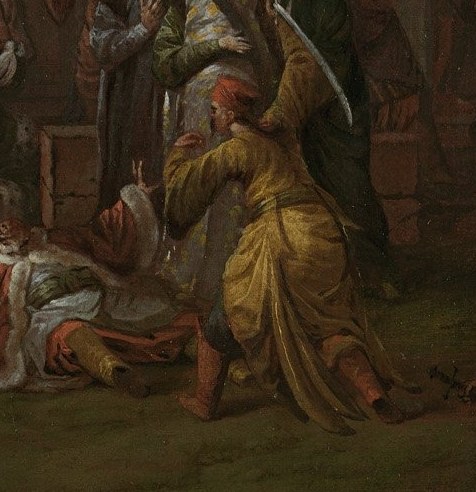
Look at how every figure is coded. The raised sword, the white turban of an official, the yellow robes of the palace guard, the plumed hat of a European observer, each detail declares who holds power. Vanmour, a Flemish-French painter who lived in Constantinople for decades, documented Ottoman costume with meticulous precision.
In 1730, Patrona Halil led a popular revolt during the Tulip Era under Sultan Ahmed III. The uprising was violently suppressed. Vanmour painted its aftermath for European collectors hungry for images of Ottoman life. The painting entered the Dutch national collection and remains there.
Every color, every gesture, every hat in this painting was chosen to be read. Who was the intended audience?
Details
Transcript
Constantinople, 1730. A rebellion has been crushed. Patrona Halil. He led the revolt against the Sultan. A raised sword. This is law, not a brawl. White turban: an official of rank. The state approves. Yellow robes. The Sultan's men reclaim the square. A plumed hat. A European observer. Painted for the West.