A Reconnaissance by Frederic Remington
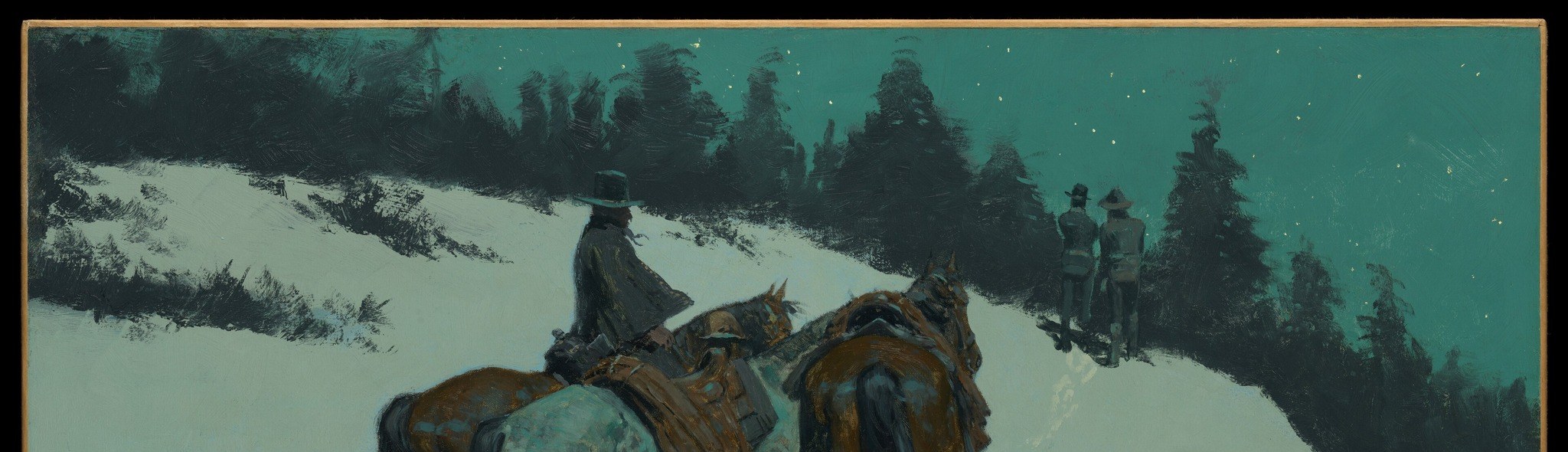
This is Frederic Remington's 'A Reconnaissance,' painted in 1902, now at The Metropolitan Museum of Art. Remington built his career on the drama of the American West, cavalry charges, cowboys, and action. But here, late in his life, he painted something much quieter: a single soldier paused in the snow, watching.
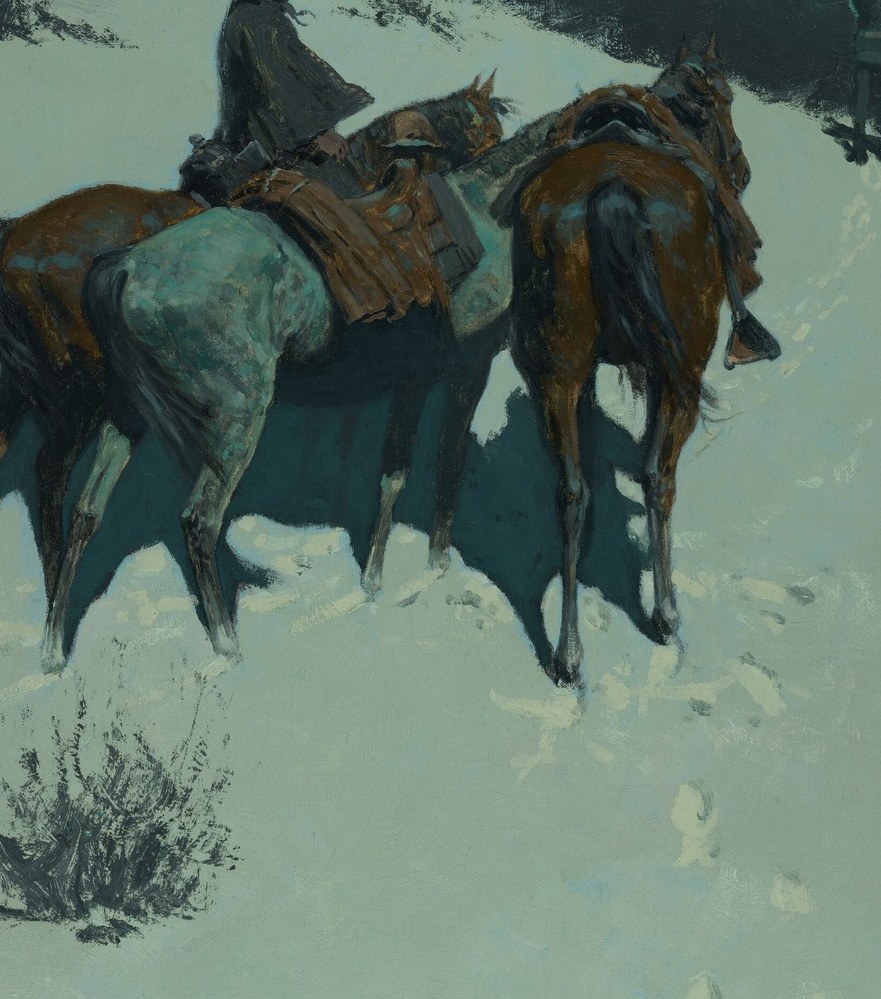
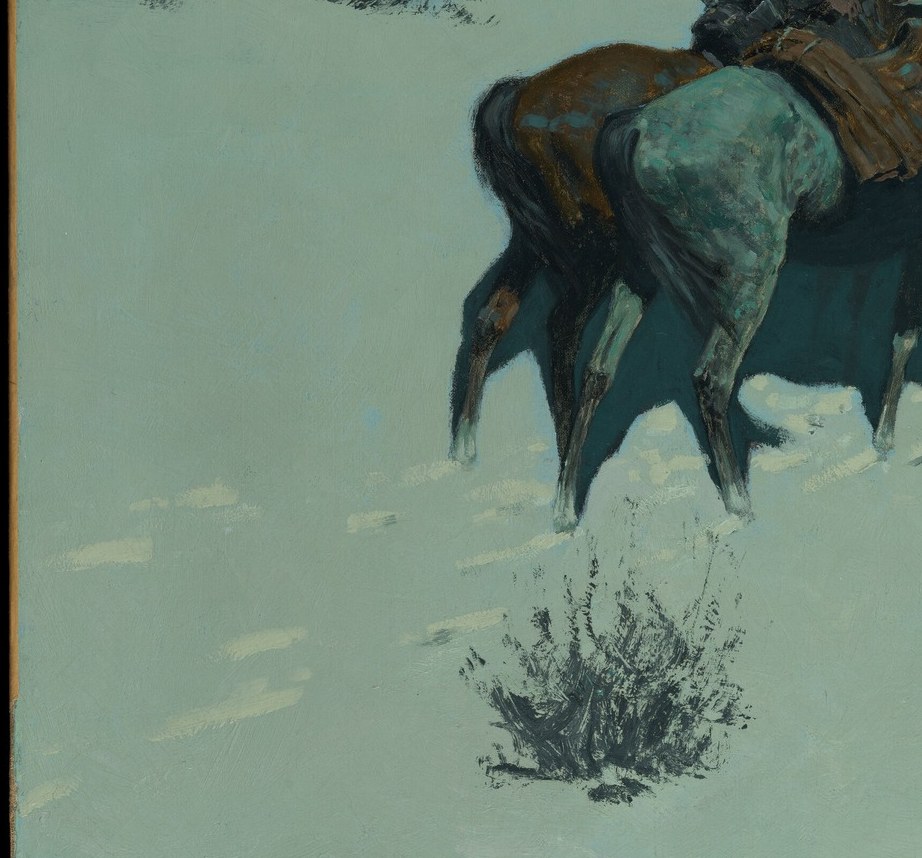
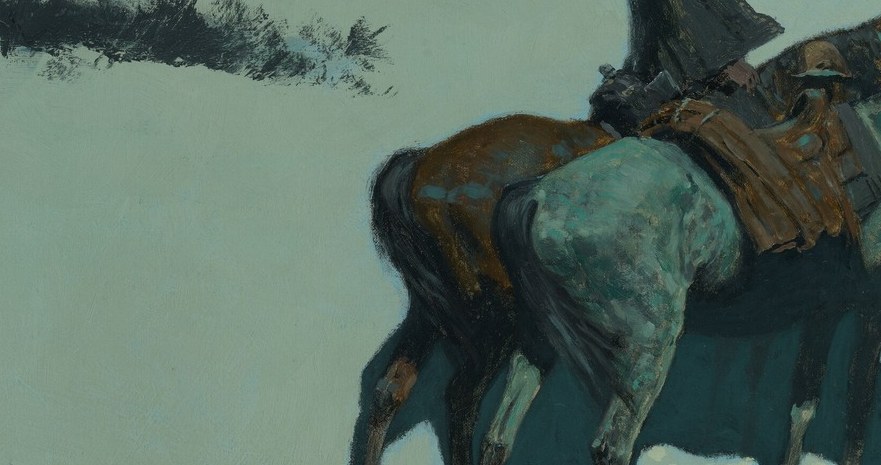
The soldier rides a pale horse, which against a white snowfield makes him terribly conspicuous, a quiet, embedded danger. A second horse stands beside him, saddled but riderless, which tells you he is part of a small scouting party. The man's face is shadowed under his campaign hat. Remington gives you no expression, no identity, just a type: the frontier scout as a figure of pure alertness.
By 1902, Remington was only forty-one but his health was already collapsing, he would die seven years later at forty-eight. He had begun to abandon the romantic, action-heavy style that made him famous, moving instead toward a more atmospheric, psychologically heavy realism. 'A Reconnaissance' belongs to that late turn. The dark treeline across the background reads as a wall, the unknown hiding place of whoever the soldier is watching.
The title tells you what you are seeing, but Remington leaves the outcome unanswered. Did the scout see what he needed to see? Did he ride back? The painting holds its breath and asks you to hold yours with it.
Details
Transcript
He has stopped to read the snow. The second horse means he is not alone by choice. A pale horse against snow, a tactical mistake. Remington quietly makes the soldier conspicuous. His face is shadowed. We never know him. The dark treeline hides whatever he is watching. Remington was forty-one and already failing. He died at forty-eight. This is his late, quiet truth.