Ceres (Summer) by Watteau, Antoine
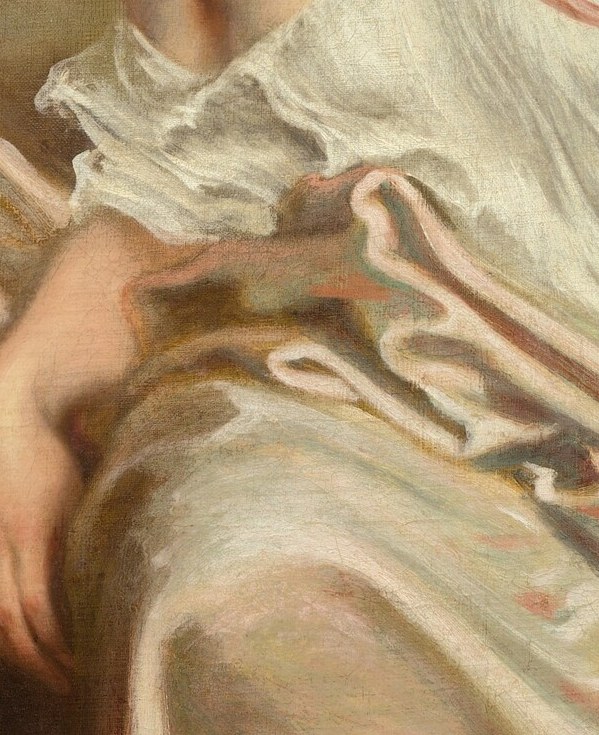
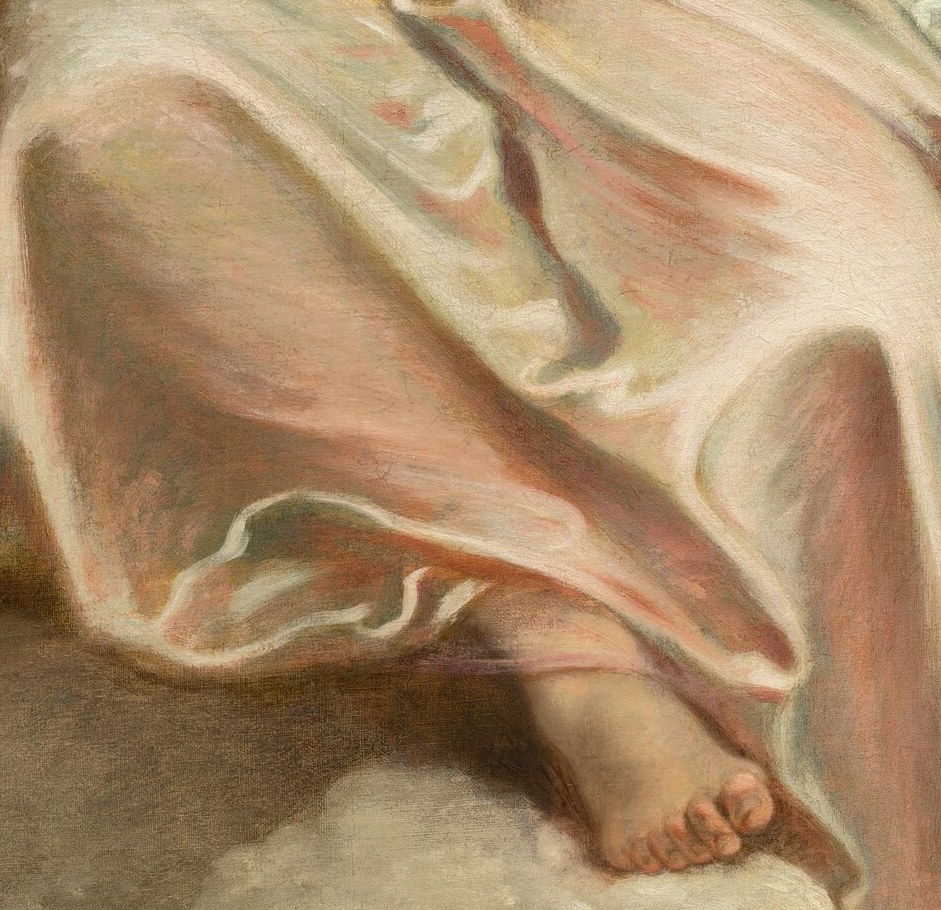
Antoine Watteau's *Ceres (Summer)*, painted around 1717/1718, is a beautiful allegory of the season. At first glance, it presents a classical scene, but Watteau, known for his subtle touches, included a tiny detail that rewards closer inspection.
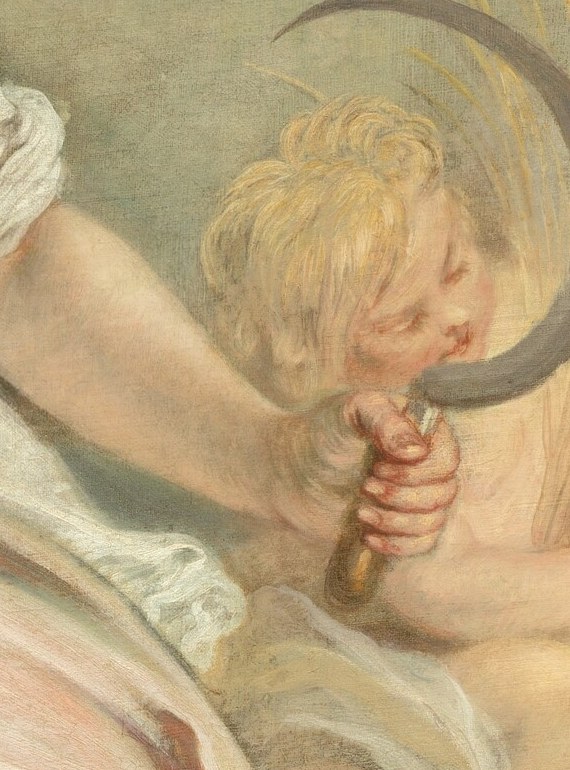
The central figure is Ceres, the Roman goddess of agriculture and harvest, identifiable by her flower crown and the prominent sheaf of wheat. A winged putto behind her holds a mirror, adding layers of meaning, perhaps alluding to vanity or reflection.
Yet, tucked away in the lower left corner, a small insect can be found. This seemingly minor detail adds a touch of naturalism and grounds the divine scene in the earthly realm. It's a testament to Watteau's skill in blending grand allegories with observations from the natural world.
What other small wonders might be hidden in plain sight in famous paintings?
Details
Transcript
This allegorical painting shows Ceres, goddess of summer. She wears a flower crown, and holds a sheaf of wheat. A winged putto holds a mirror behind her. But look closely, there is one tiny hidden detail. The painter, Antoine Watteau, was famous for such details. A small insect crawls unnoticed in the grass.