Fort Union by Catlin, George
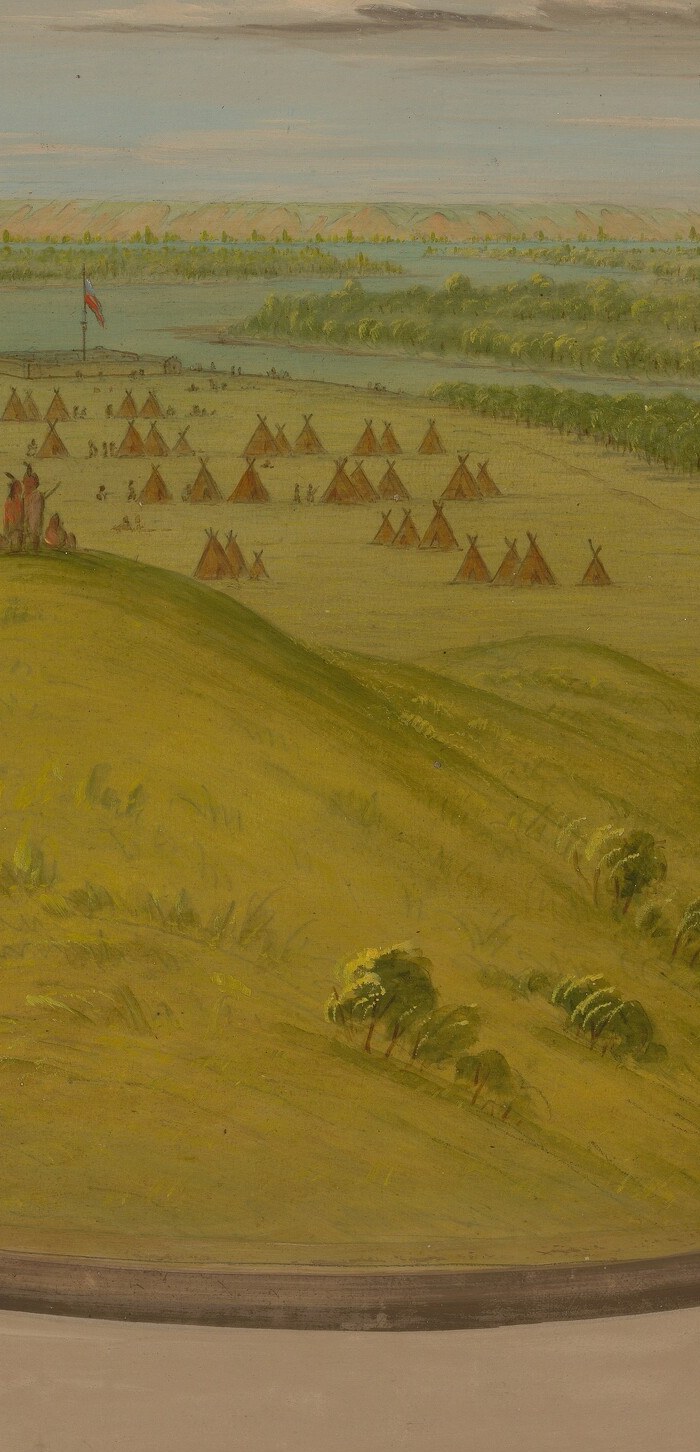
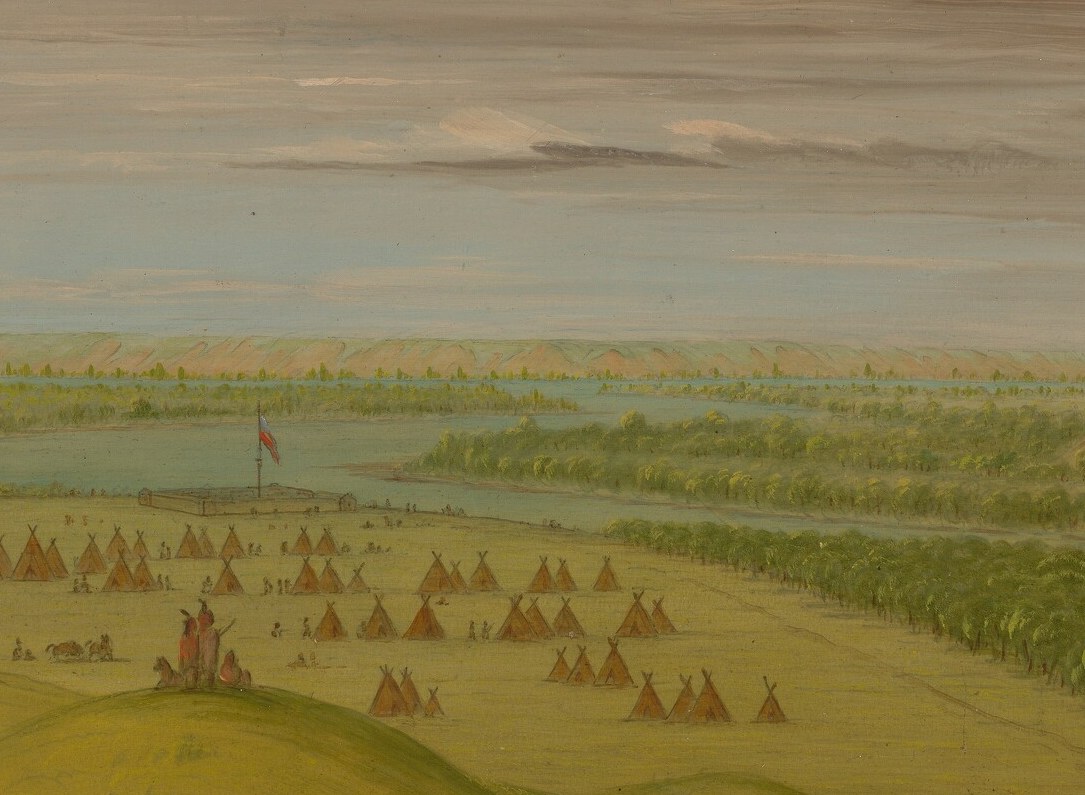
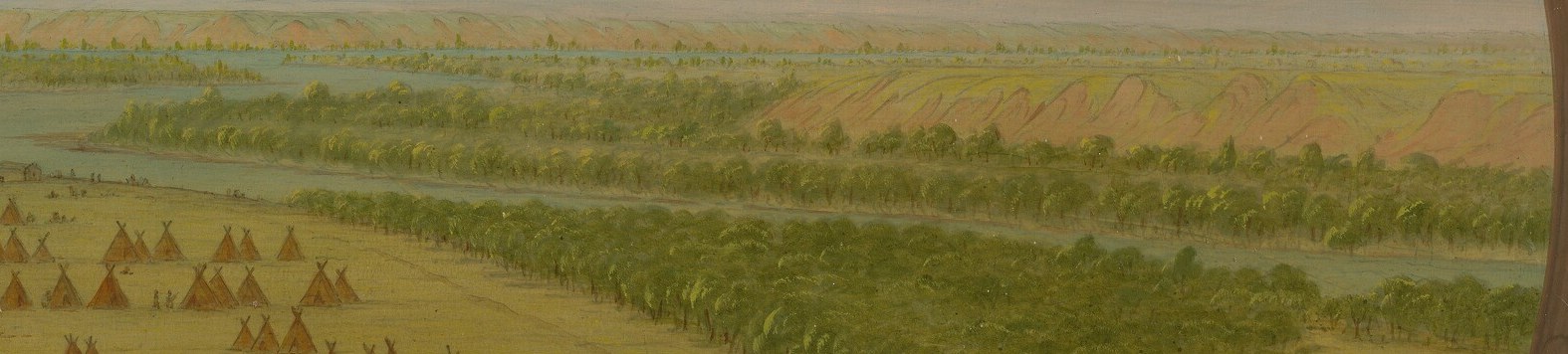
George Catlin, a lawyer-turned-painter, spent the 1830s extensively documenting Native American life and the landscapes of the American West. His work, *Fort Union*, painted in 1861, is an oil on card mounted on paperboard, and is part of the collection at the Smithsonian American Art Museum.
In this painting, Catlin focuses on a solitary tree, a powerful symbol of endurance on the vast frontier. Though the scene includes a distant Native American village and mounted figures, the eye is drawn to the tree's quiet presence against the rolling hills and dramatic sky.
Catlin continued to produce works like *Fort Union* in his later career, returning to the stark beauty of the West. He passed away just a few years after completing this piece, leaving behind a remarkable visual record of a changing American landscape.
What do you see in this lone tree?
Details
Transcript
This painter explored the American West in the 1830s. He recorded Native American life and the vast landscapes. Here, a village bustles with life around one tree. Decades later, he returned to this isolated subject. The muted tones emphasize its quiet endurance on the frontier. He died a few years after painting this work.