Three Delaware Indians by Catlin, George
George Catlin's *Three Delaware Indians*, painted between 1861 and 1869, captures a poignant moment of cultural continuity. This oil on card, mounted on paperboard, is housed at the National Gallery of Art, offering a window into the lives of the Lenape people. Catlin, known for his extensive travels and portraits of Native Americans, created this work after decades of documenting Indigenous cultures in the American frontier.
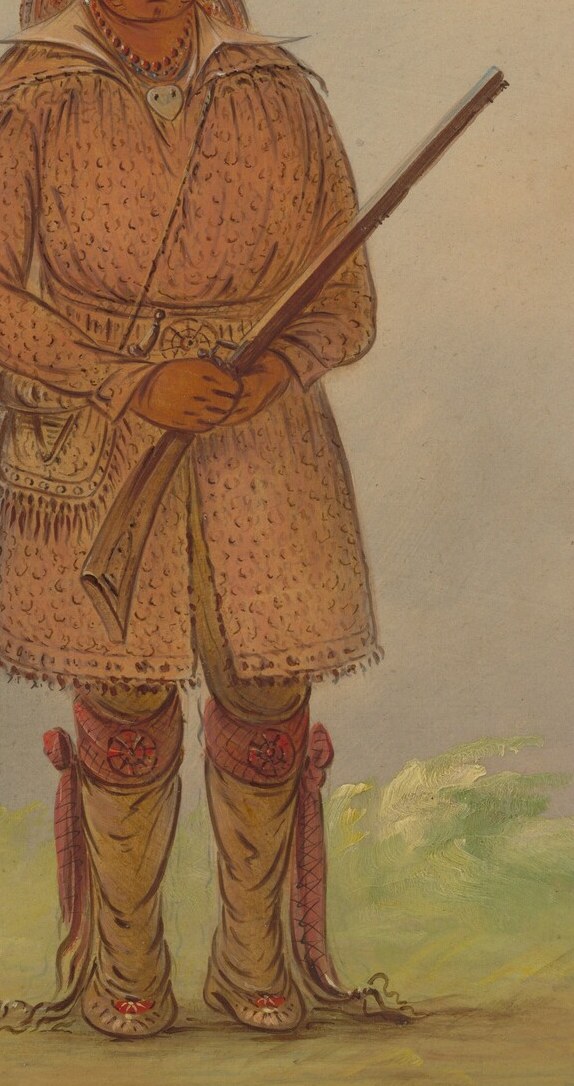
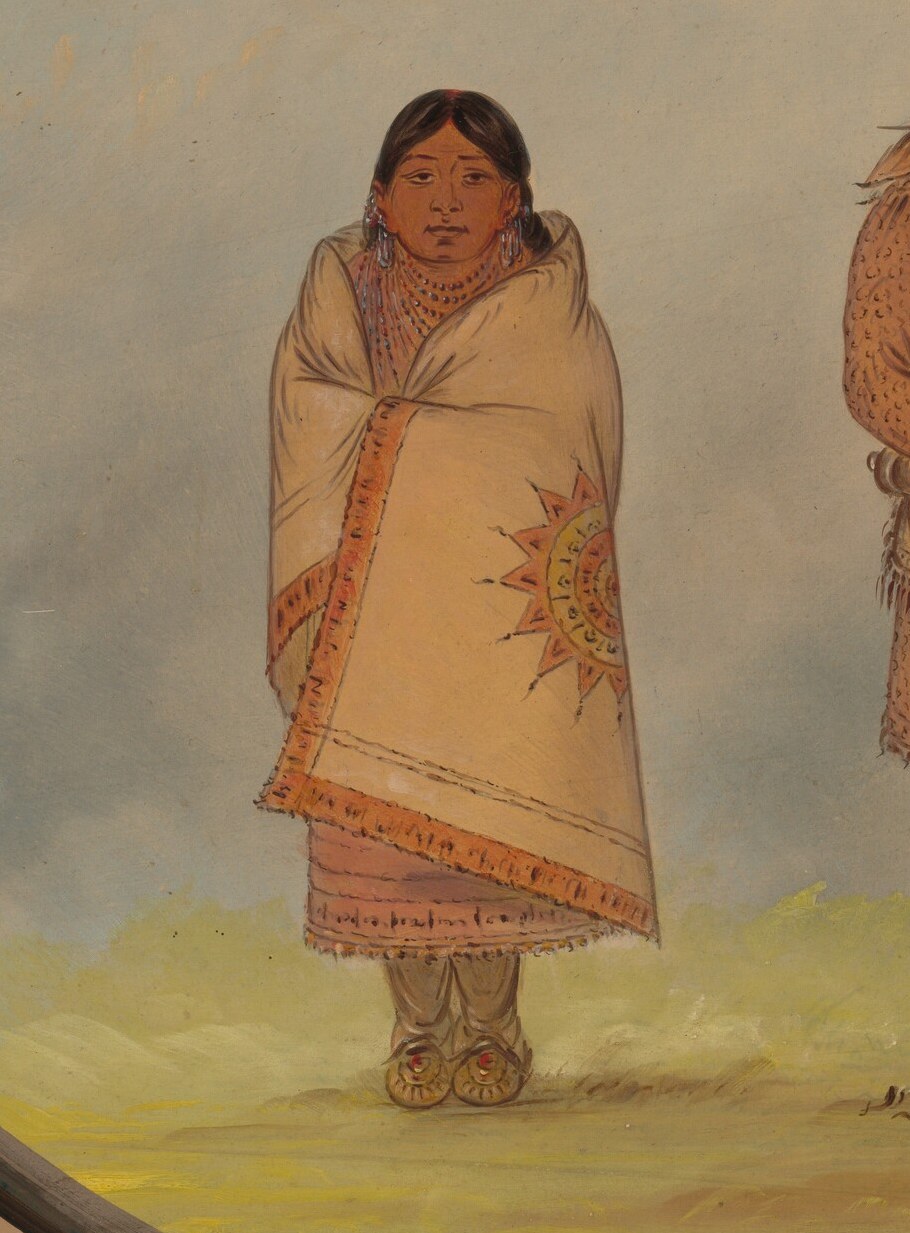
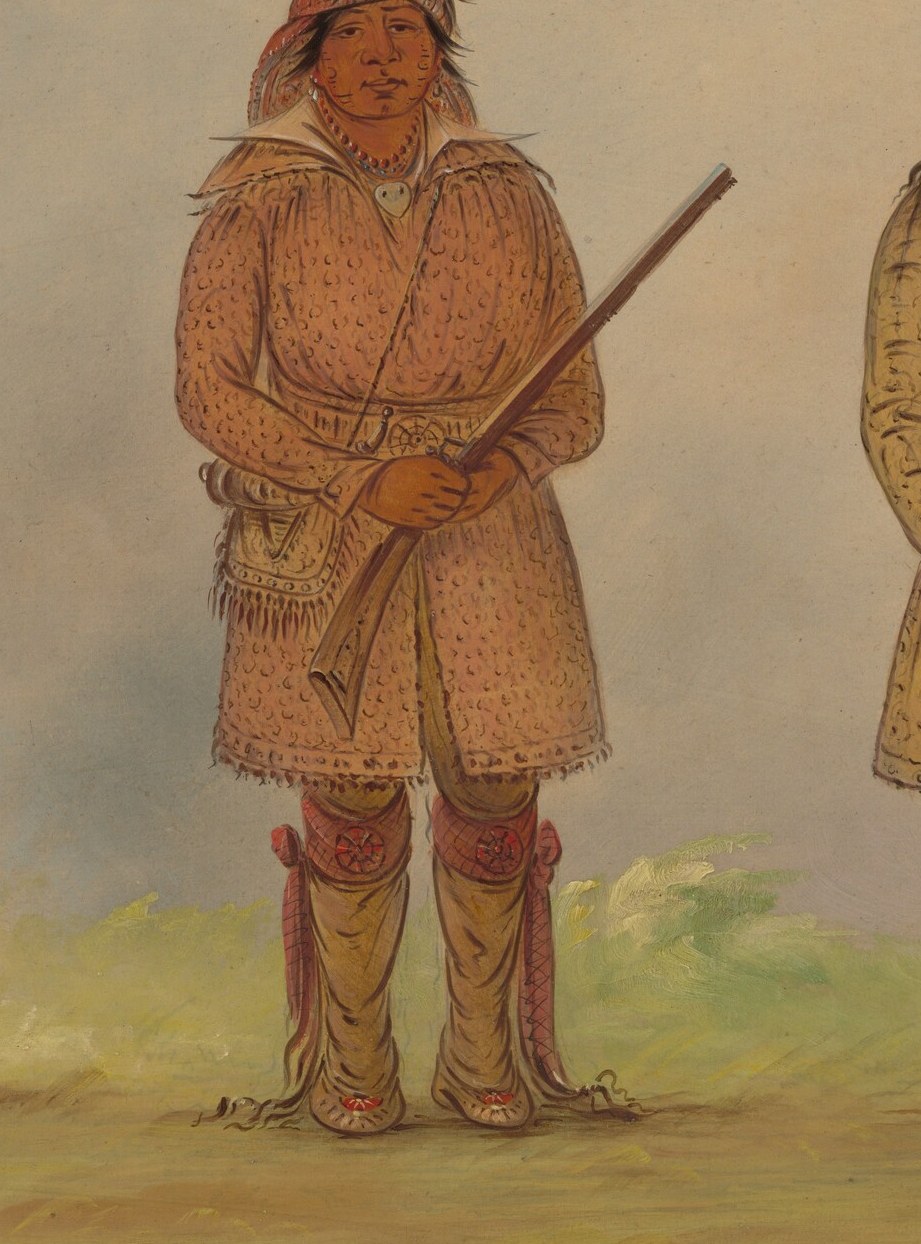
Look closely at the details that tell a story: the prominent sun motif on the woman's blanket, a significant cultural and spiritual emblem for the Lenape. The central figure holds a staff, often a symbol of authority, while the figure on the right holds a pipe, likely used in social or ceremonial rituals.
Catlin's dedication to visually recording Indigenous peoples was crucial, especially as the Delaware people faced displacement from their ancestral lands by the mid-1860s. His work stands as a testament to their enduring presence and rich cultural heritage.
What other details do you notice that speak to the lives and traditions of the Delaware people?
Details
Transcript
This painter documented Native American life in the 1800s. He captures three individuals from the Delaware, or Lenape, people. The woman’s blanket has a prominent sun motif. The sun is a significant cultural or spiritual emblem for the Lenape. This man holds a long staff, a symbol of authority. The figure on the right holds a pipe, likely for social rituals. Catlin preserved a moment of cultural continuity amid forced migration.