The Building of Westminster Bridge by Samuel Scott
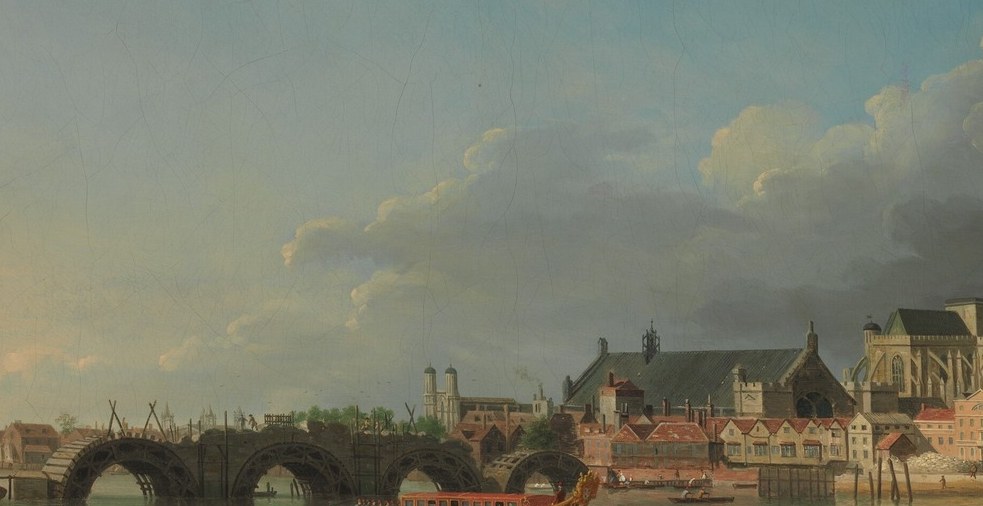
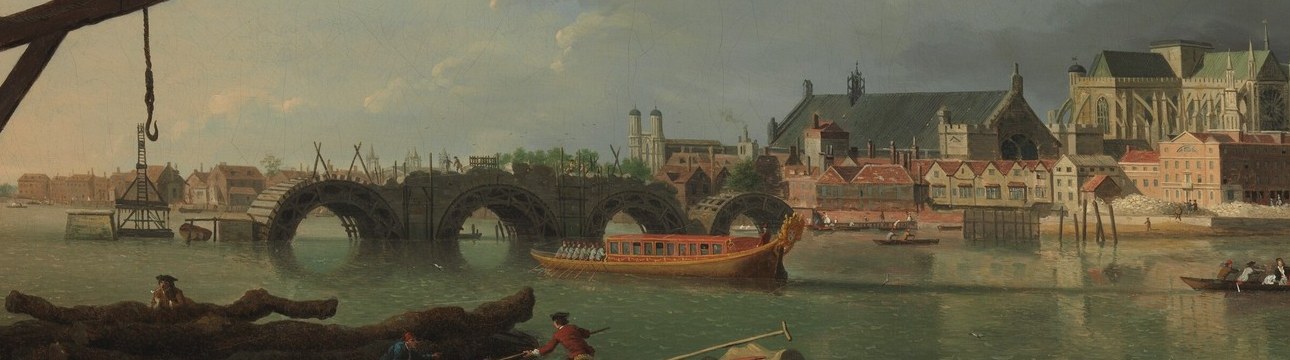
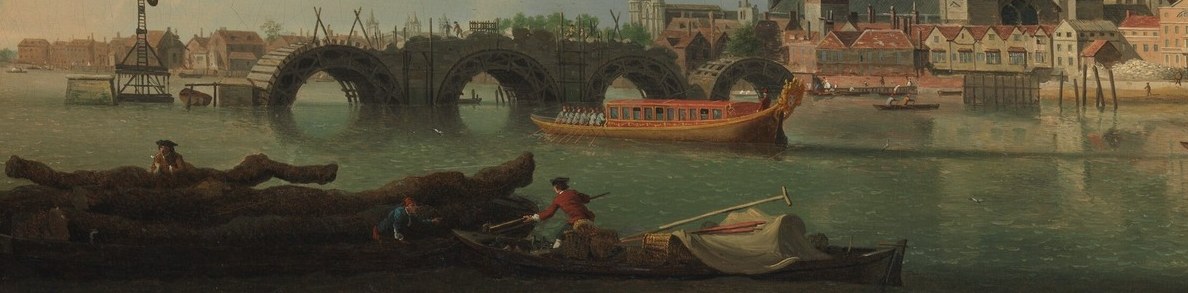
This is Samuel Scott's 'The Building of Westminster Bridge,' painted in 1747 and now in the Metropolitan Museum of Art. It captures the exact moment London became a two-bridge city. Before Westminster Bridge opened in 1750, London Bridge was the only way across the Thames, a medieval bottleneck crammed with houses and shops. Parliament funded the new crossing with a £218,000 budget, and Scott was there to document the construction while it was still a forest of wooden scaffolding rising from the river.
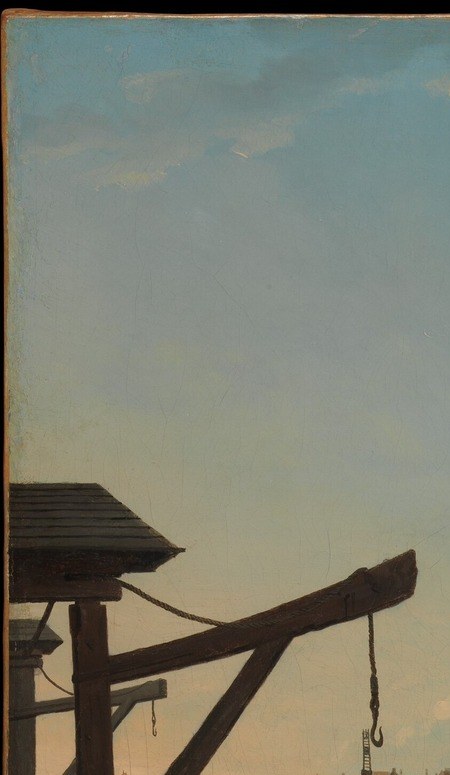
Look at the wooden crane dominating the left bank. That angular timber frame did the actual lifting, hauling the stone blocks you can see staged in the foreground yard. Scan across to the three stone arches and notice the wooden centering still propping them up: that's scaffolding from a lost engineering technique, the falsework Georgian masons built in the river current itself.
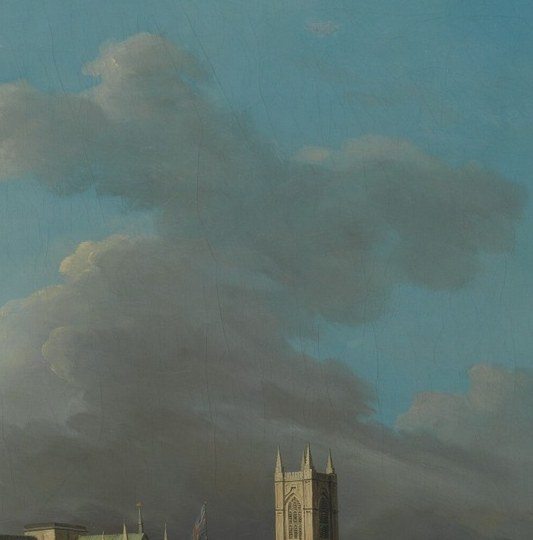
The sky is the real flex. Those soft-edged cumulus clouds, catching warm light on one side and cold shadow on the other, are pure Venetian technique. Scott earned the nickname 'the British Canaletto' painting London as if it were the Grand Canal, the luminous atmosphere, the broken sunlight on the water, the meticulous architectural detail, all of it learned second-hand from prints and imported paintings. He never crossed the English Channel.
Westminster Bridge still stands, though almost nothing else in this painting does. The Palace of Westminster visible behind the bridge burned down in 1834. Samuel Scott died in Bath in 1772, remembered as the finest marine painter Britain produced between the Dutch masters and Turner. What do you notice first, the engineering or the sky?
Details
Transcript
Before 1750, London had only one bridge. This is the second one, mid-construction. Stone by stone, hauled in on these barges. Parliament paid for it. The bridge cost £218,000. But the painter never set foot in Venice. Samuel Scott made his living painting London like Canaletto.