The Virgin and Child with Four Holy Virgins by Master of the Virgo inter Virgines
The Virgin and Child with Four Holy Virgins, painted in the 1490s by the artist known only as the Master of the Virgo inter Virgines, hangs today in the Rijksmuseum. For centuries it was attributed to Jan van Eyck, until 1903, when art historian Max J. Friedländer identified a distinct hand and gave the painter the name he still carries, borrowed from this very altarpiece.
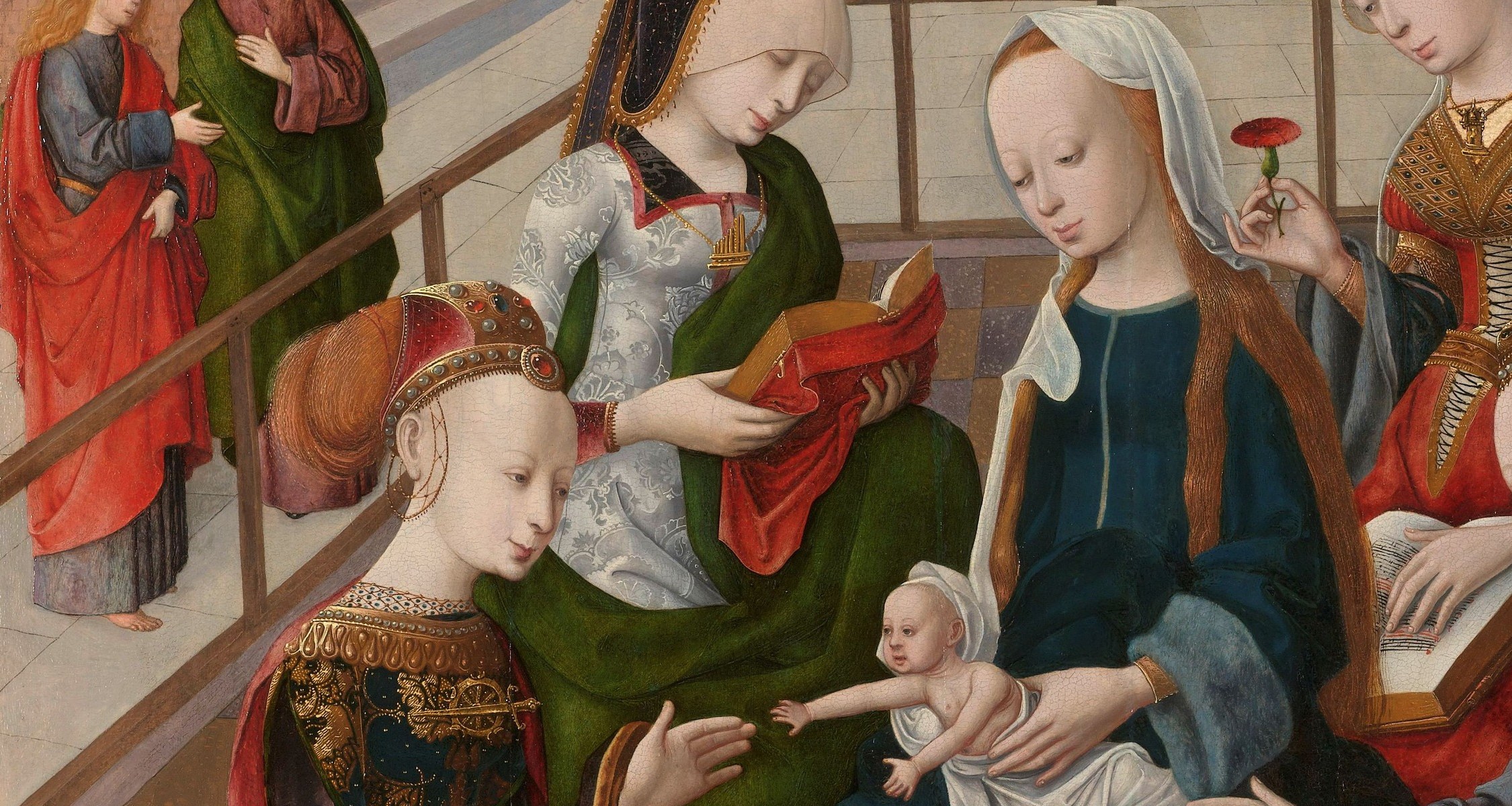
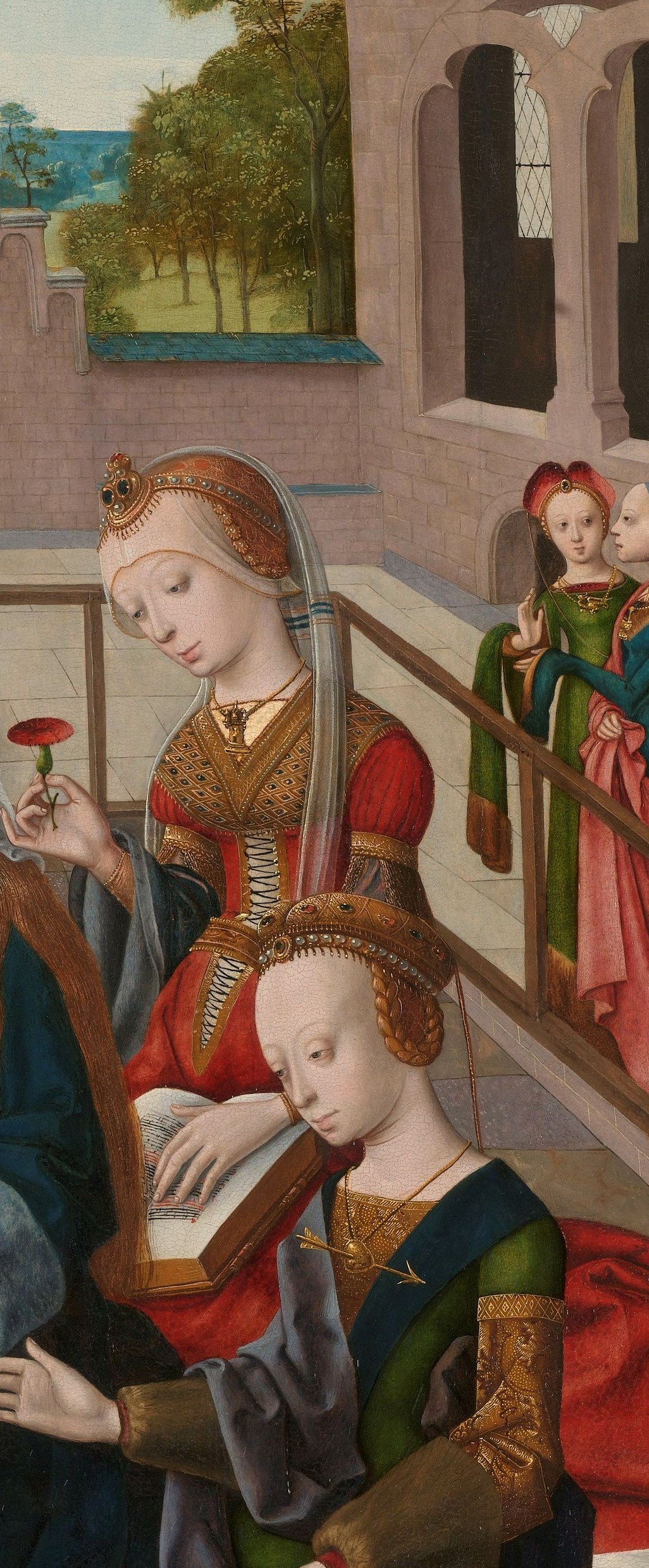
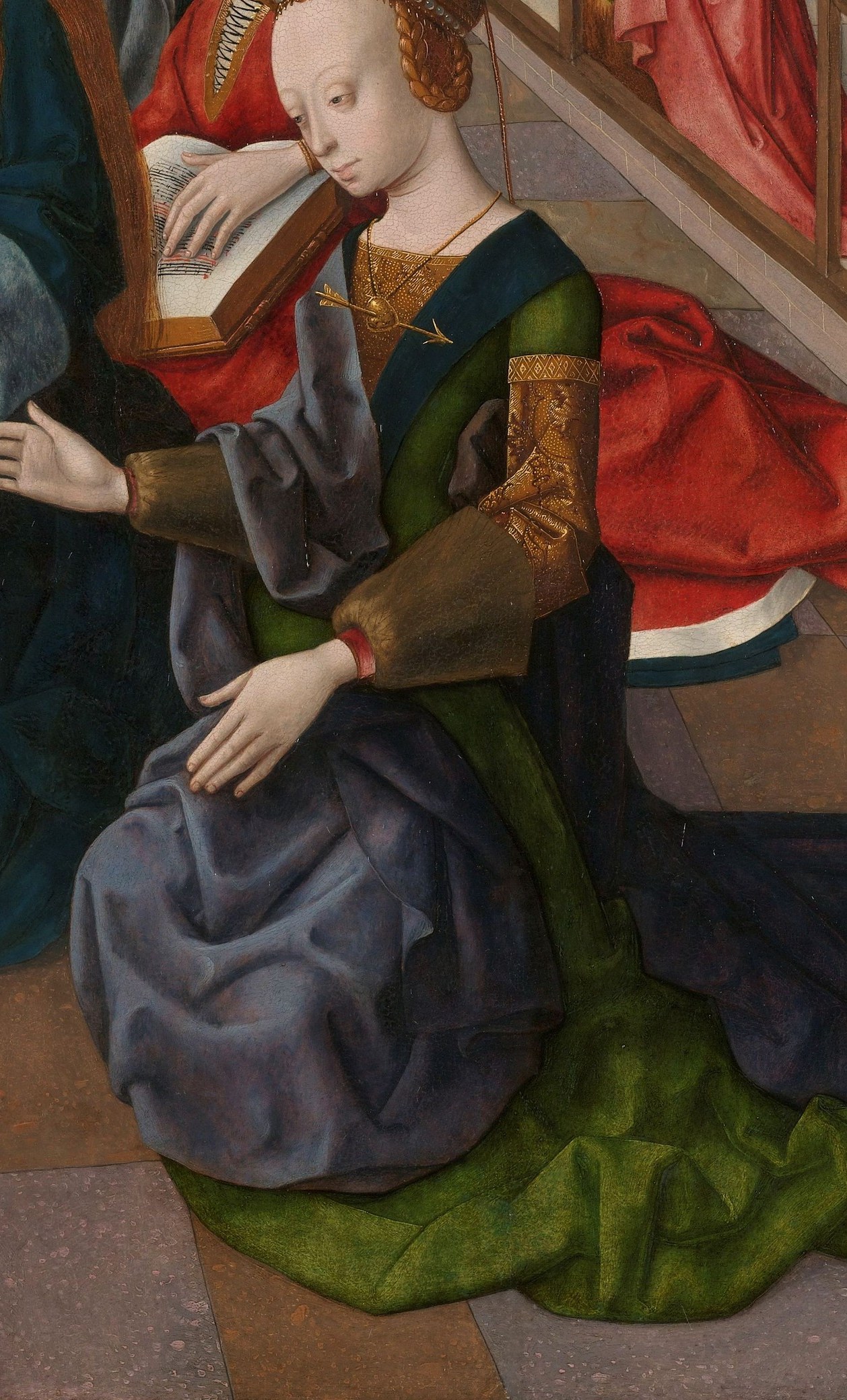
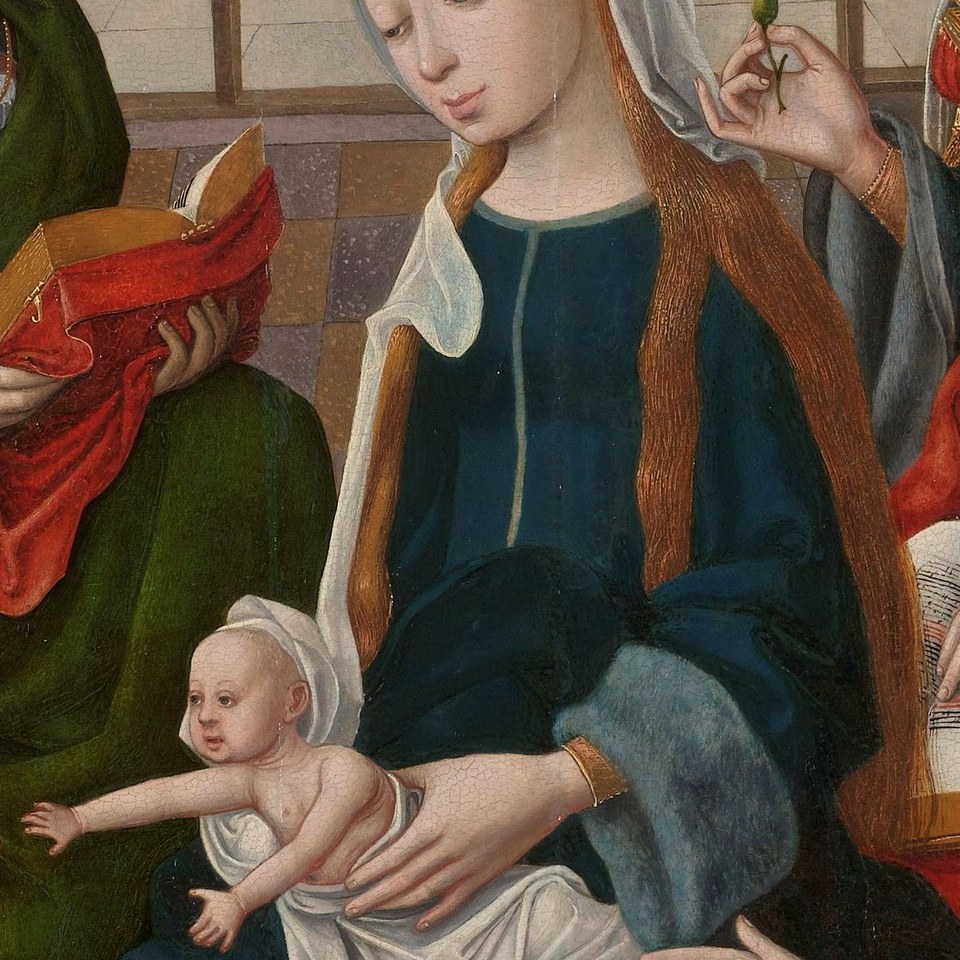
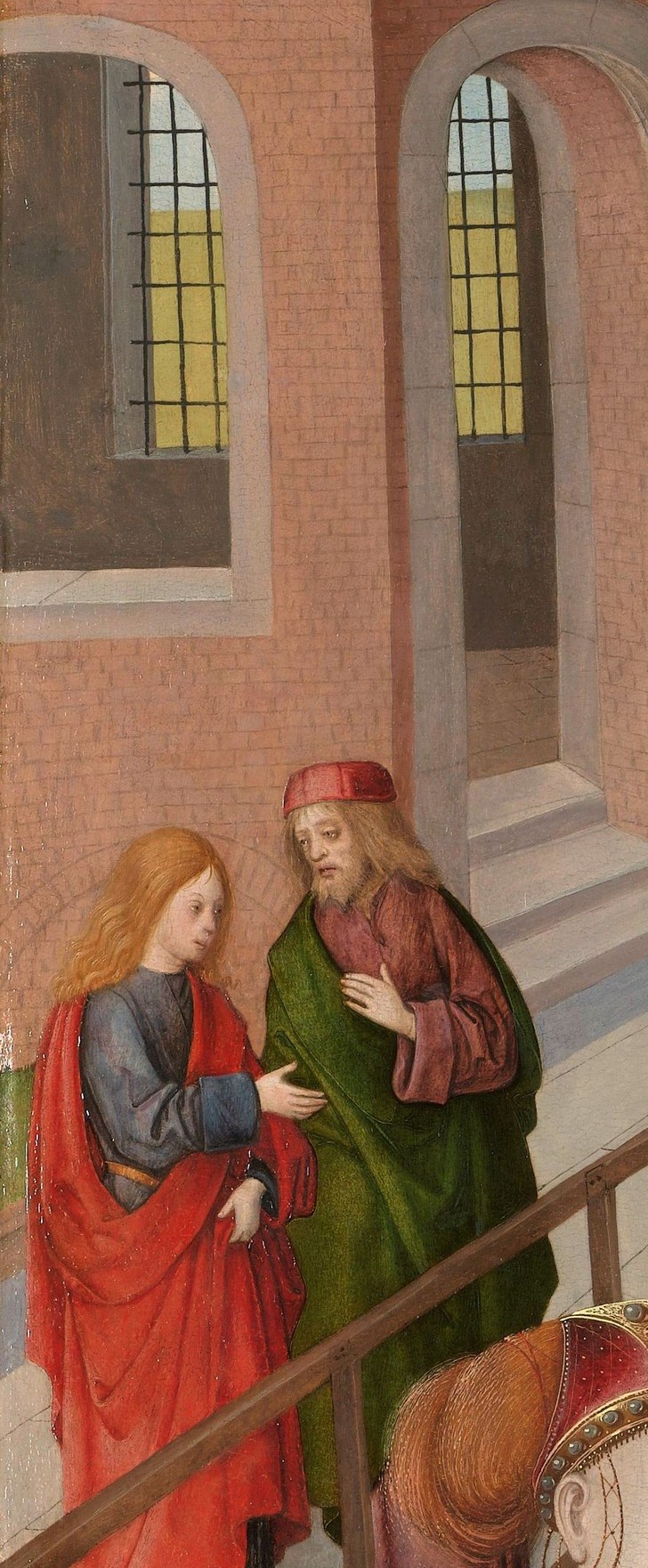
Look first at Mary's hands. Her fingers rest on her son's body with an unforced tenderness that the whole composition bends toward. The four virgin saints, Catherine, Cecilia, Ursula, and Barbara, lean in radially, drawing the eye back to that one quiet point of contact. Then look at the margins: two unidentified men stand silent, witnesses whose presence has never been satisfactorily explained.
The painting once belonged to the convent of Koningsveld, outside Delft. The convent was torn down in 1573 during the Dutch Revolt. The panel survived, moving from a demolished sacred space into the secular collection of a museum, a fragment of a world that vanished.
The Master of the Virgo inter Virgines has been called the most uncompromising realist of his generation. He did not seek elegance. He painted what he saw: a mother, holding her child, while unknown men watched from the shadows.
Details
Transcript
For over 300 years, this was called a van Eyck. It survived the destruction of its convent in 1573. Four virgin saints gather around Mary in an enclosed garden. One reads intently, her devotion is quiet, scholarly. But the painting's real heart is here. A mother's fingers cradle the child who will be taken from her. Two men stand at the edges. No one knows who they are. In 1903, one scholar saw a different hand, and named him only for this painting.