Madame Jean-Baptiste Nicolet (Anne Antoinette Desmoulins, 1743–1817) by Jean-Baptiste Greuze
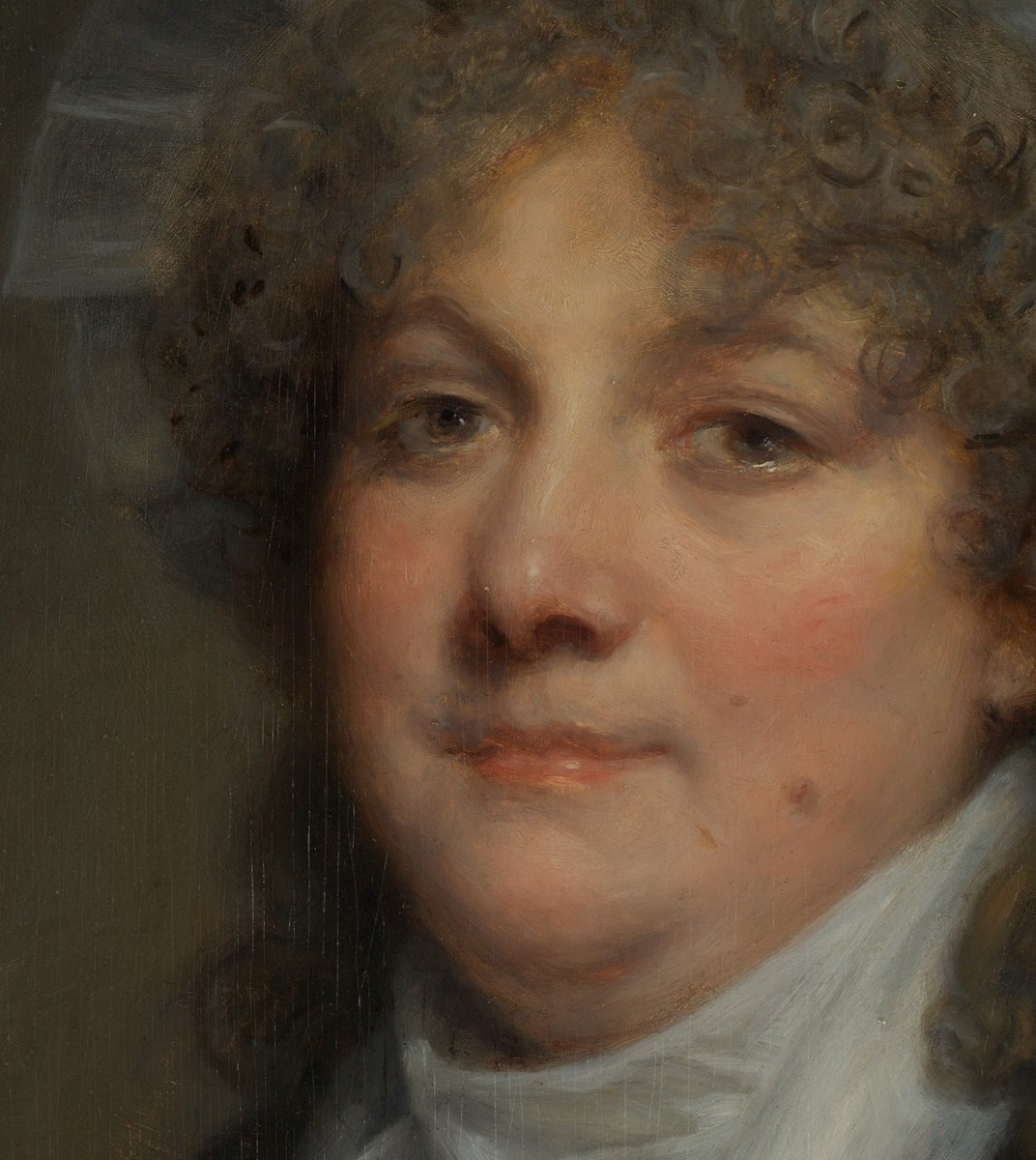
Jean-Baptiste Greuze's "Madame Jean-Baptiste Nicolet (Anne Antoinette Desmoulins, 1743-1817)" from 1790, held at The Metropolitan Museum of Art, captures a woman of quiet introspection and intellectual depth.
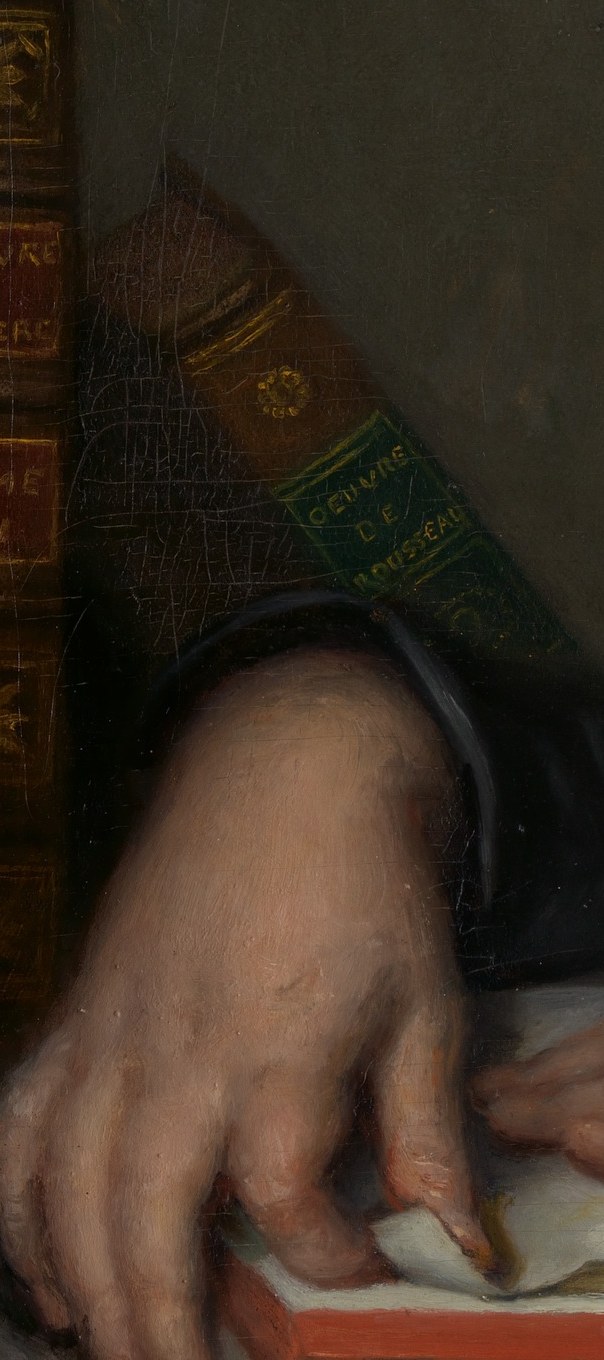
The portrait shows Anne Antoinette Desmoulins, wife of a prominent theater director, engaged in a private moment with books. Her delicate hands rest on an open volume, and a stack of books titled 'Oeuvres' (Works) sits nearby, signaling her learned interests rather than merely her domestic role. The artist, Jean-Baptiste Greuze, was known for imbuing his portraits and genre scenes with moralizing narratives and insights into character.
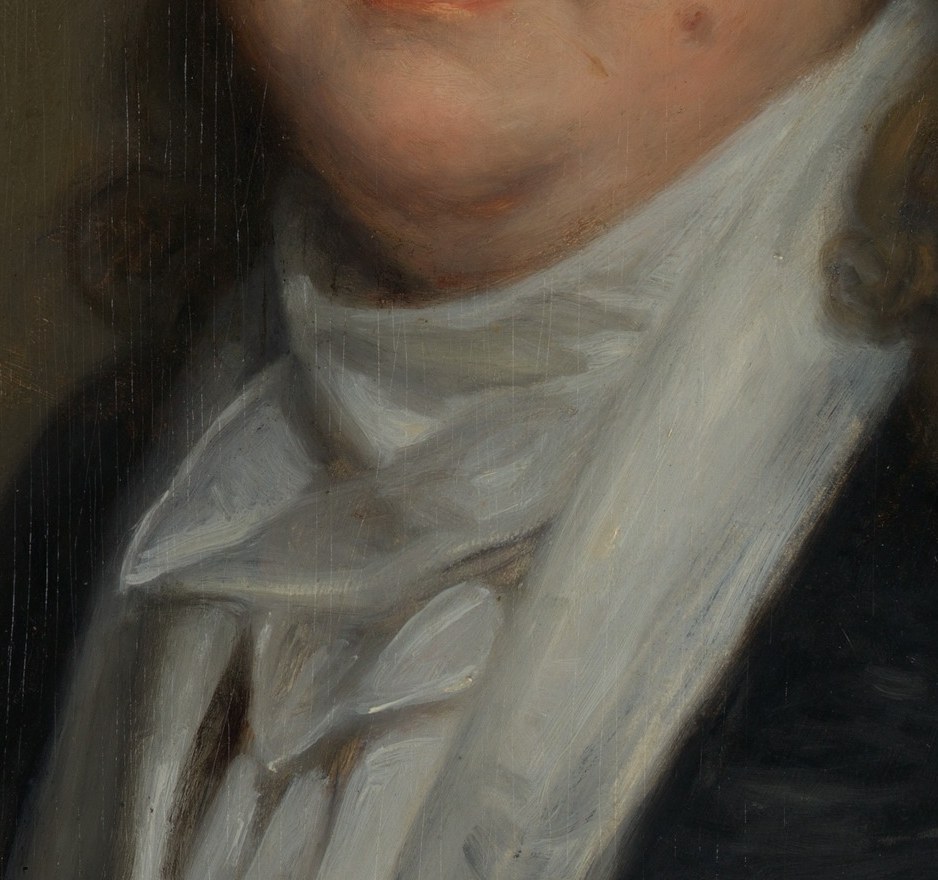
Greuze painted this Rococo-style oil on canvas with meticulous attention to detail, from the soft rendering of her skin to the textures of her clothing and the subtle light on her hands. This work is a testament to his skill in portraying not just a likeness, but also the inner life of his subjects. It reflects a period taste for intimate portrayals that reveal character through domestic activity, moving beyond mere social representation.
What do you notice in her expression that hints at her inner world?
Details
Transcript
This woman, Anne Antoinette Desmoulins, was no ordinary socialite. She married Jean-Baptiste Nicolet, a successful theater director. Notice her hands, gently resting on an open book. Her quiet contemplation suggests intellectual pursuits. The painter, Greuze, often used objects to tell a story. This portrait reflects a quiet dignity, not just social status.